Spotting Carpenter Bees Early: How to Prevent Wood Damage in Spring
Spotting Carpenter Bees Early: How to Prevent Wood Damage in Spring
When homeowners think of pests that tend to show up in the spring, they usually picture examples like ants and mosquitoes. Carpenter bees are well worth adding to that list, as they often show up much earlier than people expect, sometimes the moment average temperatures rise above 50 degrees.
If you live in states like Pennsylvania, New Jersey, Delaware, and Maryland, carpenter bee activity on your property can begin as soon as March or early April. But by the time you actually notice them, they’ll likely already have started burrowing into any exposed wood around your home.
Knowing what to watch for is the key to preventing expensive property damage.
Why Do Carpenter Bees Appear So Early?
Carpenter bees are born inside wood structures and will overwinter there. As soon as temperatures start to rise in the spring, the adult bees emerge, begin to mate, and start creating new nest tunnels.
Because they don’t have to build their nests from scratch like other insects do, carpenter bees can get down to business right away. They’re especially partial to homes with decks, fences, railings, wooden siding, or porch ceilings, making vigilant carpenter bee control a must.
Early Signs of Carpenter Bee Activity to Know
The ability to catch carpenter bee infestations early makes all the difference, so knowing what to watch for is essential. Here are some key examples to be aware of.
Large bees hovering near wood
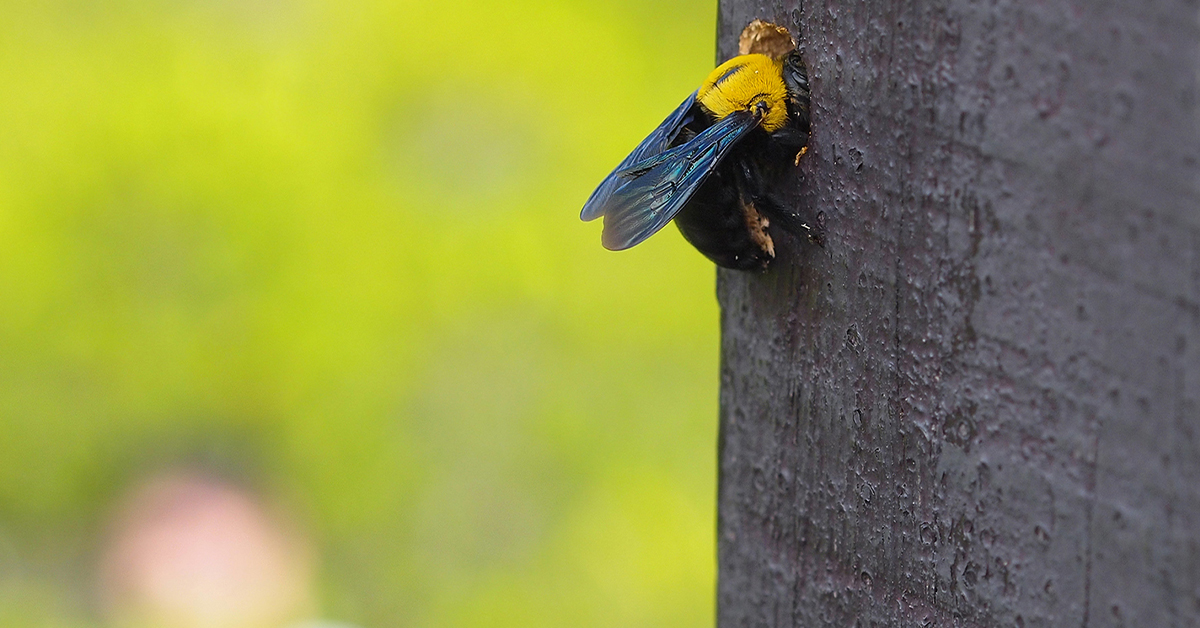
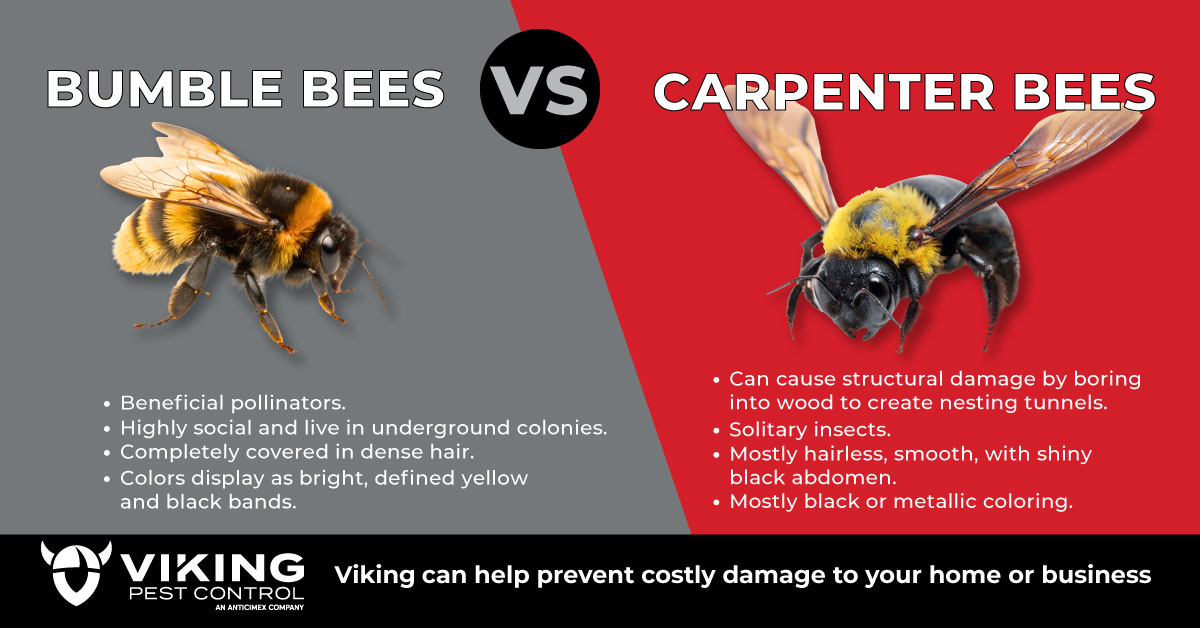
It’s not uncommon for homeowners to mistake carpenter bees for bumblebees, as they look similar. However, one difference to look for is a carpenter bee’s shiny, black abdomen. (Bumblebees have fuzzy abdomens.)
Males often like to hover and hang around near wooden structures and property features. They can occasionally behave aggressively, but they do not sting.
Perfectly round entry holes
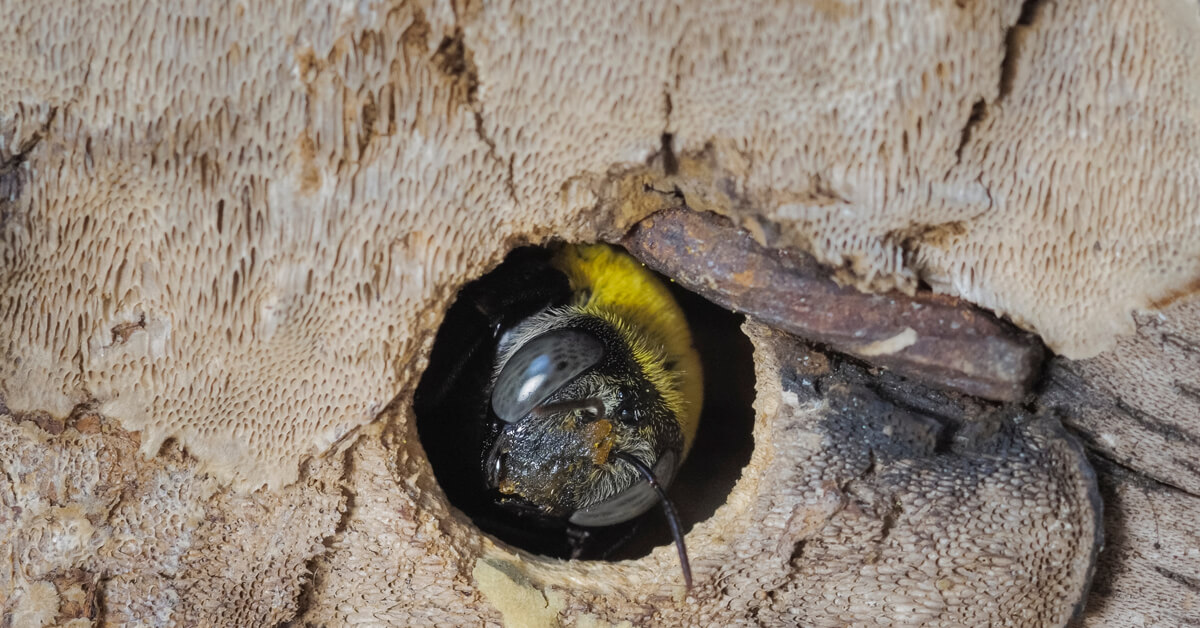
Carpenter bees drill dime-sized, round holes into exposed wood. Once they’ve bored their way in, they create tunnels that run alongside the grain of the wood. Over time, this process can significantly weaken wood.
Sawdust piles or staining
Watch for small piles of sawdust underneath holes in any wooden structures, as that’s a sure sign of activity. You may also notice yellowish stains appearing below the openings (due to bee waste disposal).
Returning to the same spots every year
Carpenter bees like to reuse existing tunnels when they can. So, if you’ve had carpenter bees on your property in years past, know that it’s highly likely they’ll try to return there in the future, making prevention a wise move.
Why Early Carpenter Bee Control Matters
A single carpenter bee hole may not seem like a very big deal, but the damage can really add up over time. Not only do multiple tunnels weaken a property’s wood, but they can also attract destructive animals like woodpeckers that like to feed on the bee larvae.
Addressing carpenter bees as early in the season as possible helps prevent:
Progressive structural weakening
Repeat infestations
Expensive repairs
Ugly cosmetic damage
DIY carpenter bee treatment attempts (e.g., simply filling holes) aren’t usually effective, as bees will simply drill new ones. The best approach is to get a qualified carpenter bee exterminator in New Jersey on the job as soon as you spot signs of the bees on your property.
Effective Carpenter Bee Treatment in New Jersey
Worried carpenter bees may have set up shop at your New Jersey home or business? Viking Pest Control has you covered with targeted carpenter bee control treatments that resolve infestations quickly and sustainably.
Every Viking Pest technician possesses deep knowledge of seasonal carpenter bee patterns. We not only take care of existing infestations but also take steps to keep them from returning. Contact us today to schedule an inspection!
Carpenter Bees Bugging You? Here’s What You Need to Know!
Every year, wood-loving pests wreak havoc on homes and businesses across the Mid-Atlantic. Some chew through wood, while others drill into it to make their nests—causing major headaches and expensive repairs. Among the biggest troublemakers in New Jersey, Pennsylvania, Delaware, and Maryland? Termites, carpenter ants, old house borers, and, of course, carpenter bees.
Carpenter bees (Xylocopa virginica) are often mistaken for bumble bees because they look similar. But unlike bumble bees, these guys don’t live in hives. Instead, they burrow into wood to make their homes. If you’ve spotted them buzzing around your property, don’t wait—Viking Pest Control can take care of the problem fast and effectively.
What Are Carpenter Bees Up To?
It’s easy to confuse carpenter bees with bumble bees, especially when they’re hovering near your wooden decks, fences, or eaves. But here’s the thing—carpenter bees don’t eat wood. Instead, they tunnel into it to create cozy little nurseries for their young.
They prefer untreated or unpainted wood, which means they often target decks, fences, railings, eaves, shingles, and even wooden patio furniture. Their nests start with a neat, round hole (about half an inch wide) before they dig tunnels inside, sometimes expanding old ones year after year.
During winter, these bees hunker down inside their tunnels until spring arrives and it’s time to mate. The females lay eggs and leave a stash of pollen and nectar for their babies to munch on. By late summer, new adult carpenter bees emerge, ready to start the cycle all over again.
Will Carpenter Bees Sting?
If you’ve ever had a carpenter bee buzz a little too close for comfort, you’re not alone. Males can be pretty bold, hovering in your face as if they own the place. But here’s the kicker—male carpenter bees can’t sting. Only females have stingers, and they usually won’t use them unless they feel truly threatened.
The sting itself is painful but generally mild unless you have an allergy. While they’re not the most dangerous pests, their wood-boring habits can lead to structural damage over time—making them more of a nuisance than anything.
How to Keep Carpenter Bees Away
Want to stop carpenter bees before they turn your deck into a drilling site? Here are some simple ways to keep them from moving in:
Seal up cracks and crevices in wooden surfaces with caulk or another sealant.
Paint or stain untreated wood—carpenter bees prefer bare wood!
Clear away unnecessary wood debris like fallen branches or logs.
While these DIY tricks can help, they might not be enough if carpenter bees have already settled in. That’s when it’s time to call in the pros.
The Best Way to Get Rid of Carpenter Bees
Seeing carpenter bees buzzing around your home or business? The fastest, most effective way to get rid of them is with professional pest control. At Viking Pest Control, our expert team knows exactly how to handle carpenter bees, using safe, state-of-the-art methods to protect your property.
With years of experience dealing with carpenter bees and other stinging insects, Viking Pest Control offers long-lasting solutions to keep your home or business bee-free. We use advanced equipment and eco-friendly treatments to get the job done right.
If carpenter bees are causing trouble in New Jersey, Pennsylvania, Delaware, or Maryland, Viking Pest Control has your back. Give us a call today, and let’s take care of the problem for you!
Do Carpenter Bee Traps Work?
Carpenter bees are relatively harmless; the males don't have stingers and the females are very docile.
But just because they're somewhat gentle doesn't mean they're innocuous. In fact, they can do lots of damage to your home's wood!
So if you have these insects in your home, you may be wondering about carpenter bee traps. In that case, read on. We'll discuss how effective they are and more.
Do Carpenter Bee Traps Work?
Carpenter bee traps work in the sense that they might eliminate the adults that fly in. However, by the time they've flown out and succumbed to your trap, they may have already laid eggs.
You see, these insects drill tunnels to lay eggs. As you may have guessed, these traps won't prevent the hatching of new carpenter bees.
So you can catch bees in a trap. However, this won't be an effective way to get rid of carpenter bees for good. Not only is it tedious and time-consuming to set all the necessary traps, but it'll be pretty ineffective as well.
Keep reading to see what's a better option.
The Best Way to Get Rid of Carpenter Bees
The best way to rid yourself of these pests is to work with a professional and reliable exterminator. They'll have technicians that are trained and experienced in handling all sorts of pest problems, including carpenter bees.
If you have an active infestation, they can perform the necessary steps to not only eliminate adult insects, but also the eggs and larvae. Not just that, but they can also further advise you on how to keep carpenter bees away so you don't have a recurrent problem.
Preventative Care
In addition to extermination services, pest control companies can help you with preventative care. If left to their own devices, carpenter bees can do massive damage to your home's wood, which can ruin its integrity.
Pro pest control can do a thorough inspection of your property to make sure you don't have an active infestation and that it stays that way.
Maintenance
Pest control isn't a one-and-done deal. To really keep pests at bay, you must be vigilant.
You should always take the advice of exterminators. In addition, you need to have them return to your property all throughout the year to ensure no carpenter bees have made themselves at home.
When pests are caught early, not only will you reduce your resulting bill, but you'll also preserve your home better.
Get a Professional to Handle Your Carpenter Bee Problems with Viking Pest Control
As you can see, carpenter bee traps don't really work. To really get rid of this pest, you'll need experts to handle the job.
Once you've gotten rid of the bees, the best foot forward is to be proactive and take preventative measures. Listen to the advice the exterminators give you to get the best results possible.
Do you think you have a carpenter bee infestation? Viking Pest is the carpenter bee exterminator expert throughout New Jersey, Pennsylvania, Delaware, and the Eastern Shore of Maryland. Get a fast, free carpenter bee estimate online, or call us today at 1-800-618-2847!
How to Keep Your Home Protected From Carpenter Bees
Carpenter bees are a common seasonal pest throughout New Jersey, Pennsylvania, Delaware, and the Eastern Shore of Maryland, and if you own a home in the region, chances are you’ll encounter them at some point. While they may look similar to bumblebees, their behavior and the damage they cause to wood structures make them a very different kind of problem for homeowners.
Understanding how carpenter bees behave, where they nest, and how to stop them early can save you from expensive structural damage—and in many cases, prevent a growing infestation before it starts.
What Is a Carpenter Bee?
A carpenter bee is a native insect found across much of the United States. They are large, often around one inch long, and are most commonly mistaken for bumblebees due to their similar size and coloring.
Unlike social bees, carpenter bees are solitary. They do not live in large hives. Instead, they bore into wood to create individual nesting tunnels where they lay eggs and raise their young.
How to Identify Carpenter Bees
Carpenter bees are fairly easy to recognize once you know what to look for:
They are large, round-bodied bees similar in size to bumblebees
They often have a shiny, almost hairless abdomen (unlike fuzzy bumblebees)
Males may appear to have a yellow marking on the face
Females are typically darker and lack the same facial coloring
A key sign of carpenter bee activity is the presence of clean, round holes in untreated or unpainted wood, often about the size of a dime.
Carpenter Bees vs. Bumblebees
It’s easy to confuse carpenter bees with bumblebees, but there are important differences:
Bumblebees are fuzzy, social insects that nest in the ground or in colonies. Carpenter bees are smoother, more metallic-looking, and prefer to drill into wood rather than live in groups.
This nesting behavior is what makes carpenter bees a concern for homeowners—not their presence alone, but the damage they leave behind.
What Damage Do Carpenter Bees Cause?
Carpenter bees don’t eat wood, but they tunnel into it to build nesting galleries. Over time, these tunnels can become extensive—sometimes stretching deep into beams, decks, fascia boards, and siding.
This can lead to:
Weakening of wooden structures
Cosmetic damage (visible holes and staining)
Moisture intrusion leading to rot and decay
Long-term structural integrity issues if left untreated
Decks, porch railings, sheds, eaves, and untreated wood surfaces are especially vulnerable.
Where Carpenter Bees Commonly Nest
Carpenter bees prefer soft, unfinished, or weathered wood. Around the home, they are commonly found in:
Decks and porch railings
Fascia boards and soffits
Eaves and rafters
Wooden outdoor furniture
Sheds and play structures
One of the biggest risk factors is exposed or unsealed wood. Once bees establish tunnels, they often return to the same area year after year and expand existing damage.
When Are Carpenter Bees Active?
In the Northeast region, carpenter bees typically become active in spring as temperatures warm. This is when they begin mating, drilling new nesting tunnels, and expanding existing ones.
They remain active through spring and summer, then overwinter inside their tunnels, emerging again the following year. This cycle makes early prevention especially important.
Do Carpenter Bees Sting?
Carpenter bees are generally not aggressive, but there are differences between males and females:
Male carpenter bees often hover and “dive-bomb” people, but they cannot sting
Female carpenter bees can sting, but typically only do so if directly handled or threatened
In most cases, the real issue is not stings—it’s the structural damage they cause over time.
How to Prevent Carpenter Bees
The most effective way to discourage carpenter bees is to make your home less attractive to them:
Paint or seal all exposed wood surfaces
Repair or replace damaged or weathered wood
Fill old nesting holes with wood putty or dowels
Use exterior-grade finishes on decks and trim
Inspect wood structures each spring for early signs of activity
Prevention helps, but once carpenter bees establish active tunnels, DIY methods often fall short of fully eliminating the problem.
How to Get Rid of Carpenter Bees for Good
Carpenter bee infestations are difficult to control once they spread into multiple nesting sites. Even if you plug visible holes, bees may already be deeper inside the wood—or may simply drill new entry points nearby.
That’s why many homeowners turn to professional treatment instead of trying to manage the problem alone.
A targeted pest control approach focuses on:
Identifying active nesting sites
Treating adult carpenter bees safely and effectively
Addressing hidden larvae inside tunnels
Preventing reinfestation through long-term protection strategies
Why Homeowners Choose Viking Pest Control
When carpenter bees start damaging your home, fast action matters. That’s where Viking Pest Control comes in.
With decades of experience protecting homes across the region, Viking Pest Control understands how quickly carpenter bee damage can escalate—and how to stop it at the source.
Their technicians don’t just treat visible activity. They inspect your property for hidden nesting sites, assess wood vulnerability, and provide long-term prevention strategies designed to keep carpenter bees from coming back.
Instead of guessing or relying on temporary fixes, homeowners get a complete solution that protects both the structure and value of their property.
Protect Your Home with Viking Pest Before Damage Spreads
Carpenter bees may seem like a minor nuisance at first, but the damage they cause builds over time. What starts as a few small holes can turn into weakened boards, structural repairs, and recurring infestations year after year.
If you’ve noticed signs of carpenter bee activity—or want to prevent them before they start—the safest move is to bring in a professional early.
For reliable, long-term carpenter bee control in NJ, PA, DE, and the Eastern Shore of Maryland, contacting Viking Pest Control is one of the most effective ways to protect your home and stop damage before it spreads.
How to Get Rid of Carpenter Bees and Protect Your Home From Damage
Carpenter bees may look similar to harmless bumble bees, but these wood-boring insects can cause serious damage to homes throughout New Jersey, Pennsylvania, Delaware, and Maryland if left untreated.
Unlike termites, carpenter bees don’t eat wood. Instead, they tunnel through it to create nesting galleries where they lay eggs and shelter during the colder months. Over time, repeated nesting activity can weaken decks, railings, siding, fences, eaves, and other wooden structures around your home.
If you’ve noticed perfectly round holes in wood surfaces or large bees hovering around your property, you may be dealing with carpenter bees.
What Do Carpenter Bees Look Like?
Carpenter bees are large black and yellow bees often mistaken for bumble bees. The easiest way to tell the difference is by looking at the abdomen.
Carpenter bees have a smooth, shiny black abdomen.
Bumble bees have a fuzzy abdomen covered in hair.
Carpenter bees are solitary insects, meaning they do not live in large colonies like honey bees or bumble bees. Instead, each female creates her own nest by boring into wood.
Signs of Carpenter Bee Activity
One of the most obvious signs of carpenter bees is the appearance of smooth, perfectly round holes in exposed wood. These holes are usually about half an inch wide and may appear in:
Decks and railings
Wooden siding
Porch ceilings
Fences
Fascia boards
Window and door trim
Wood shingles and overhangs
You may also notice:
Small piles of sawdust beneath holes
Bees hovering near wooden structures
Increased woodpecker activity
Buzzing sounds around eaves or decks
Carpenter bee tunnels typically begin several inches deep but can expand over time as multiple generations reuse the same nesting sites year after year.
Are Carpenter Bees Dangerous?
Carpenter bees are more destructive to property than they are dangerous to people.
Male carpenter bees often appear aggressive and may hover or dive toward people near their nesting areas, but males do not have stingers. Female carpenter bees can sting, though they are generally docile and rarely do so unless directly threatened.
The bigger concern is the long-term structural damage carpenter bees can cause. Repeated tunneling weakens wood and may eventually lead to costly repairs if infestations continue untreated.
How to Prevent Carpenter Bees
Prevention is one of the best ways to protect your home from carpenter bee damage.
Paint or Seal Exposed Wood
Carpenter bees prefer untreated or unfinished wood. Painting, staining, or sealing wooden surfaces makes them far less attractive for nesting.
Repair Existing Holes
Old carpenter bee tunnels can attract future generations. Once activity is eliminated, fill holes with wood filler or sealant and repaint the area.
Inspect Wooden Structures Regularly
Check decks, fences, soffits, railings, and trim each spring for new holes or signs of activity.
Use Hardwoods When Possible
Hardwoods are generally less appealing to carpenter bees than softer woods like pine, cedar, fir, or redwood.
How to Get Rid of Carpenter Bees
DIY carpenter bee treatments are often ineffective because each individual gallery must be treated properly. Missing even a few active tunnels can allow the infestation to continue.
Professional carpenter bee control is the safest and most effective solution, especially when infestations spread across multiple wooden structures.
At Viking Pest Control, our trained pest management professionals identify carpenter bee activity, locate hidden galleries, and recommend the best treatment plan for your property.
Our carpenter bee services help:
Eliminate active infestations
Prevent recurring nesting activity
Protect wooden structures from future damage
Reduce the risk of long-term structural repairs
Professional Carpenter Bee Control with Viking Pest in NJ, PA, MD, and DE
If you’re seeing carpenter bees around your home or noticing damage to wooden structures, early treatment can help prevent costly repairs later.
Viking Pest Control has been helping homeowners throughout New Jersey, Pennsylvania, Delaware, and the Eastern Shore of Maryland protect their homes from carpenter bees and other wood-destroying pests for decades.
Contact Viking Pest today for a fast, free estimate and learn more about our carpenter bee control and prevention services.
Prevent Carpenter Bees This Spring
Carpenter bee prevention can tie into your spring home improvement projects.
Carpenter bees are not your average bee. In fact, this species compared to other stinging insects like hornet, yellow jackets and wasps behaves very differently. Carpenter bees are actually a wood destroying pest due to their habits of building nests in burrows of wood. As we enter the season of home improvement projects including painting the house and other home maintenance, now is the perfect time to implement prevention strategies. Since carpenter bees are attracted to soft wood around your home and property (i.e. decks, sheds, picnic tables), carpenter bee prevention can tie into your spring cleaning and spring home improvement projects.
What are Carpenter Bees?
First, is it is important to learn how to identify carpenter bees. What you typically see is an aggressive bee buzzing around the outside of a wooden structure. This is the male bee, which doesn’t have a stinger but is protecting the nest. The hole that carpenter bees carve is about 1/2 of an inch in diameter and usually in untreated or soft wood structures. You may also see small piles of yellow sawdust which are left under the holes after the carpenter bees bore their way inside of the wood for nesting. Carpenter bees are not social bees so you are not going to find a massive swarm of them, but rather just one or maybe two.
Carpenter Bee Prevention Tips
If you are building structures inside or outside of your home, it is best to use hardwood rather than softwood. This will reduce the threat of a carpenter bee infestation since they prefer softer wood sources.
Make sure that wood surfaces are finished with a stain or paint in order to create a seal. Carpenter bees do not like carving through sealed surfaces so this will greatly reduce the risk of them boring holes and leaving you with weakened wood structures and a bee’s nest inside of the wood.
Remove sources of decaying, soft wood from around the property which carpenter bees are most attracted to.
Contact Viking Before Carpenter Bees Ruin Your Home's Structure
Since carpenter bees nest inside of wood structures via small holes, they are not easy to get rid of. And if you are noticing them now, it is probably because the females laid eggs in wood structures to stay safe and warm through the winter months. If you do believe that you have carpenter bees then it is best to give your local experts at Viking Pest Control a call. We provide safe and effective carpenter bee control throughout New Jersey, Pennsylvania, Delaware, and the Eastern Shore of Maryland as well as offer Home Protection Plans that protect your home and family from other pests and the problems they cause.
Call Viking at 800-618-2847 to learn more about carpenter bee pest control and extermination services, or get a fast, free quote online today!