
Bat Control & Exclusion Services
Bat exclusion can ONLY legally be performed from April 1-May 15, and from August 1-October 15.
Viking Pest Control does not offer Carcass & Dead Animal Removal. Animal removal is only completed by our team when an animal is found in a wildlife trap. Please contact your municipal office for local animal removal vendors.
Homeowners across New Jersey, Delaware, Pennsylvania, and Maryland trust Viking Pest Control for effective bat control. While, for the most part, bats are timid and peaceful creatures, they can also carry serious diseases and become unwelcome guests in attics and sheds, which turn into temporary homes. If you detect bats in your home or business, it’s essential to take immediate steps to control them by seeking help and recommendations from wildlife control experts like those at Viking Pest. To protect your home or business from bats, you need to understand their behavior, take preventive measures, and seek effective treatment options should an infestation occur. Bats may be an important part of our ecosystem, but they need to stay outside where they belong.
Table of Contents
What are Bats?
Bats are the only mammals in the world that can fly. They usually make their homes in caves and hollow trees. Over 1,000 different bat species have been identified throughout the world. Bats use high-pitched sound waves, or echolocation, to navigate in the dark and locate prey. They are most active at night and typically spend daylight hours roosting upside down in caves, trees, or buildings.
Although encounters between humans and bats are rare, there can be conflict when a bat stumbles into a business or residence, or when maternal bat colonies make their home in a seemingly unoccupied structure.

How Do I Identify Bats?
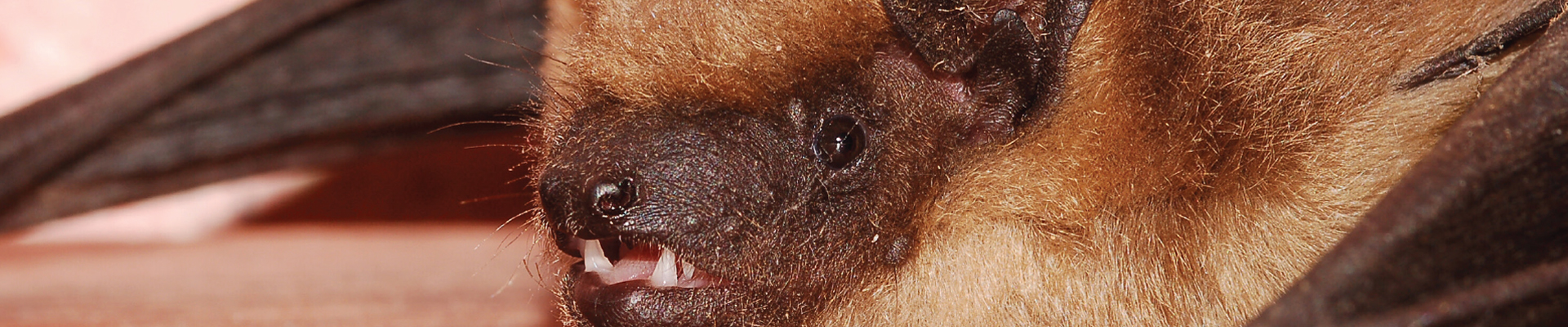
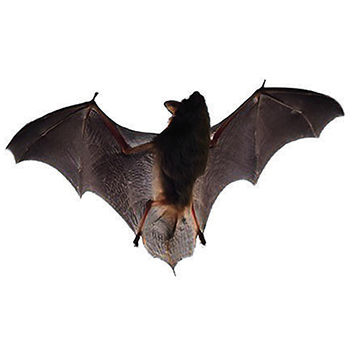
Bats are identifiable by their furry bodies and delicate wings. Bats typically fly with fast, jerky, and twisting movements at dusk. They resemble mice with leather wings. Some species of bats also have “nose leaves,” which are fleshy facial structures that help direct outgoing echolocation calls. The color of their fur ranges from golden-brown to dark grey or ginger.
How Long Do Bats Live?
Depending on the species, the life expectancy of bats can be 20 to 40 years in the wild. This means that if bats start nesting in a certain area, you can expect them to return to that same place every year for decades unless something deters or bars them from returning. Contacting a bat control specialist as soon as you spot bat activity is the best way to prevent this from becoming an annual problem.
Common Bat Species in NJ, PA, DE, & MD
There are 9 different species of bat typically found within New Jersey, Pennsylvania, Maryland, and Delaware. These include:
Little Brown Bat (Myotis Lucifugus)
Little brown bats are some of the most common bats found throughout the region. True to their name, these bats have dark, glossy brown fur, often with black coloring around the shoulders. Little brown bats are among the smaller species in the area, weighing 1/7 to 1/3 of an ounce and averaging a wingspan of 25 centimeters.
Evening Bat (Nycticeius Humeralis)
The evening bat is fairly small, weighing around 3/8 of an ounce with a wingspan of approximately 27 centimeters. This is a rare species seldom seen in the area.
Hoary Bat (Lasiurus Cinereus)
Hoary bats are the largest bats found in Maryland, Pennsylvania, Delaware, and New Jersey, weighing up to 1 full ounce with a wingspan of up to 41 centimeters. Red, brown, or tan fur covers their bodies and tails, with silver-white tips that give hoary bats a frosted appearance.
Silver-Haired Bat (Lasionycterus Noctivagans)
This mid-sized tree bat has black wings and (as you may have guessed) silver fur. You’ll seldom find the silver-haired bat in the area during winter, as they commonly migrate south for the colder season.
Eastern Red Bat (Lasiurus Borealis)
Eastern red bats are the most common tree bat found within Delaware, Pennsylvania, New Jersey, and Maryland, easily recognized by their bright reddish-orange colored fur. Moderate in size, the Eastern red bat has a wingspan of roughly 32 centimeters (just over one foot) in length.
Tri-Colored Bat (Perimyotis Subflavus)
Although the tri-colored bat was once common in the U.S., its population has declined significantly due to the spread of white-nose syndrome. The tri-colored bat is sometimes also known as the eastern pipistrelle or pygmy bat. This bat has dark fur at the base, light in the middle, and dark again at the tip.
Eastern Small-Footed Bat (Myotis Leibeii)
The Eastern small-footed bat is one of the most diminutive bat species in the U.S., weighing only 1/9 to 3/16 of an ounce and with a wingspan that tops out at 25 centimeters. The fur is golden brown, with a black mask around the face.
Northern Long-Eared Bat (Myotis Septentrionalis)
Around the same size as little brown bats, northern long-eared bats are distinguished by their long, pointed ears and extended tails. Northern long-eared bats are rarer than little brown bats, and there is relatively little known about their feeding and nesting habits.
Big Brown Bat (Eptesicus Fuscus)
Big brown bats weigh up to 18 grams with wingspans up to 40 centimeters, making them roughly twice the size of little brown bats. You can easily recognize them with their large size, uniform coloration, and black wings.
How Did I Get Bats?
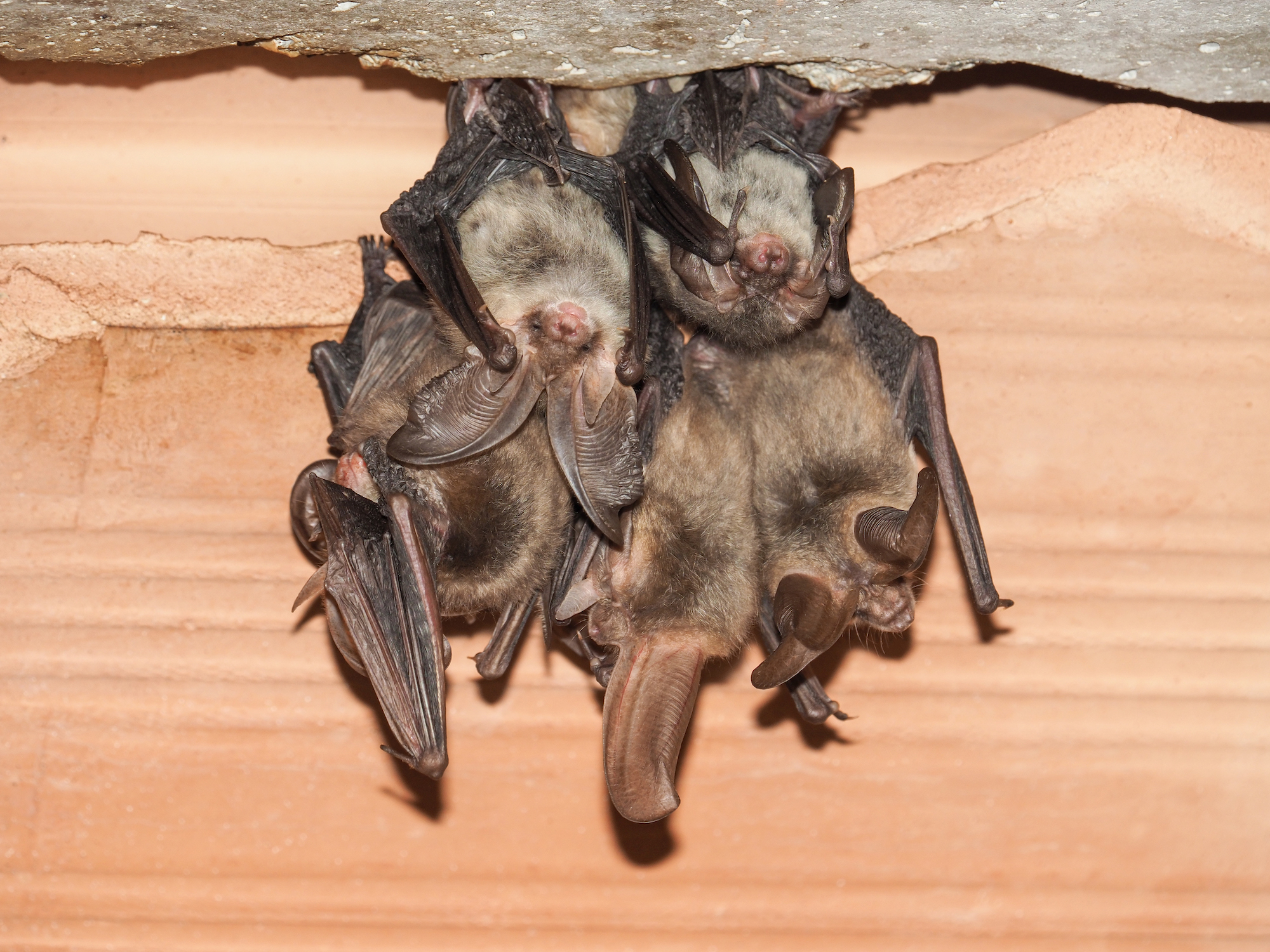
Bats naturally live in caves and hollow trees. In many areas of New Jersey, Pennsylvania, Maryland, and Delaware, human development has made bat habitats scarce, so these highly adaptable creatures often make their homes in unoccupied structures, including sheds, garages, and the rafters of homes and business buildings. Maternal colonies raise their young in attics for their warmer temperatures. Bats can enter surprisingly small areas, and their entry points can be anything from an unscreened attic vent to a crack in the siding or a hole under the eaves. If a colony of bats finds a way into your home or business for raising young, they’ll usually return every year.
The only way to effectively prevent bats from entering your home or business is to properly seal entrances. Seasonal maintenance can help you identify and eliminate entry points. Another way to learn how to keep bats away is to follow the humane bat control recommendations from the wildlife control experts at Viking Pest.
What are the Effects of Bats in and Around My Home or Business?
Bats nesting in your home or business in NJ, PA, MD, or DE can be a nuisance. For one thing, bat droppings (also known as guano) and nests can cause allergies, unsightly marks, and unpleasant odors. However, the most serious problem with a bat infestation is that bats can carry disease. Bat guano can contain airborne fungus spores that can cause histoplasmosis. While this is rare, it can become severe, causing influenza-like symptoms, pneumonia, and even death. Bats can also carry mites, fleas, and ticks.
Although bats rarely bite humans, they can, like most wild animals, carry rabies. Bat bites are often small and can even go unnoticed. Therefore, if you find signs of a bat in an area with children, sleeping individuals, or people suffering from dementia or another issue that could render them disabled, the CDC recommends that they be tested for rabies as soon as possible.
The Risks of Ignoring a Bat Problem
Although bats are typically timid and non-aggressive, they can pose real health risks if they settle inside your property.
The main health concerns with bats are:
- Rabies: Infections are rare, but rabies is a serious disease that can be transmitted through bites or scratches, and because bat bites are small, they can often go unnoticed. Rabies is also 100% fatal.
- Histoplasmosis: This is a lung infection that can develop simply from breathing air contaminated with guano (and leads to lung scarring. In extreme cases, it can cause long-term respiratory issues, flu-like symptoms, pneumonia, or even death.
- Other pests: Bats may also bring along parasites like mites, fleas, and ticks, adding another layer of concern for both homes and businesses.
How to Prevent Bats
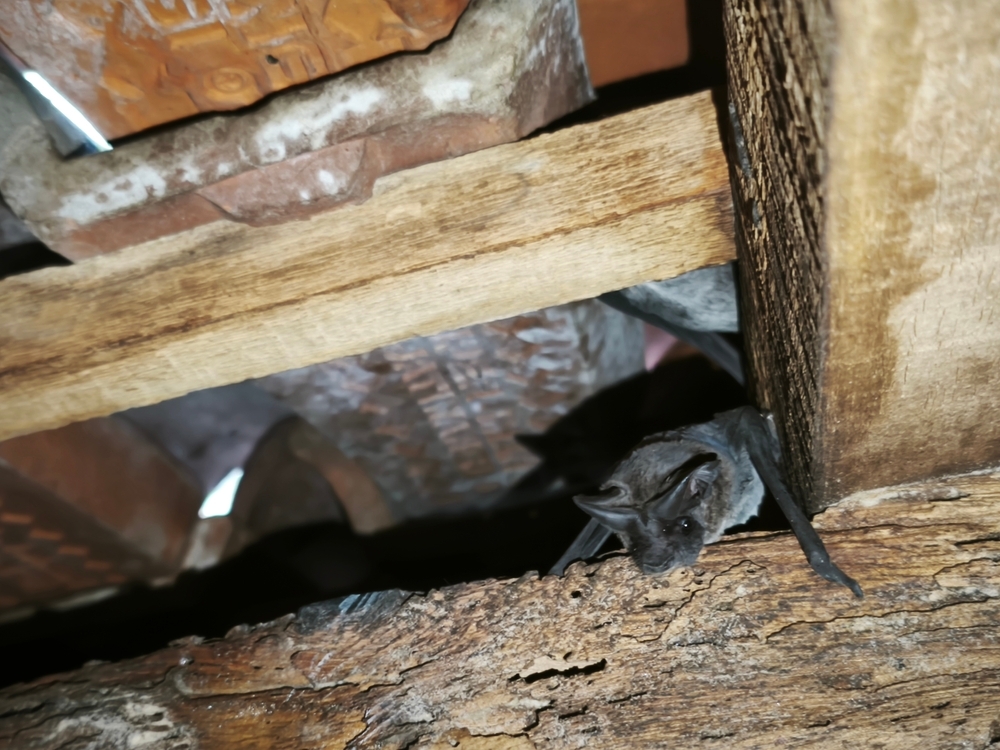
The best way to prevent bats from entering your home or place of business is to conduct regular inspections of the building to ensure there are no entry points. Viking Pest recommends checking in these spaces:
- Spaces between the walls and holes created for utility lines and airflow
- Under the eaves
- Chimney flues
- Holes and cracks in damaged siding, fascia, or soffits
Because most bat species are protected in New Jersey, Delaware, Pennsylvania, and Maryland, and are in need of careful conservation, bat pest control issues must be handled with the utmost care. Viking Pest handles bat pests using humane techniques proven effective. Drawing on expert knowledge of bat habits and behaviors, Viking installs strategic prevention measures to keep bats away.
How Professionals Safely Remove Bats
Bat protection means that expulsion must be handled carefully and humanely. The most effective method is aptly named exclusion, and it is the core of most professional bat removal services in this region.
The process of exclusion involves installing one-way devices, also known as bat valves. These allow bats to leave an area but prevent them from re-entering. Once the entire colony is locked out, all possible bat entry points are sealed to prevent future infestations and avoid needing repeat bat removal in the future.
Another exclusion method used at Viking is netting. This involves hanging mesh nets over the entry points where bats enter and exit your home. Bats can drop out and fly away safely, but they cannot reenter the structure. Netting is typically used for larger areas of concern, such as when bats are roosting in multiple areas, like under a facia board. The bat control method deployed by a technician depends on the nature of the bat infestation.
A proper bat control service will also:
- Inspect the property and its structures thoroughly
- Identify and seal even the smallest entry points
- Clean contaminated areas
- Provide recommendations for ongoing prevention
Bat Exclusion During Maternity Season
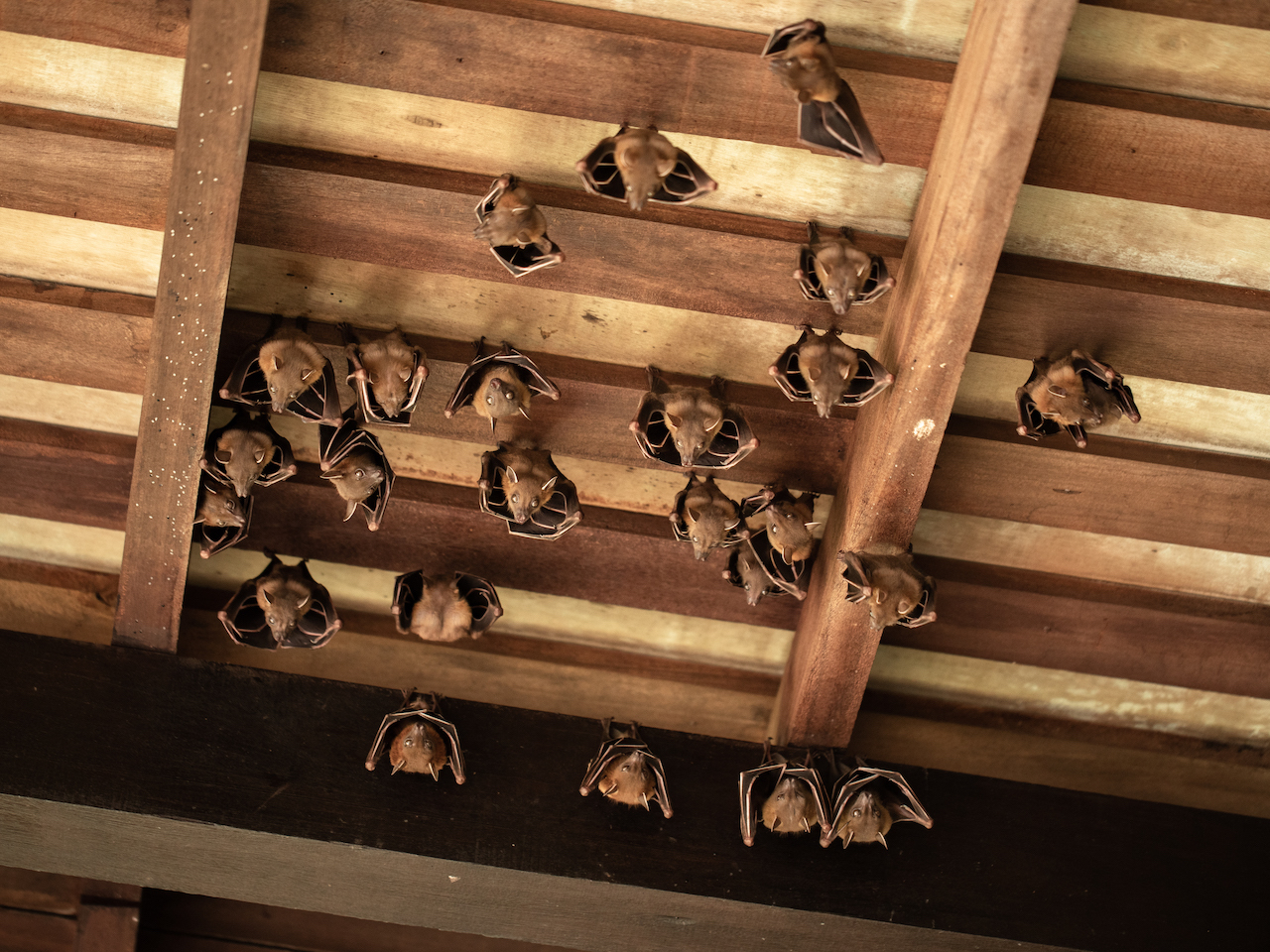
Bat exclusion can legally be performed from April 1-May 15, and from August 1-October 15, as stated by the NJ Division of Fish and Wildlife. These guidelines protect bats and people by ensuring that exclusion is carried out effectively and in ways that align with bats’ natural rhythms. Performing exclusion work outside these windows is more likely to result in bats entering your living space and/or causing illegal harm to the animals. If bats are invading your home outside of the legal exclusion window, please read below.
- Our wildlife control experts can block openings between the bats’ roost and human living areas (i.e., the space beneath the attic door, holes in ceilings or walls, etc.) at any time of year since doing so will not disturb or trap bats. This is a preventative measure to keep bats from encountering people or pets inside the home.
- For health-related concerns, residents should contact their local health department.
- You can find more info on the NJ Division of Fish and Wildlife Bat Conservation webpage and Bats in Buildings page.
Why April is an Important Month for Bat Exclusion
April is considered a safe “blackout window” for bat removal, and it is one of the few times early in the year when bat expulsion is possible before baby bats are born in the summer. Once babies are born, they cannot be removed. The separation of mothers from their young is illegal, which means colonies will remain in your home until late summer or early fall. To make matters worse, if nothing is done to expel the bats before or after their occupation on your property, they will return there each year for decades
This means that if you miss this April window, you may be stuck with a bat colony until August or even October. While the expulsion period for bats runs from April 1st to May 14th, missing the April deadline could risk your health and safety if you have a bat infestation and delay bat removal services until later in the year.
Are Bats Still Active in October?
Yes, bats can still be active in October. Many colonies remain in place through late summer and early fall, especially if they have an established roost in your attic or walls. Depending on weather and food availability, some bats may not fully migrate or enter hibernation until later in the fall, which is why a missed April window can leave you living with bats for months.

Learn More About Bats
- Why April is the Most Important Month for Bat Removal
- How to Keep Bats Away From Your Home
- Recent Rabies Cases Highlight the Importance of Bat Control in New Jersey
FAQs
Protecting Your Home or Business From Bats With Viking Pest Control
Viking Pest offers expert treatment designed to effectively and efficiently control and prevent pests from invading your home or business in New Jersey, Pennsylvania, Maryland, and Delaware. Our use of Integrated Pest Management (IPM) techniques focuses on finding the core of the pest concern and controlling Bats from the source. Through IPM, pest control materials are selected and applied in a manner that minimizes risks to human health, pets, and the environment. Call Viking today for your FREE and NO OBLIGATION estimate at 1-800-618-2847 or Schedule Online today!
Schedule Service Today & Get Unlimited Service Requests*
* Some restrictions apply
Buy Online
Customer Login