A Guide to Mid-Atlantic Wasps: Types of Wasps and What You Need to Know About Them
Warm weather in New Jersey, Pennsylvania, Delaware, and Maryland means more time spent outdoors — but it also means wasps, hornets, and yellow jackets are becoming active again. Whether you’re grilling in the backyard, gardening, or relaxing on the patio, the last thing you want is to accidentally disturb a nest of aggressive stinging insects.
Not all wasps behave the same way. Some are relatively docile and rarely sting, while others can become highly aggressive if they feel threatened. Knowing which type of wasp you’re dealing with can help you better understand the risks around your home and when it’s time to call the professionals at Viking Pest Control.
Yellow Jackets
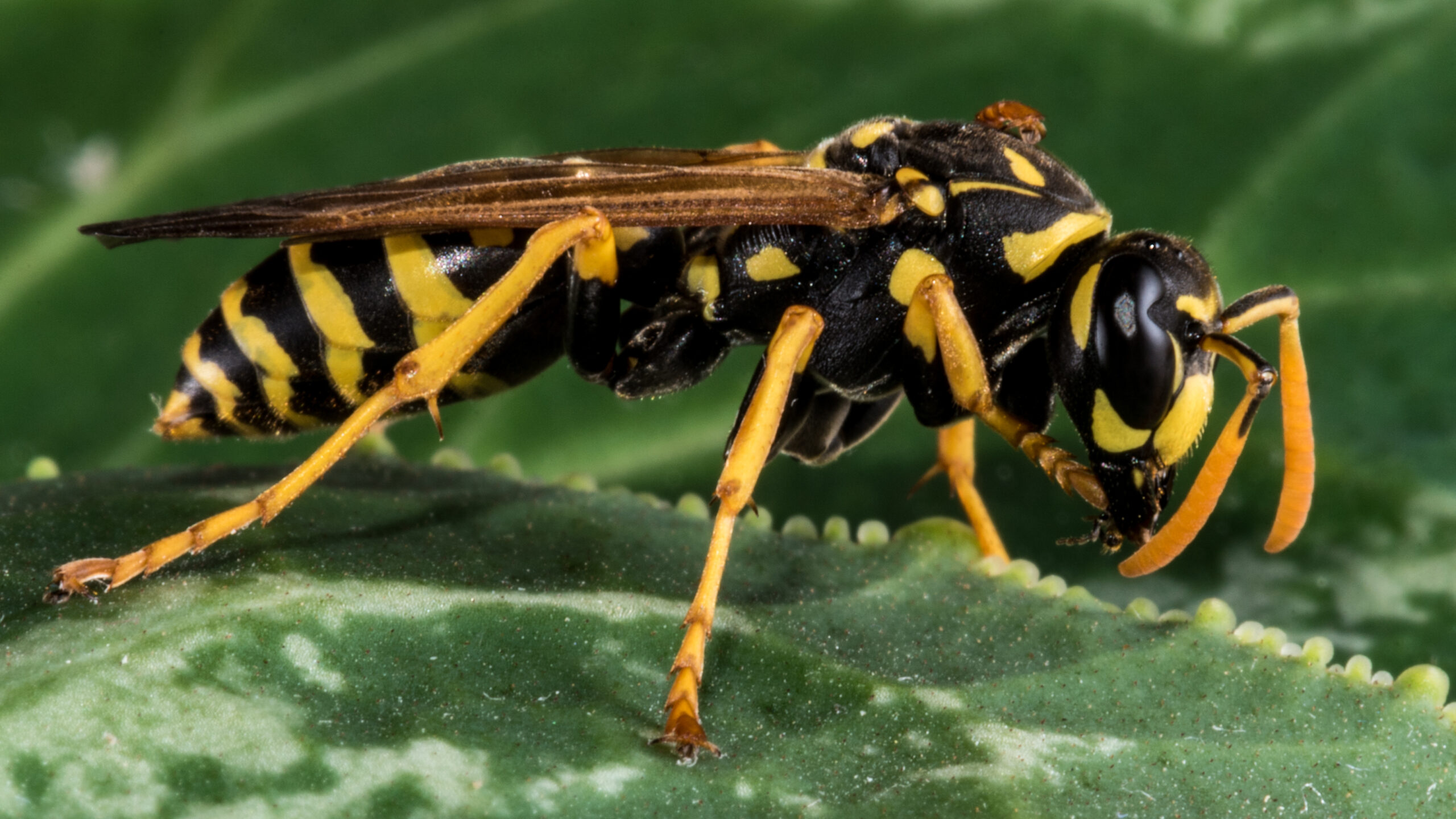
Yellow jackets are among the most aggressive stinging insects homeowners encounter. These social wasps live in large colonies and are notorious for defending their nests aggressively. They are easy to recognize by their bright yellow and black coloring and compact bodies.
Unlike bees, yellow jackets can sting multiple times and often attack in groups. Their nests are commonly found underground, inside wall voids, beneath decks, or attached to shrubs and structures around the home. During late summer and early fall, yellow jackets become especially aggressive as food sources become scarce.
If you notice yellow jackets repeatedly flying in and out of the same area of your yard, there’s a good chance a nest is nearby.
Hornets
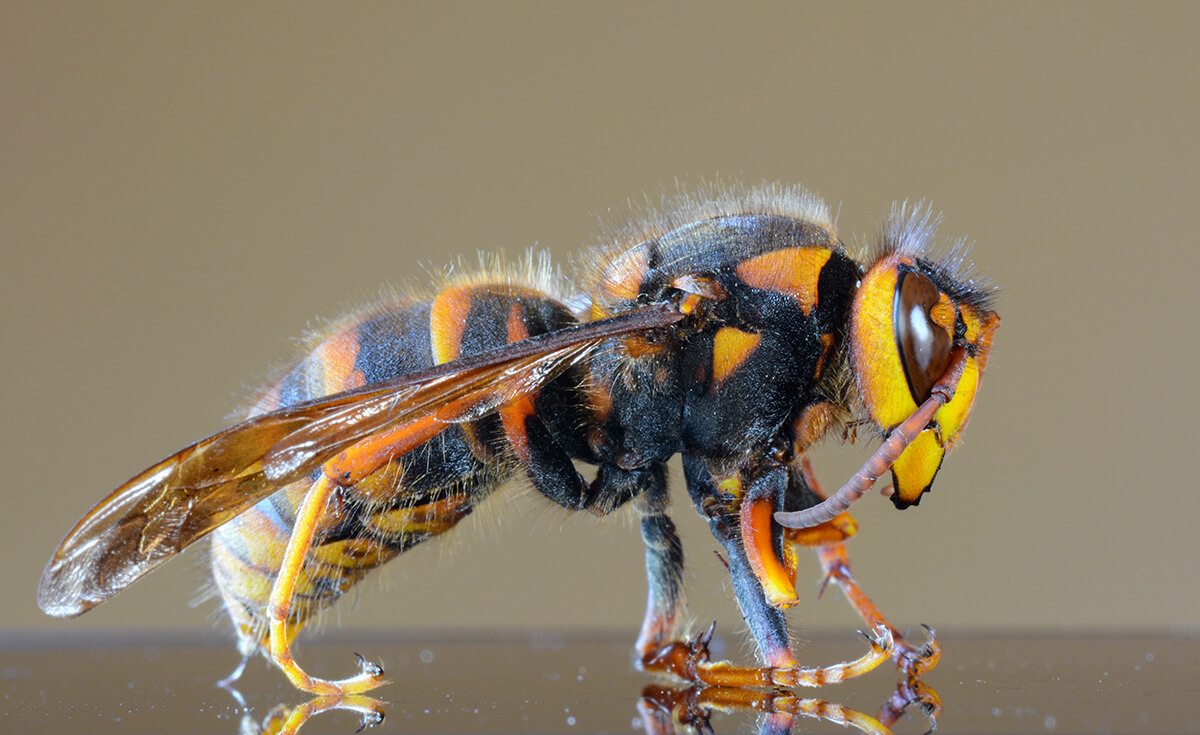
Hornets are technically a type of wasp, but they are larger and often more intimidating than yellow jackets. Most hornets in the Mid-Atlantic region build large, enclosed paper nests high in trees, under rooflines, or attached to homes and sheds.
Hornets are social insects that live in organized colonies with queens, workers, and drones. While they generally won’t sting unless provoked, disturbing a hornet nest can trigger an aggressive swarm response.
Their stings are painful and may be dangerous for anyone with allergies to stinging insects. Because hornet nests are often located high above the ground, attempting DIY removal can be especially risky.
Paper Wasps
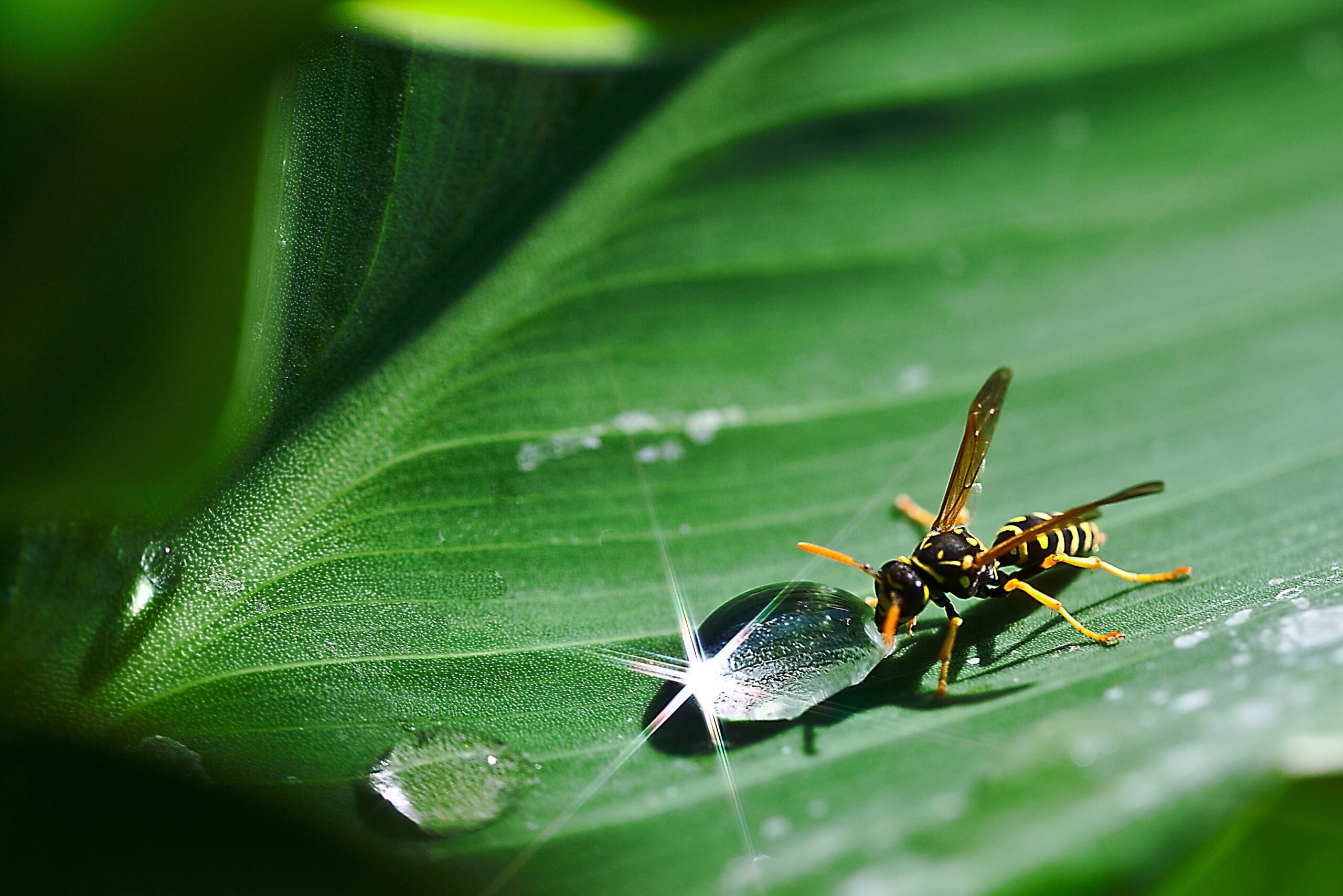
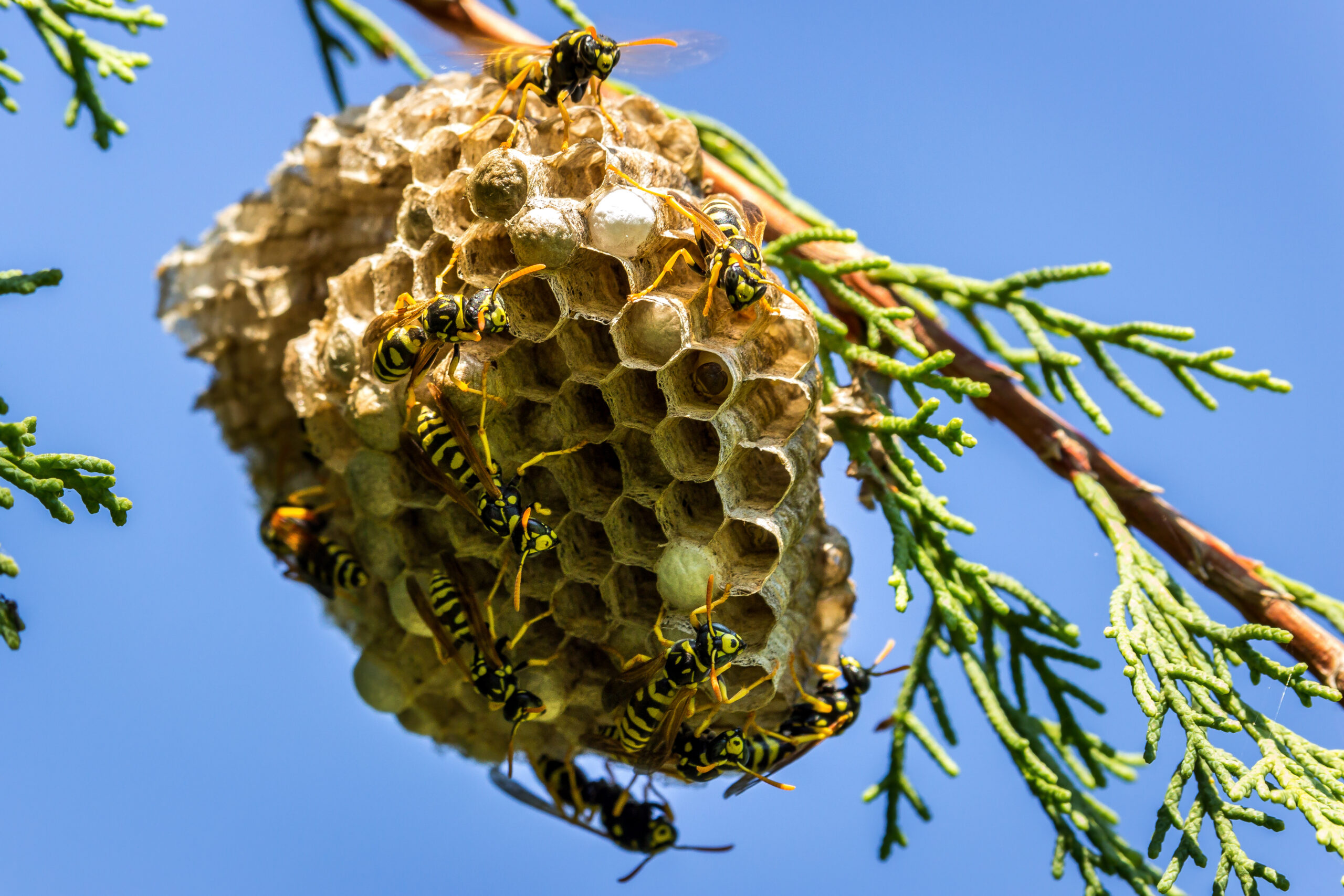
Paper wasps are slightly less aggressive than yellow jackets, but they can still sting when they feel threatened. These wasps are known for their long legs, slender waists, and brown or reddish coloring with yellow markings.
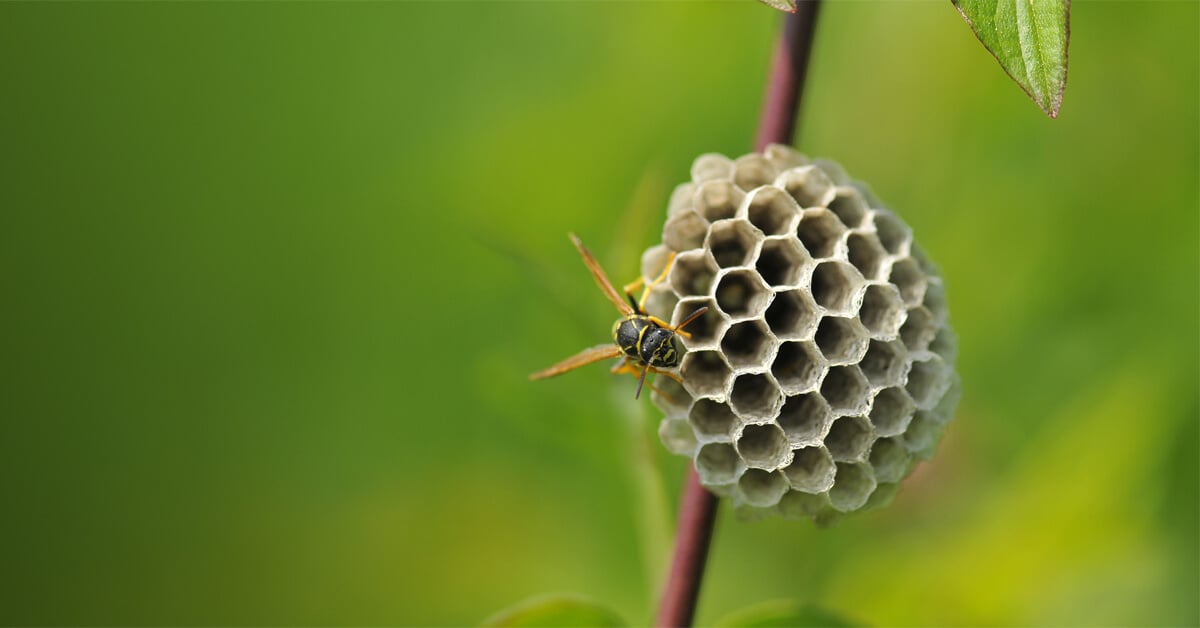
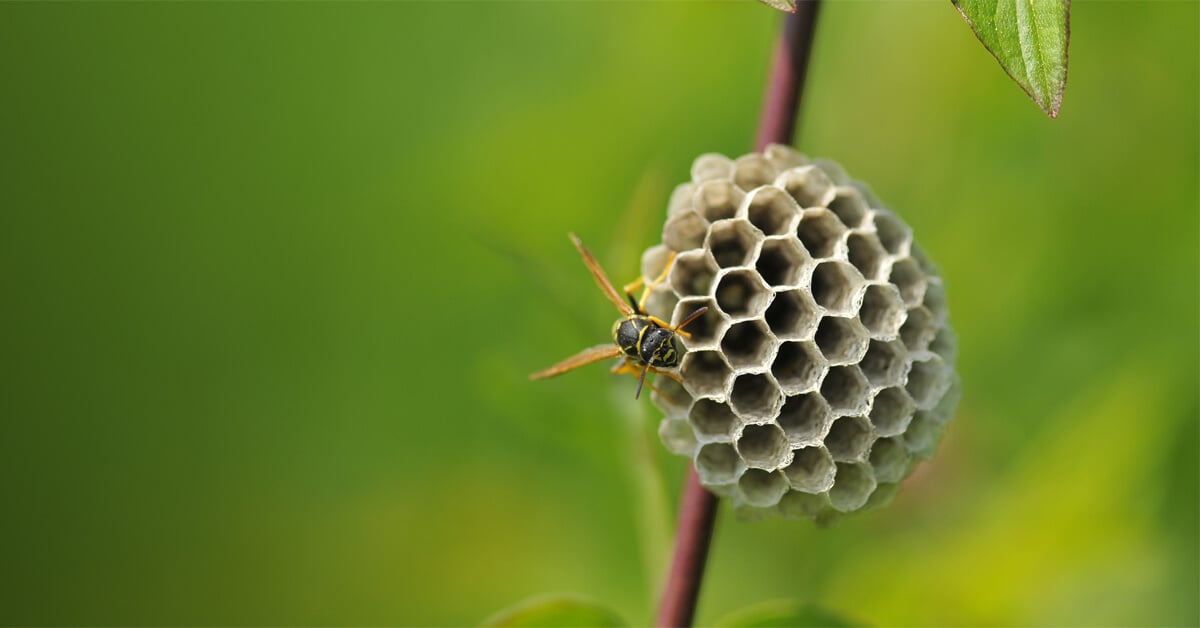
Their nests resemble upside-down umbrellas and are often found hanging beneath eaves, porch ceilings, railings, shutters, and deck structures. Paper wasps create these nests by chewing wood fibers into a paper-like material.
While paper wasps tend to be less confrontational away from the nest, they are very protective once someone gets too close to their colony.
Mud Daubers
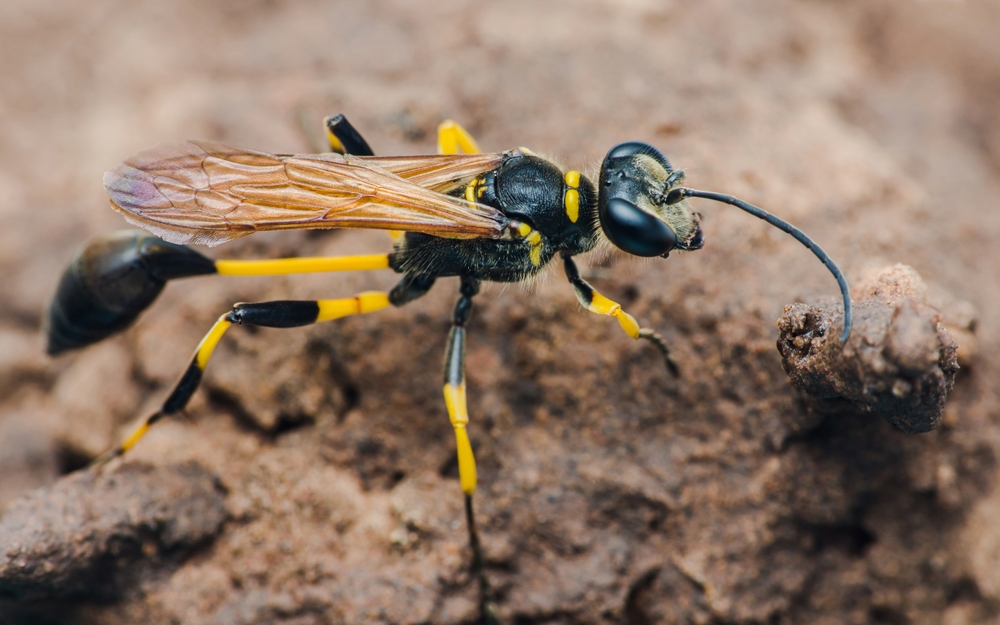
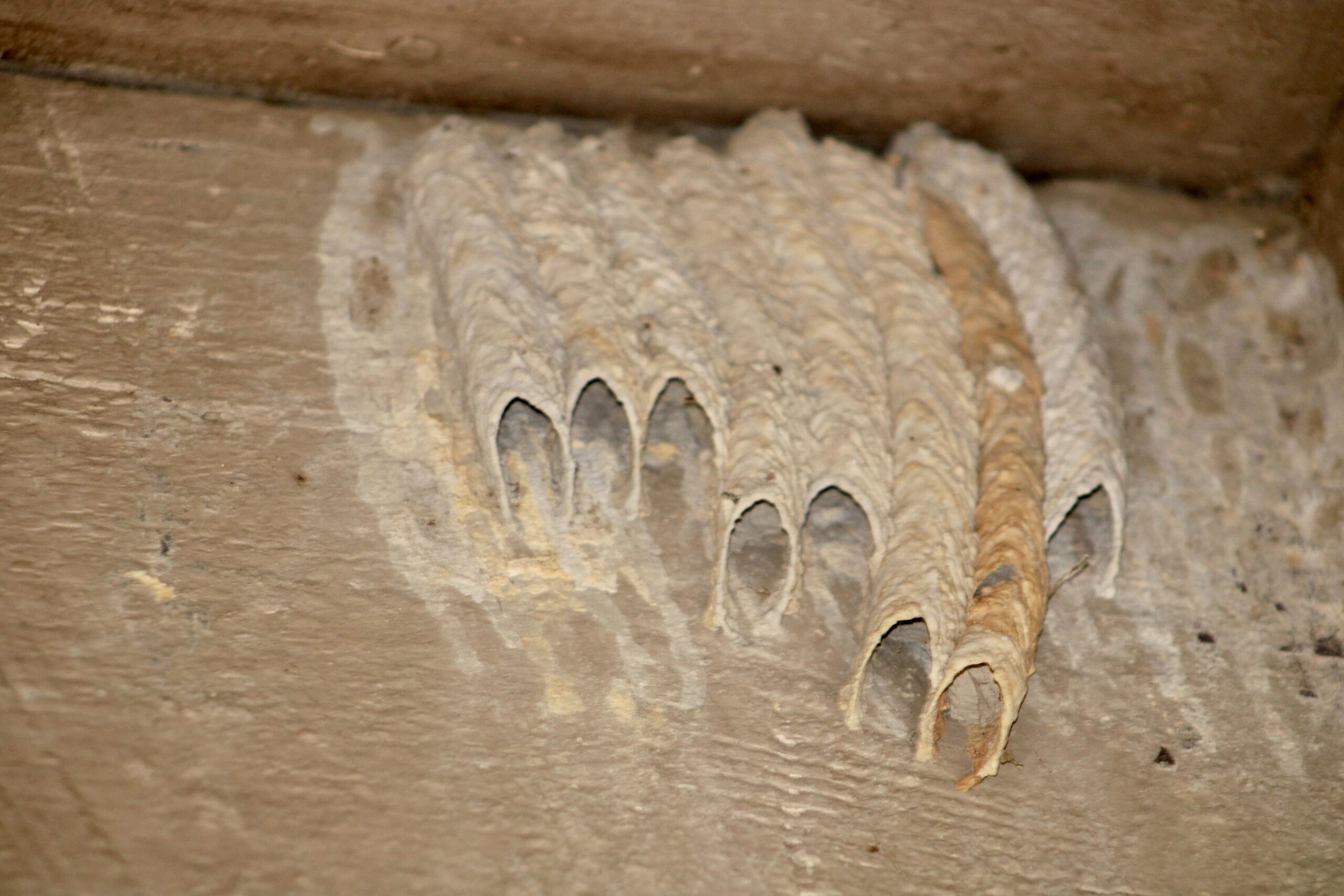
Mud daubers are one of the less aggressive wasps homeowners may encounter. These solitary wasps build small tube-shaped nests out of mud in garages, sheds, attics, under eaves, and along porch ceilings.
Mud daubers are recognizable by their long, thin bodies and metallic black or blue coloring. Unlike social wasps, they do not live in large colonies and rarely sting humans unless directly handled.
Although they are less dangerous than yellow jackets or hornets, their nests can still become a nuisance around the home.
Cicada Killers
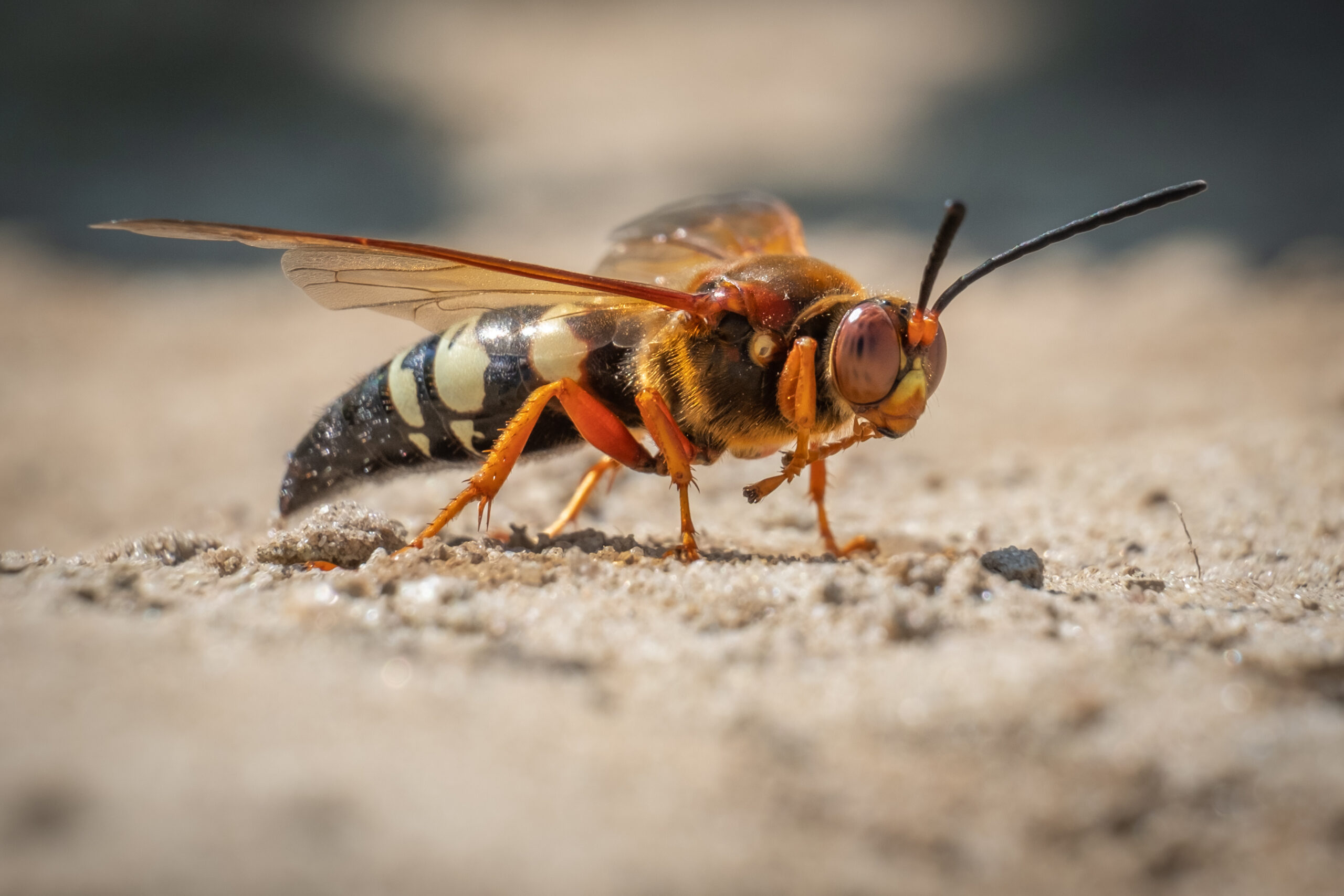
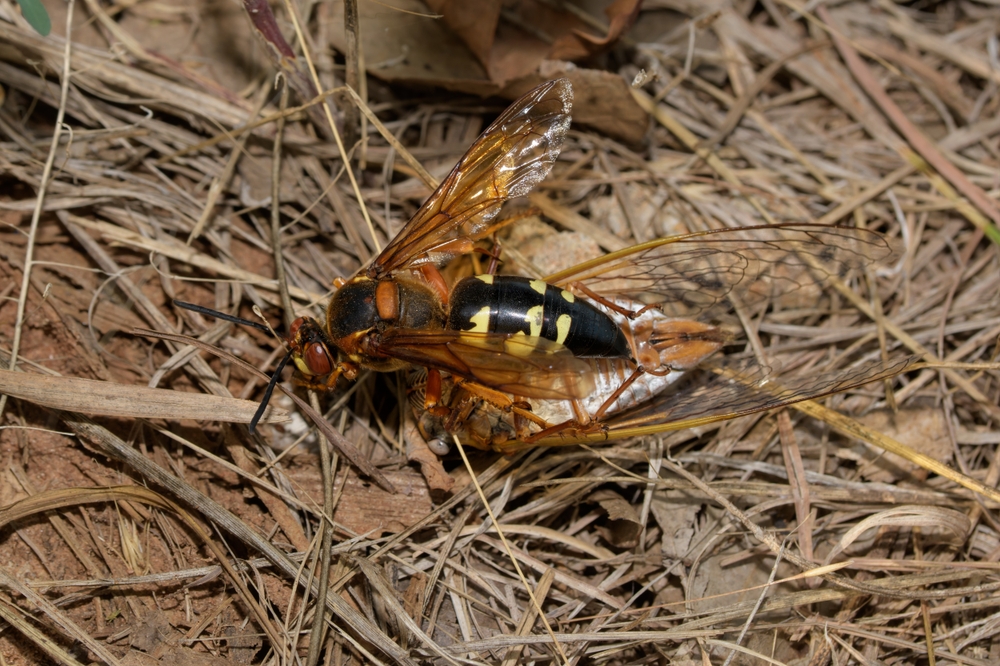
Cicada killers are large ground-nesting wasps commonly seen during the summer months. Despite their intimidating size, these wasps are generally not aggressive toward people.
Female cicada killers dig burrows in the soil and use paralyzed cicadas as food for their young. You’ll often spot them around bare patches of dirt, gardens, sidewalks, or landscaped areas.
Male cicada killers may appear territorial, but they do not have stingers. Females can sting but rarely do unless physically threatened.
Why Wasps Around Your Home Can Become Dangerous
While wasps do help control other insect populations, they become a serious concern when they nest near homes, patios, playgrounds, walkways, or outdoor gathering spaces.
Stinging insects can be especially dangerous because:
Many species can sting multiple times
Some wasps attack in swarms
Their nests are often hidden underground or inside structures
Stings can trigger severe allergic reactions
Aggressive species become more active in late summer and fall
Attempting to remove a nest yourself can quickly escalate the situation, especially with yellow jackets and hornets. DIY sprays often fail to eliminate the entire colony and may provoke surviving wasps into becoming even more aggressive.
How to Help Prevent Wasps Around Your Property
Homeowners can reduce the chances of attracting wasps by taking a few preventative measures:
Keep trash cans tightly sealed
Clean up fallen fruit and sugary spills outdoors
Avoid leaving pet food outside
Seal cracks and gaps around siding and rooflines
Fill ground holes that could become nesting sites
Trim overgrown shrubs and tree branches
Remove old nests during the winter months
Regular inspections around decks, eaves, sheds, and attics can also help catch nests before colonies grow larger.
Professional Wasp Control From Viking Pest Control
If you’ve noticed wasps flying around your property or discovered a nest near your home, it’s best not to take chances. Some species become extremely aggressive when disturbed, and removing nests without proper equipment can be dangerous.
Viking Pest Control has decades of experience helping homeowners throughout New Jersey, Pennsylvania, Delaware, and the Eastern Shore of Maryland safely eliminate wasps, hornets, yellow jackets, and other stinging insects. Our trained technicians can identify the species, locate hidden nests, and provide safe, effective treatment solutions designed to protect your family and property.
Call Viking Pest Control at 800-618-2847 to learn more about professional wasp and stinging insect control services, or get a fast, free quote online today!
How to Get Rid of a Wasp Nest Safely
Nothing ruins time outside faster than discovering a wasp nest near your home. Whether they’re hovering around your deck, nesting under your roofline, or swarming near your yard, wasps can quickly become a serious safety concern for homeowners throughout New Jersey, Pennsylvania, Delaware, and the Eastern Shore of Maryland.
Unlike bees, wasps can sting repeatedly and often become aggressive when they feel threatened. Some species, especially yellow jackets and hornets, may even attack in swarms. Because of this, removing a wasp nest is not something homeowners should take lightly.
Before attempting DIY wasp removal, it’s important to understand the risks, how to identify the type of wasp you’re dealing with, and when it’s safest to call a professional.
Why Wasps Around Your Home Are Dangerous
While wasps do help control some insect populations, they become a major problem when they build nests close to people.
Wasps can:
Sting multiple times
Become aggressive when disturbed
Swarm to defend their nest
Trigger dangerous allergic reactions
Build nests inside walls, attics, soffits, and rooflines
During late summer and early fall, wasps become even more aggressive as food sources begin to disappear. This is when many homeowners first notice large numbers of wasps around trash cans, outdoor meals, gardens, and entryways.
Common Types of Wasps and Stinging Insects
Correctly identifying the insect is important because nesting habits and aggression levels vary significantly.
Yellow Jackets
Yellow jackets are among the most aggressive stinging insects homeowners encounter. They are black and yellow, about half an inch long, and often build nests:
Underground
Inside wall voids
Under decks
In shrubs
Around structures
Their colonies can become very large and highly defensive.
Paper Wasps
Paper wasps are slightly larger with long, slender bodies and orange-tipped antennae. They create umbrella-shaped paper nests commonly found:
Under eaves
Porch ceilings
Deck railings
Tree branches
They are generally less aggressive unless their nest is disturbed.
Hornets
Hornets are larger than typical wasps and build large hanging nests made from wood pulp. Their nests are commonly found:
In trees
On utility poles
Under rooflines
Near sheds or garages
Hornets can become extremely aggressive if approached.
Mud Daubers
Mud daubers are less aggressive solitary wasps that build small mud nests on walls, garages, sheds, and ceilings. While intimidating in appearance, they rarely sting unless handled directly.
Signs You May Have a Wasp Nest
Homeowners often discover wasp problems after noticing:
Increased wasp activity around the home
Buzzing sounds in walls or attics
Wasps entering and exiting small openings
Hanging paper nests
Underground insect traffic
Wasps gathering near trash cans or outdoor food
Observing flight patterns during the daytime can often help identify where the nest is located.
Why DIY Wasp Nest Removal Can Be Dangerous
Many homeowners attempt to remove nests themselves using store-bought sprays or homemade remedies. Unfortunately, this often leads to painful stings or larger infestations.
Some of the biggest DIY risks include:
Wasps swarming during treatment
Falls from ladders while spraying nests
Wasps entering the home through wall voids
Incomplete elimination of the colony
Exposure to pesticides
Harm to pets or children
Wasps also release alarm pheromones when threatened, which signals nearby colony members to attack.
Even at night, when wasps are less active, disturbing a nest can trigger an aggressive response within seconds.
How to Help Prevent Wasps Around Your Home
While prevention cannot guarantee wasps stay away entirely, it can greatly reduce the chances of nesting near your home.
Seal Entry Points
Inspect your home for:
Cracks and gaps
Open soffits
Damaged siding
Gaps around roofing
Openings near vents and utility lines
Wasps can squeeze into surprisingly small spaces.
Eliminate Food Sources
Wasps are attracted to both proteins and sugary foods depending on the season.
To reduce attraction:
Keep trash cans sealed tightly
Clean outdoor eating areas promptly
Pick up fallen fruit
Avoid leaving pet food outside
Cover drinks during outdoor gatherings
Maintain Your Yard
Reduce nesting opportunities by:
Filling ground holes
Trimming shrubs and tree branches
Removing yard debris
Inspecting sheds and playsets regularly
Use Wasp-Repelling Plants
Certain plants may help discourage wasps near patios and entryways, including:
Citronella
Spearmint
Thyme
Eucalyptus
Wormwood
Should You Remove a Wasp Nest Yourself?
Small, easily accessible nests may sometimes be removed safely with proper protective equipment and extreme caution. However, homeowners should never attempt DIY removal if:
The nest is large
The nest is inside walls or attics
You are allergic to stings
The nest is difficult to access
The insects appear highly aggressive
Children or pets are nearby
Professional pest control technicians use specialized protective equipment, treatment methods, and safety procedures designed to eliminate wasp colonies effectively and safely.
Professional Wasp Control in NJ, PA, DE, and MD
If wasps are nesting around your home, don’t put yourself at risk trying to handle the problem alone. Viking Pest Control provides safe, professional wasp and stinging insect control throughout New Jersey, Pennsylvania, Delaware, and the Eastern Shore of Maryland.
Our trained technicians can identify the species, locate hidden nests, safely eliminate active colonies, and help prevent future infestations around your property.
Call Viking at 800-618-2847 to learn more about wasp pest control and extermination services, or get a fast, free quote online today!
Types of Wasp Nests in NJ, PA, DE & MD
Did you know that wasps can sting multiple times? In particular, it's the females who can do so.
If you have young children or you're allergic to stings, then having wasps on your property can be a real problem.
Here are 4 types of wasp nests you should look out for in NJ, PA, DE, and MD.
1. Yellowjackets
Yellowjackets are wasps that you commonly see flying about. However, their nests will be in hidden spaces, such as underground, in cupboards, and even in the empty spaces in your walls.
Their nests look like a ball that's been encased in gray bandages, with a single hole on the bottom. You won't be able to see the hexagonal cells, as the insides are completely encased.
Because they make their nests in such hidden spaces, you may not be aware of them at first. But if you notice yellowjackets coming in and out of somewhere, investigate further.
You'll probably then discover holes in the ground. This is most likely the entrances to the various nests underground.
2. Paper Wasps
Paper wasps will build what's called an umbrella nest, which is considered an exposed type of nest. You'll usually find these under branches, eaves, or rafters of your home.
You'll know it's a paper wasp nest when you look up and the nest looks like it's made of grayish paper (hence their name). You'll also be able to see the typical bee/wasp nest shapes of hexagonal cells.
Typically, these nests are very lightweight when compared to the other types of wasp nests.
3. Cicada Killers
Unlike the other wasps on this list, cicada killers don't have nests. Instead, they dig.
For this reason, there are barely any signs of a wasp nest. You'll have to look around areas with lots of sand and soil. about a foot into soil and lay their eggs there. Inside, there are different cells where the females lay their eggs in.
4. Mud Daubers
Mud daubers (or mud wasps) are aptly named so because they make their nests out of either mud or clay. You'll usually find them on the sides of buildings.
Their nests are very unique looking, as they aren't in a circular shape. Instead, they consist of what looks like mud pipes. You'll also notice individual chambers, which contain a single egg.
What makes mud dauber nests stand out against the rest is they don't have hexagonal cells.
Keep an Eye Out for These Types of Wasp Nests
Now that you know what the types of wasp nests are in NJ, PA, DE, and MD make sure you keep an eye out for them.
If you notice any of these nests on your property, then make sure you give a professional pest control company, like Viking Pest, a call. We will be able to effectively and safely remove the nest with the proper protective equipment so you're not in danger anymore.
Have you noticed a wasp nest on your property? Then schedule an appointment with us now. Our pest control experts will help you get rid of wasps quickly and effectively. Get a fast, free quote online, or call us today at 1-800-618-2847.