Are Spotted Lanternflies Back? Viking Pest Control Reports Twice as Many Calls So Far This Year Than in 2024
Spotted Lanternflies, the invasive, plant-destroying, polka-dotted pests that have prompted a statewide quarantine in New Jersey, are once again making their presence known. Viking Pest Control's spotted lanternfly call volume has doubled in 2025 compared to this same time last year. That sharp increase should raise alarms for both homeowners and agricultural experts. If you think you haven’t seen any this season, you might be surprised—they're already here, just not in the form most people recognize.
Why You Might Not Recognize Spotted Lanternfly Nymphs
Most people associate spotted lanternflies with their adult form—those striking black-and-red insects with spotted wings that swarm trees, porches, and backyard gardens in late summer and early fall. But long before they reach their eye-catching adult stage, lanternflies go through several nymph phases, which is what we are getting calls for this spring.
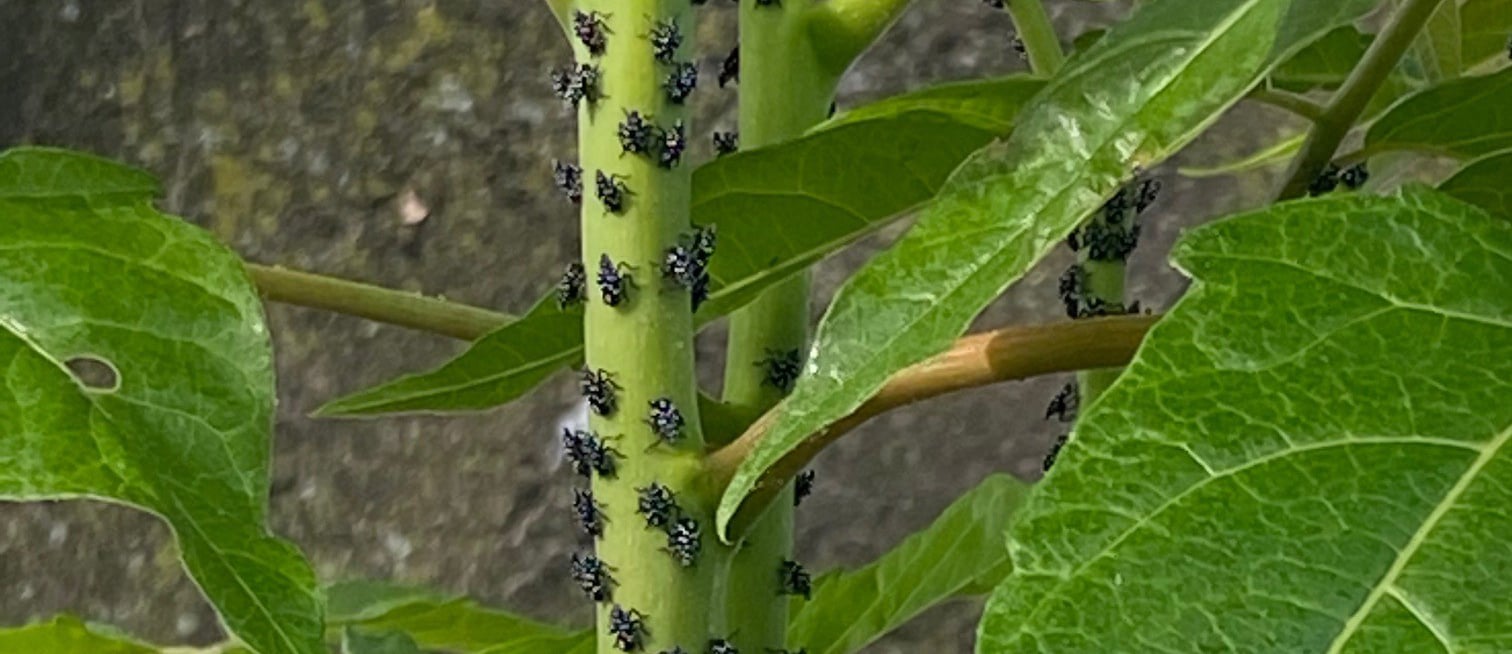
Spotted lanternfly nymphs begin their life as small, black insects with bright white polka dots and no wings. They’re often mistaken for other types of bugs or simply overlooked because of their small size. As they develop, the nymphs transition into a red and black coloration, still wingless but increasingly visible and mobile. It’s during these early stages—when most people aren’t paying close attention—that they begin feeding and causing damage.
Why It’s Critical to Stop Spotted Lanternfly Nymphs Early
While the best time to prevent lanternfly infestations is between fall and early spring—when the insects are dormant in egg masses—the current nymph stage is the next best opportunity to act. Egg masses can be scraped off trees and outdoor surfaces during the colder months, but once they’ve hatched, quick action is needed.
Nymphs, although not as destructive as adult lanternflies, still pose a risk—especially to young and vulnerable plants. They feed on the tender shoots of annuals, perennials, and garden plants, potentially stunting growth or killing off smaller vegetation. If allowed to mature, the nymphs will transform into the highly destructive adults that wreak havoc on hardwood trees, fruit trees, grapevines, and ornamental plants.
Adult lanternflies feed on plant sap using piercing mouthparts, which stresses the host plant. But the damage doesn’t stop there. As they feed, they excrete a sticky substance known as honeydew, which attracts ants and fosters the growth of sooty mold. This black fungus coats leaves and bark, blocking sunlight and further harming the plant. In vineyards, orchards, and hardwood groves, this damage can be devastating—economically and ecologically.
What You Can Do About Spotted Lanternflies Now
If you spot small, polka-dotted black or red insects hopping around your yard, garden, or trees, don’t wait—take action. Call Viking Pest Control for treatments that get spotted lanternfly nymphs under control before they can do damage to your property or spread out to do damage to trees and plants across your entire community. The earlier we respond, the better chance we have of reducing their numbers before they reach the adult stage and cause widespread damage later this year.
Spotted Lanternfly Control in Delaware
If you've experienced the destruction that the spotted lanternfly in Delaware can cause, you're not alone. This invasive species has decimated gardens, crops, and vineyards across the state and cause huge problems for residents and business owners. Whether you live on the Eastern Shore of Maryland, or own an agriculture business in Dover, it's important to understand more about these attractive but destructive pests.
In this blog, we look closer at the spotted lanternfly, the damage they can cause, and most importantly, how to avoid an infestation taking hold.
What Are Spotted Lanternflies?
The spotted lanternfly is an invasive species that damages trees, plants, and outdoor spaces. In recent years, they have rapidly spread across Delaware, threatening residential spaces, agriculture and vineyards. Lanternflies feed on a wide range of trees and plants, causing problems for residents and local businesses.
Why Are Spotted Lanternflies So Destructive?
With their vibrant red wings, intricate black spots, and delicate appearance, spotted lanternflies might seem more like a work of art than a destructive pest. But don't let their beauty fool you. These winged insects are incredibly harmful and leave a trail of destruction in their wake.
The spotted lanternfly sucks sap from plants, weakening them and making them more vulnerable to disease, the elements, and other stressors. They also excrete a sticky honeydew that promotes mold growth and attracts other pests.
How to Tell if You Have an Infestation
Early identification of a spotted lanternfly infestation is essential for minimizing the damage they can do and arranging pest control in Delaware. Here's how to tell if you have a problem with these pests:
Sightings of Spotted Lanternflies
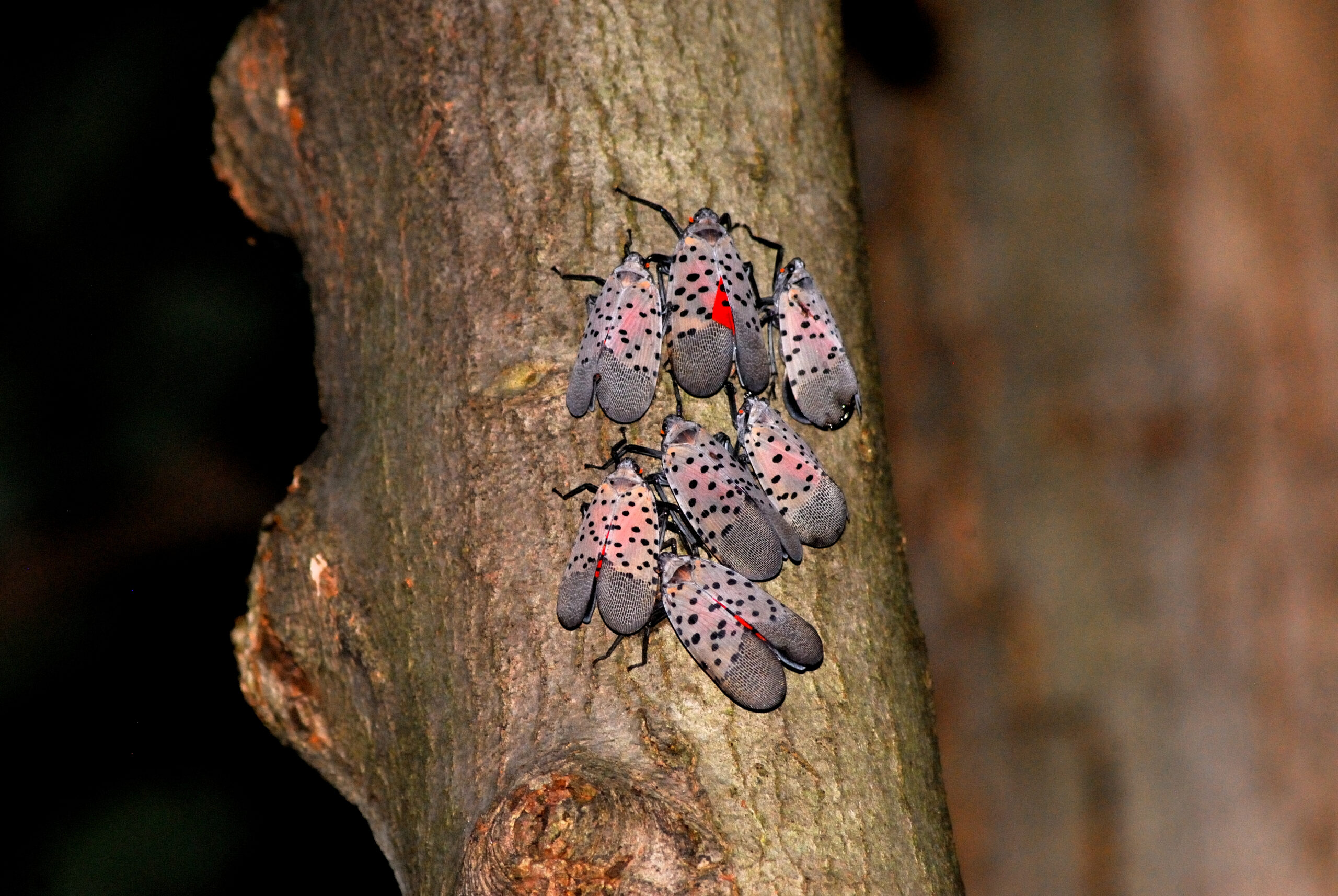
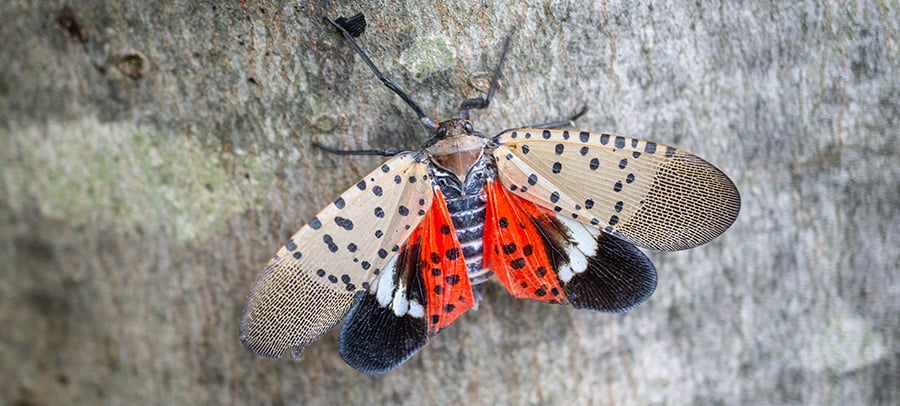
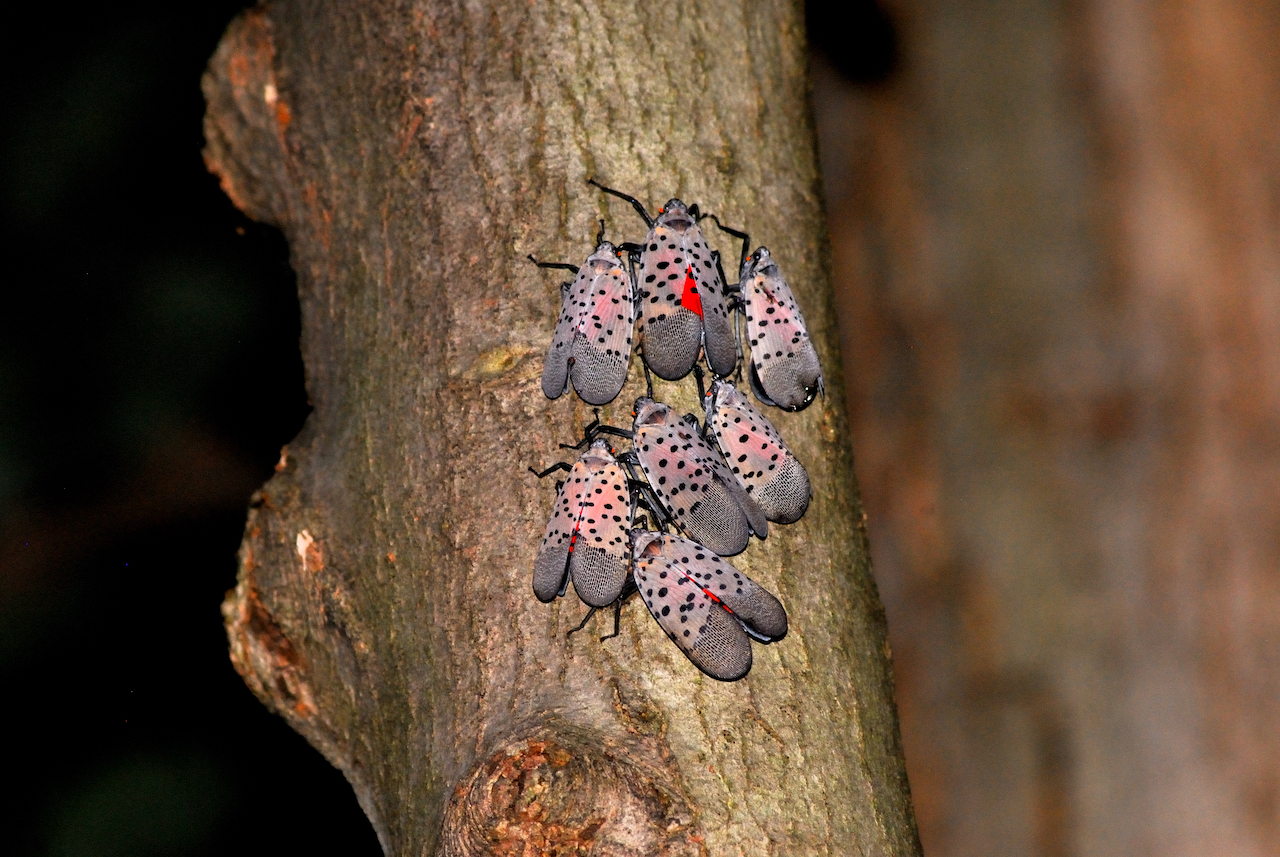
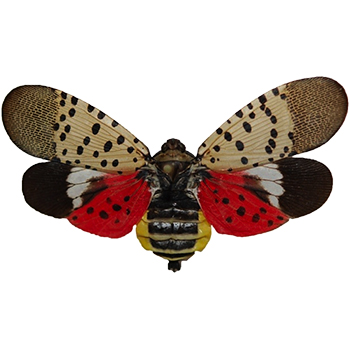
Adult lanternflies have distinctive colorful wings. The front wings are grey with black spots, and the hind wings have patches of red, black, and white. Adults are around 1 inch long.
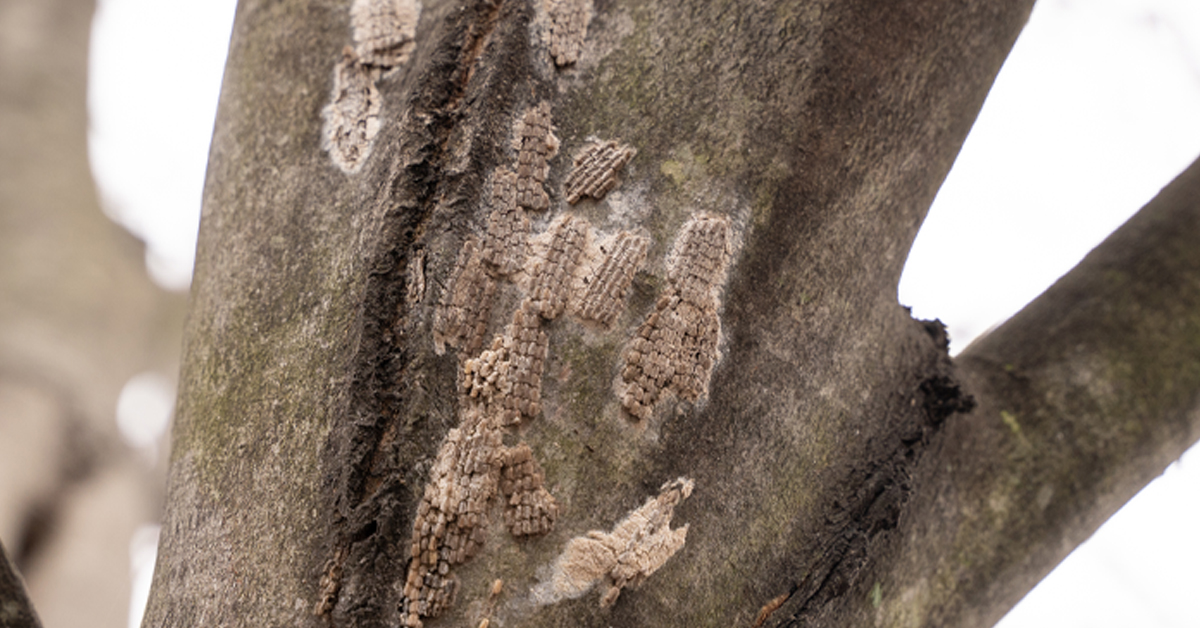
Look out for lanterfly egg masses on tres, vehicles, outdoor furniture, and other surfaces. Eggs are light grew and look like mud smears.
Plant Damage
When spotted lanternflies feed, they remove the sap from plants. Look for tilting, leaf curling, and reduced growth as these are sure signs that lanternflies are present. If your plants or outdoor surfaces have a sticky substance on them, it could be the honeydew that lanternflies secrete.
Do You Have Tree of Heaven?
Spotted lanternflies love tree of heaven (Ailanthus altissima) and may be more prevalent on your property if you have this plant growing. In fact, spotted lanternfly control in Delaware includes removing tree of heaven and applying pesticides where necessary.
How to Stop and Prevent Spotted Lanternflies
When it comes to spotted lanternfly control in Delaware, nobody does the job better than Viking Pest Control. Whether you have spotted lanternflies in your garden, vineyard, or crops, you'll want to eliminate them quickly, and we have the solution to this attractive but destructive menace.
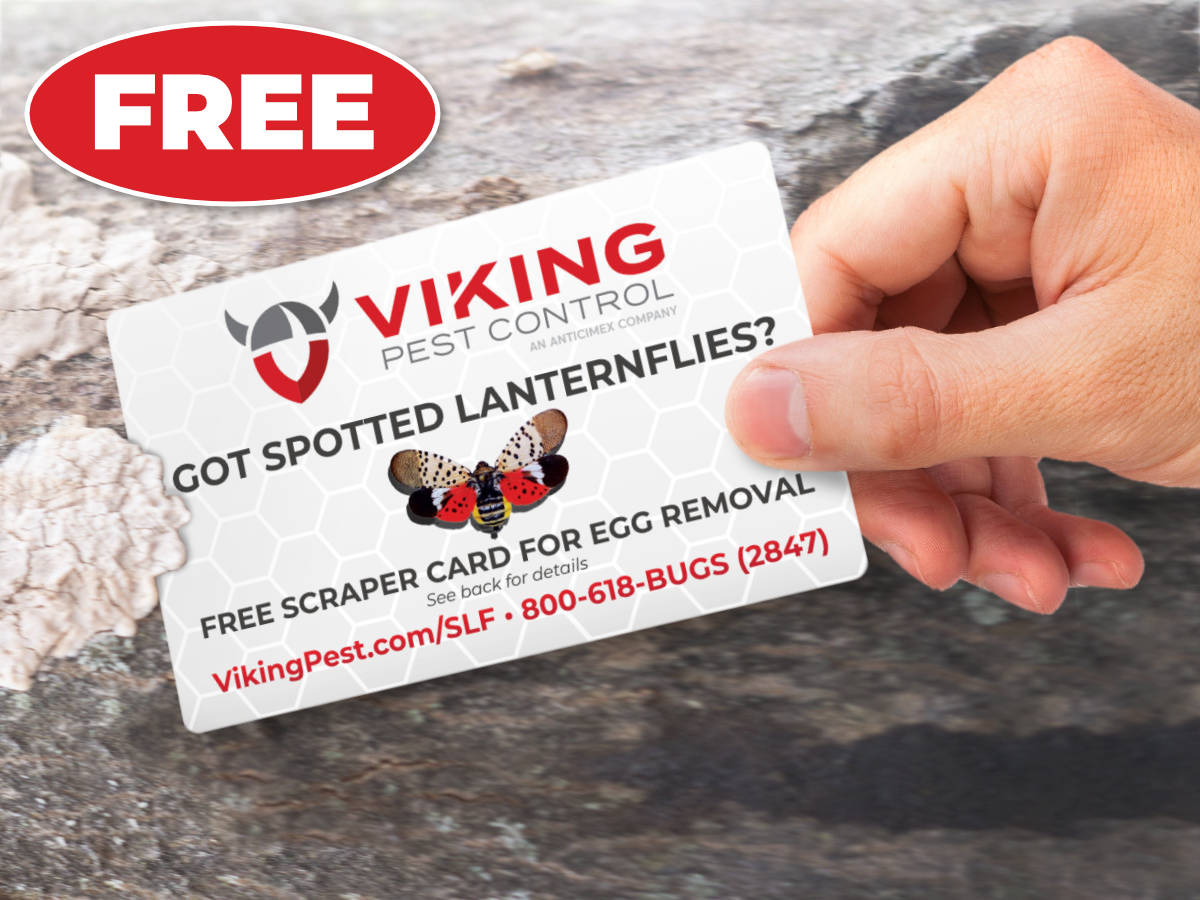
We offer comprehensive pest control treatments for this specific insect. Our complimentary spotted lanternfly egg removal cards are designed to reduce infestations before they have a chance to hatch. Lanternflies lay eggs in the hundreds and camouflage them to blend into the environment. These eggs often go unnoticed until it's too late, and the brood has hatched and started to feast on your plants, trees, and crops. By addressing the problem at its source, we help to reduce the spread of these pests and the damage they can cause.
Don't take any chances with these destructive pests. Call Viking Pest today at 800-618-2847 to eliminate your spotted lanternfly infestation.
Viking Pest Control to Collaborate with the City of Pleasantville NJ in Its Fight Against the Spotted Lanternfly
NJ-Based Pest Control Company Assists the City With its Spotted Lanternfly Problem.
Viking Pest Control takes great pleasure in its partnership with the city of Pleasantville, NJ, to assist in their spotted lanternfly management efforts.
Viking Pest Control has been contracted to treat six public spaces in Pleasantville: two parks – Lincoln Green and New Hope Commons, the JB Smith Playground, the Pleasantville Recreation Center, and two bike path segments – Decatur Avenue to 2nd Avenue, and Doughty Road to Bayview. Viking is collaborating with the city government and its Department of Public Works to combat the invasive and destructive insect species. The Department of Public Works has initiated a plant trimming initiative to ensure the safety of the park, playground, and bike path users. At the same time, Viking has commenced its treatment protocol for dealing with the spotted lanternfly. City Administrator Linda Peyton was instrumental in coordinating this effort between Viking, the Department of Public Works, and the Pleasantville government.
“We are excited to partner with Viking Pest Control, helping to combat the Spotted Lanternfly in Pleasantville,” says Judy M. Ward, Mayor of Pleasantville, NJ. “We are taking the necessary steps to help improve our beautiful public spaces and the quality of outdoor life for our residents.”
While the Spotted Lanternfly is not directly harmful to humans, they are highly detrimental to plant life and pose a significant risk to agriculture; in sufficient numbers, Spotted Lanternfly can cause significant, even fatal, damage to plant life. Spotted Lanternfly egg masses resemble patches of mud on tree bark and other surfaces and should be scraped off. They also excrete honeydew, a sweet, sticky liquid that attracts other pests, such as ants and stinging insects, as well as harmful sooty mold presenting additional risk. If a tree is heavily infested, the dropping honeydew makes it appear as if the tree is raining.
Viking’s Spotted Lanternfly treatment has been recognized by Real Simple magazine as the best in the country. Applications of this treatment are designed to help control and reduce the overpopulation of this invasive pest species while having minimal impact on beneficial plants and wildlife.
Viking Pest Control is a modern pest control company offering sustainable solutions to pest infestations. The company services a four-state area: New Jersey, Pennsylvania, Delaware, and Maryland, where it has provided reliable and effective pest control for more than 40 years.
Spotted Lanternfly Damage... And What to Do About It
In just seven years, the spotted lanternfly has spread from a small section of Pennsylvania to nine U.S. states. But would you recognize one if you saw it? What if it started damaging your home?
Spotted lanternfly damage is affecting agricultural businesses and homes alike as these bugs terrorize the Northeast United States. If you haven't heard about lanternflies yet, or are aware of the devastation this pretty little monster can wreak on plant life, it's time to educate yourself on this invasive pest. Keep reading to learn more.
What Is the Spotted Lanternfly?
The spotted lanternfly is a fairly recent invasive insect species to the US. This bug is native to China, India, and Vietnam but came to the US in 2014. An egg sack was probably carried over on a shipping container, and these multi-legged menaces have been terrorizing US trees and crops and expanding their destructive rampage across the states since their arrival.
The Spotted Lanternfly was first documented in Pennsylvania, but it can now it can also be found in New Jersey, Delaware, Maryland, New York, Connecticut, and even Virginia. Spotted lanternflies were able to spread so quickly because they will lay their eggs on almost any surface. It's very easy for people to bring lanternfly egg sacks to new locations on their cars without even realizing it.
What Is Spotted Lanternfly Damage?
All life stages of spotted lanternflies present a risk of damage to plants and crops. They pierce plant tissue with their mouths and drain them of vital fluids. The younger stages tend to damage tender plant life, while adults are able to pierce through the bark of trees during feeding.
In the US, spotted lanternflies pose a threat to economically important plant life including grapevines, blueberry bushes and apple, peach, maple, walnut, and pine trees. Many farmers have resorted to extreme methods to protect their crops against lanternflies, some of which can be damaging to pollinator bugs as well as expensive for businesses.
Even worse than the damage they do while feasting on plants is the damage they do when defecating. Lanternfly “honeydew” is a sticky substance that they secrete after eating. This goo invites other pest insects to the same tree and develops a fungus that can damage its root system.
How Do I Identify Spotted Lanternflies?
It's clear that the lanternflies need to be stopped. But if you don't know what they look like how can you stop them? It's important that everyone in the lanternfly's current area be able to identify them at all life stages. While the distinctive spotted red and white wings of the adult lanternflies are quite distinctive, their previous stages of development aren’t as easily recognized.
It's especially important to respect the spotted lanternfly quarantine. This means that you should be inspecting your car for egg masses so that you don't bring them into new territories.
Here's a helpful guide.
Eggs
Spotted lanternfly egg masses start appearing in the fall season. Lanternflies will lay their eggs on any hard surface - from cars to playground sets, trees, and patio furniture. They're very hard to spot because of their coloring, and because a lot of other things look like them.
When dry, the egg masses look like cracked mud packed onto a surface. They're about one square inch all the way around. Each mass contains up to sixty lanternflies inside. That's a lot fewer lanternflies if you can identify a mass and destroy it.
Nymphs
Lanternfly nymphs come in two stages. They start hatching in the spring, and their first stage is quite small. They look like little black beetles with white polka dot spots. They are wingless and grow to be about a quarter of an inch long.
In the midsummer, those early nymphs will go through a molting process and start to show their second stage of nymph-hood. These so-called "red-stage nymphs" are strong enough to start breaking through the bark of trees and causing damage.
The red-stage nymphs are slightly bigger averaging at about three-quarters of an inch long. They maintain their white spots but develop a striking, bright red body and black markings like stripes. They'd be quite pretty to look at if they were such a menace.
Adults
Also around midsummer, the adult lanternflies start appearing and they'll last until it starts to frost in the fall.
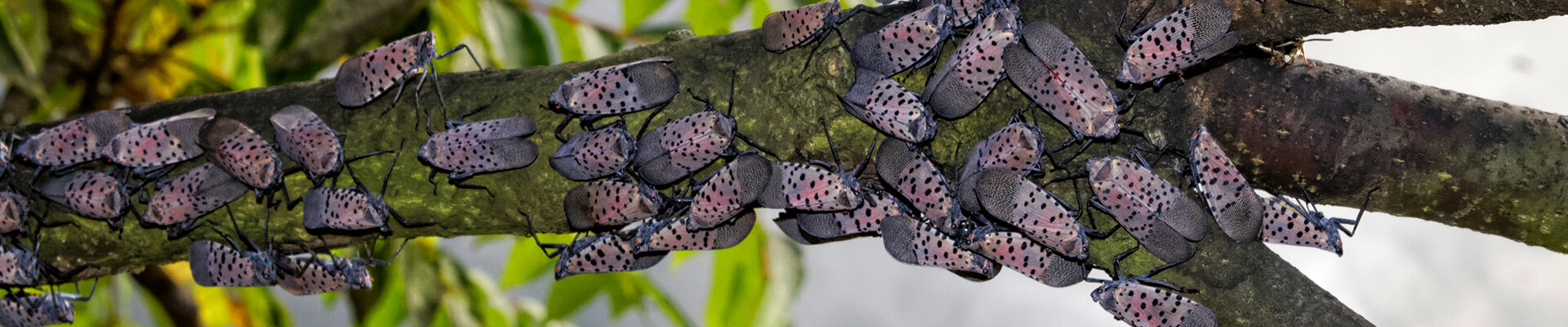
The adults are about an inch long and half an inch wide. They have a pink, tan, or brownish outer wing covered with little black spots (hence the spotted name). They look a little bit like a mix between a moth and a cicada and have quite papery wings.
The greatest indicator that you're looking at a spotted lanternfly is the bright red underwing. You won't see it unless they get disturbed and fly or jump (like a grasshopper) but then it's impossible to mistake that unique bright red color.
Spotted Lanternfly Control in NJ, PA, DE, and MD
It's up to all of us to do our part to stop the spread of the spotted lanternfly.
As mentioned before, check your car before any road trips for egg masses, especially in the Fall. Remove them and then put them in a bag filled with alcohol to be sure that all the eggs are killed. Viking offers free spotted lanternfly egg scrapers.
If you see any stage of nymphs or adult lanternflies, squash them with your foot! They're quite fragile and there's no harm in killing them one by one.
Lanternfly Infestation? Call Viking Today!
If you start seeing more and more lanternflies in your backyard and discovering that sticky honeydew on your trees, you may have a full infestation.
Don't let lanternflies continue to breed in your yard and cause damage to your valued trees and plans. Call an exterminator to take care of the problem once and for all.
We can all do our part to stop the invasion of spotted lanternflies and put an end to spotted lanternfly damage. Check your car for egg masses, kill them on sight, and call an exterminator to deal with larger infestations.
Have you noticed nymphs in your yard? Check out our service for spotted lanternfly egg removal!
How to Identify and Remove Spotted Lanternfly Eggs
Since first appearing in Pennsylvania in 2014, spotted lanternflies have spread rapidly throughout New Jersey, Delaware, Maryland, and other surrounding states. These invasive pests pose a major threat to agriculture, landscaping, vineyards, and hardwood trees.
Because spotted lanternflies reproduce quickly, identifying and removing egg masses early is one of the most effective ways to help reduce their spread.
Why Spotted Lanternflies Are a Serious Threat
Spotted lanternflies feed on plant sap using piercing mouthparts. Heavy feeding weakens plants and can lead to long-term damage or decline.
These invasive pests commonly target:
Grapevines
Fruit trees
Hardwood trees
Hops plants
Ornamental landscaping
Agricultural crops
As they feed, spotted lanternflies also produce a sticky sugary substance called honeydew, which promotes black sooty mold growth and attracts additional pests.
Large infestations can negatively impact farms, vineyards, timber operations, and commercial agriculture throughout the region.
When Do Spotted Lanternflies Lay Eggs?
Spotted lanternflies begin laying eggs during late summer and fall, typically from September through November.
Egg masses overwinter and hatch during spring, usually beginning in April or May.
Because each egg mass may contain 30–50 eggs, early removal is critical for limiting future infestations.
What Do Spotted Lanternfly Eggs Look Like?
Spotted lanternfly egg masses are commonly mistaken for patches of mud or cement.
Egg masses are typically:
Light gray or brownish-gray
About one inch long
Roughly 3/4 inch wide
Covered with a protective waxy coating
In some areas, multiple egg masses may appear close together.
Where Do Spotted Lanternflies Lay Their Eggs?
Although spotted lanternflies commonly lay eggs on trees, they also use many man-made surfaces.
Egg masses are often found on:
Tree trunks and branches
Decks
Fences
Brick structures
Outdoor furniture
Sheds
Landscaping materials
Vehicles and trailers
Because egg masses can be transported accidentally, they contribute significantly to the spread of spotted lanternflies into new areas.
How to Remove Spotted Lanternfly Eggs
Removing egg masses before they hatch is one of the best ways homeowners and property owners can help slow the spread of spotted lanternflies.
Safe Egg Removal Steps
To remove spotted lanternfly eggs:
Use a scraper, putty knife, or metal spatula to scrape the egg mass from the surface
Collect the eggs in a sealed plastic bag or container
Add rubbing alcohol or hand sanitizer to kill the eggs
Dispose of the sealed bag properly
Egg masses should be removed before spring hatching begins.
Why Early Egg Removal Matters
Spotted lanternflies reproduce rapidly, and infestations can expand quickly if egg masses are left untreated.
Removing eggs early helps:
Reduce future lanternfly populations
Protect trees and crops
Limit damage to landscaping
Slow the spread to neighboring areas
Protect farms and vineyards from large infestations
Because lanternflies have few natural predators in the United States, proactive prevention is especially important.
How Spotted Lanternflies Impact Farms and Agriculture
Spotted lanternflies can be especially destructive to commercial agricultural operations.
These pests are known to target:
Vineyards
Orchards
Timber operations
Hops farms
Decorative nurseries
Livestock feed crops such as alfalfa
Heavy infestations weaken plants by continuously draining sap and coating vegetation with honeydew and mold growth.
For some farms and commercial properties, untreated infestations can lead to significant crop loss and long-term plant damage.
Why Professional Spotted Lanternfly Treatment Is Important
DIY methods may help destroy individual egg masses, but large infestations often require professional management.
Professional spotted lanternfly treatment can help:
Reduce active populations
Protect valuable trees and crops
Prevent recurring infestations
Treat high-risk areas safely
Minimize environmental impact
Professional applications are designed to target spotted lanternflies while reducing risks to beneficial wildlife and surrounding vegetation.
Professional Spotted Lanternfly Control From Viking Pest Control
Viking Pest Control provides professional spotted lanternfly control services for residential and commercial properties throughout New Jersey, Pennsylvania, Delaware, and Maryland.
Treatment options may include:
Seasonal spotted lanternfly treatments
Tree applications
Property inspections
Population monitoring
Egg mass management
Protect Your Property From Spotted Lanternflies with Viking Pest
If you notice spotted lanternfly egg masses, nymphs, or adults around your property, early action can help reduce damage and prevent future infestations.
Learn more about Viking Pest Control and request a free estimate for spotted lanternfly treatment today.
Jersey’s Premier Exterminator Discussing Pests
Viking Pest Control: Jersey’s Premier Exterminator Discussing Spotted Lanternflies, Mice and Fall Pests
by Brittany Ann Morrisey
The fall season brings cooler weather, shorter days, and changing leaves. But it can also be the start of a home infestation as insects and rodents start to look for shelter from the cold weather.
That’s why it's important to take precautions now, says Jay Walters, Branch Manager for Viking Pest Control.
“In the fall, pests are trying to overwinter in or under the siding of your home,” he says. “By having Viking treat your home we can control these infestations from occurring.”
Viking Pest Control is a leader in preventing and treating infestations including those of ants, spotted lanternflies, termites, bed bugs, mice and rats. The company is also the first call for homeowners, in communities throughout New Jersey, Pennsylvania, Delaware and Maryland, who need wildlife control for pests such as racoons, groundhogs, opossums and more.
One pest that has newly become a problem in the Pennsylvania and New Jersey area is the spotted lanternfly, an invasive species that entered North America several years ago. Spotted lanternflies are known to damage crops, plants and trees.
“It is best to call a professional to treat spotted lanternflies because some insect repellents and other materials are hazardous to the environment if not used properly,” Walters says. “Viking uses specialized materials to treat spotted lanternflies while remaining cautious to the environment.”
Rodent infestations are another headache for homeowners. Viking utilizes the latest in pest control technology to stop mice and rats from proliferating in the home. Known as the SMART system, this technology gives the company the ability to detect rodent activity digitally whenever movement occurs. Adding the SMART system to your home is like having a professional constantly inspecting your home 525,600 minutes per year. SMART alerts mean quick reaction times and treatment from the Viking Pest team to avoid costly rodent infestations.
Although birds are often viewed affectionately, they can also be a serious threat to your property and health, too. Luckily, Viking also has a Bird Doctor division that removes and prevents pest birds from taking up residence in or near your home or commercial property.
“Pest birds such as pigeons, starlings and sparrows are responsible for millions of dollars of property damage each year,” Walters says. “Birds roost on ledges, signs, cornices, rooftops, and other man-made structures, resulting in destroyed equipment, clogged vents and reduced property value.”
Although the COVID-19 pandemic has interrupted the normal course of business for many companies, as an essential service, Viking is operating and taking precautions to ensure the safety and health of its employees and customers.
And in response to the pandemic, the company is now offering a new disinfectant and sanitation treatment. The Pro-Clean Disinfectant and Sanitation treatment combines a variety of application methods to thoroughly disinfect the inside of your home or business, keeping you safe from bacteria and viruses including coronavirus, hepatitis B and more.
Recently, Viking gifted a Pro-Clean Disinfectant and Sanitation treatment to a New Jersey firehouse as a part of its 40 for 40 initiative, which celebrates the company’s 40 years of business with 40 acts of kindness completed in 2020.
Viking team members have raised money to combat brush fires in Australia, hosted a blood drive and collected pantry items for the Food Bank Network of Somerset County.
“We believe in giving back to the community,” Walters says.
Forty years is a long time, but Viking’s commitment to using cutting-edge technology and sustainable solutions to help customers keep their properties free of pests has given the company longevity.
So make sure your property is ready for this fall season by calling Viking Pest Control before unwanted insects and nuisance wildlife threaten your health and the safety of your home.
Viking Pest Control Serving communities throughout Pennsylvania, New Jersey and Maryland (856) 539-2411 VikingPest.com
Published (and copyrighted) as a Suburban Family Magazine (August 2020) web exclusive.
How to Get Rid of Spotted Lanternflies
Spotted lanternflies have become a growing problem throughout New Jersey, Pennsylvania, Delaware, and Maryland. First discovered in Pennsylvania in 2014, these invasive pests spread quickly and now threaten trees, gardens, vineyards, and landscaping across the region.
If you’re seeing spotted lanternflies around your property, taking action early can help reduce damage and slow the spread of these destructive pests.
What Are Spotted Lanternflies?
Spotted lanternflies are invasive planthoppers originally native to parts of Asia, including China, India, and Vietnam.
Although they are commonly called “flies,” spotted lanternflies are actually hopping insects that feed on plant sap using piercing mouthparts.
They are especially harmful to:
Grapevines
Fruit trees
Maple trees
Black walnut trees
Willow trees
Birch trees
Ornamental landscaping
As populations grow, spotted lanternflies can severely weaken plants and trees by continuously feeding on them.
Why Are Spotted Lanternflies Dangerous?
Spotted lanternflies damage plants by piercing stems and trunks to extract sap. Heavy feeding can lead to:
Leaf curling
Oozing sap wounds
Wilting
Reduced plant health
Tree decline and dieback
These pests also produce a sticky sugary waste called honeydew.
Honeydew buildup can:
Promote black sooty mold growth
Attract ants and other pests
Coat decks, patios, and outdoor furniture
Create unpleasant odors and stains
Because spotted lanternflies feed on so many plant species, they pose a major threat to agriculture and landscaping throughout the Northeast and Mid-Atlantic.
DIY Spotted Lanternfly Prevention Tips
While professional treatment is often the best long-term solution, there are a few steps homeowners can take to help reduce spotted lanternfly activity.
Remove Egg Masses
One of the most effective prevention methods is destroying egg masses before they hatch.
To remove egg masses:
Scrape the eggs into a plastic bag or container
Add rubbing alcohol or hand sanitizer
Seal and dispose of the eggs properly
Removing eggs during fall, winter, and early spring can significantly reduce future populations.
Use Soap and Water Sprays
A mixture of dish soap and water may kill visible nymphs on contact.
However, these treatments only affect lanternflies directly sprayed and do not provide long-term protection.
Vacuum Large Groups of Nymphs
Shop vacuums can help remove large numbers of immature lanternflies before they develop wings.
Because lanternflies react quickly to movement, approaching from behind may improve success.
Why DIY Spotted Lanternfly Treatments Often Fall Short
Although DIY methods may temporarily reduce visible activity, they rarely eliminate infestations completely.
Improper pesticide use can also:
Harm trees and plants
Damage landscaping
Affect beneficial insects
Create environmental risks
Because spotted lanternflies spread rapidly and reproduce in large numbers, professional treatment is often necessary to effectively manage populations.
Professional Spotted Lanternfly Treatment
Professional spotted lanternfly services help target infestations while protecting surrounding vegetation and landscapes.
Depending on the property and location, treatments may include:
Tree banding
Targeted liquid applications
Seasonal knockdown treatments
Egg mass inspections
Ongoing monitoring
Viking Pest Control provides professional spotted lanternfly control services throughout New Jersey, Pennsylvania, Delaware, and Maryland.
Why Early Spotted Lanternfly Control Matters
Spotted lanternfly populations can grow rapidly if left untreated.
Early intervention helps:
Protect trees and landscaping
Reduce long-term plant damage
Minimize honeydew buildup and mold growth
Prevent future egg laying
Slow the spread to neighboring properties
Addressing infestations early is one of the most effective ways to protect your property from long-term damage.
Schedule Professional Spotted Lanternfly Control with Viking Pest
If you’re noticing spotted lanternflies, egg masses, or signs of plant damage around your property, professional treatment can help reduce populations and protect your landscape.
Learn more about Viking Pest Control and request a free estimate for spotted lanternfly treatment today.
Spotted Lanternfly FAQ: What Homeowners Need to Know
Spotted lanternflies continue to spread throughout New Jersey, Pennsylvania, Delaware, Maryland, and other parts of the Northeast and Mid-Atlantic. Since first appearing in the United States in 2014, these invasive pests have become a major threat to trees, vineyards, landscaping, and agriculture.
Although spotted lanternflies do not bite or sting humans, their large populations and destructive feeding habits can severely damage plants and trees around homes and businesses.
This spotted lanternfly FAQ answers common questions about identification, egg masses, damage, prevention, and professional control options.
What Is a Spotted Lanternfly?
The spotted lanternfly is an invasive planthopper originally native to Asia. In the United States, it has spread rapidly due to a lack of natural predators.
Spotted lanternflies feed by piercing plants and trees with straw-like mouthparts and extracting sap. Heavy feeding weakens plants and contributes to long-term damage.
These pests commonly affect:
Fruit trees
Grapevines
Maple trees
Walnut trees
Ornamental landscaping
Hardwood trees
Their preferred host plant is the invasive Tree of Heaven (Ailanthus altissima).
What Does a Spotted Lanternfly Look Like?
Spotted lanternflies change appearance throughout their life cycle.
Nymph Stage
Young spotted lanternflies begin as small black nymphs with white spots. As they mature, they develop red coloration while remaining wingless.
Nymphs are strong jumpers and are commonly seen during spring and early summer.
Adult Stage
Adult spotted lanternflies are about one inch long and feature:
Gray forewings with black spots
Bright red hindwings
Yellow abdomen with black bands
Black legs and head
Adults typically appear from late summer through fall.
What Do Spotted Lanternfly Egg Masses Look Like?
Spotted lanternfly egg masses are often mistaken for mud splatters or patches of dried cement.
Egg masses are usually:
Grayish-brown in color
About one inch long
Found on smooth surfaces
Covered with a protective coating
Common egg-laying locations include:
Tree trunks
Outdoor furniture
Decks
Fences
Sheds
Rocks
Vehicles and trailers
Each egg mass may contain approximately 30–50 eggs.
When Do Spotted Lanternflies Lay Eggs?
In the Northeast and Mid-Atlantic, spotted lanternflies typically begin laying eggs in September and continue through late fall.
Egg masses overwinter and hatch during late April, May, and early June.
What Is the Spotted Lanternfly Life Cycle?
The spotted lanternfly life cycle follows a seasonal pattern:
Eggs: October through May
Early nymphs: May through July
Red nymph stage: July through August
Adults: August through November
Egg laying: September through November
Understanding this cycle helps homeowners target prevention and removal efforts more effectively.
Do Spotted Lanternflies Bite Humans?
No. Spotted lanternflies do not bite or sting people or pets.
Although they have piercing mouthparts used to feed on plants, these mouthparts are not strong enough to penetrate human skin.
If a spotted lanternfly lands on someone, the sensation usually comes from its legs rather than a bite.
Are Spotted Lanternflies Dangerous?
Spotted lanternflies are not dangerous to humans, but they can cause serious damage to trees, plants, and agriculture.
How They Damage Plants
Spotted lanternflies feed by removing sap from plants and trees. Excessive feeding can weaken plants, cause wilting, and contribute to long-term decline.
Industries particularly affected include:
Vineyards and wineries
Orchards
Forestry
Landscaping
Honeydew and Sooty Mold
As lanternflies feed, they excrete a sugary waste substance called honeydew. This sticky residue promotes the growth of black sooty mold and attracts additional pests like ants and wasps.
Honeydew can accumulate on:
Patios
Decks
Outdoor furniture
Vehicles
Sidewalks
Do Birds, Chickens, or Spiders Eat Spotted Lanternflies?
Spotted lanternflies have very few natural predators in the United States.
Some predators occasionally observed feeding on them include:
Spiders
Praying mantises
Wheel bugs
Although some birds may sample spotted lanternflies, most do not appear to eat them consistently. Even chickens often avoid eating them.
Because natural predation is limited, spotted lanternfly populations can grow rapidly.
How Do I Kill Spotted Lanternflies?
If you see spotted lanternflies on your property, early action is important.
Destroy Egg Masses
One of the most effective ways to reduce future populations is removing egg masses before they hatch.
To remove egg masses:
Scrape eggs into a container or plastic bag
Add rubbing alcohol or hand sanitizer
Seal and dispose of the bag properly
Egg scraping is most effective during fall, winter, and early spring.
Kill Adults When Possible
Homeowners are encouraged to kill adult spotted lanternflies whenever possible by stomping or crushing them.
Because they jump quickly, approaching from the front often works best.
Use Traps Carefully
Sticky bands and tree traps may help reduce local activity, but precautions should be taken to avoid trapping birds, butterflies, and beneficial insects.
What Is a Spotted Lanternfly Quarantine?
Spotted lanternfly quarantine zones are designated areas where regulations help limit the spread of the pest.
Residents and businesses in quarantine areas are encouraged to inspect items before transport, including:
Vehicles
Outdoor equipment
Firewood
Landscaping materials
Furniture and trailers
These precautions help reduce accidental spread to unaffected areas.
Professional Spotted Lanternfly Control
Large infestations often require professional treatment to reduce populations effectively and protect landscaping.
Professional spotted lanternfly services may include:
Egg mass inspections
Targeted tree treatments
Seasonal knockdown applications
Property monitoring
Prevention strategies
Viking Pest Control provides professional spotted lanternfly control services for homes and businesses throughout New Jersey, Pennsylvania, Delaware, and Maryland.
Protect Your NJ, PA, MD, & DE Property From Spotted Lanternflies
Spotted lanternflies continue to spread throughout the region, making early detection and prevention more important than ever.
If you’re seeing spotted lanternflies or egg masses around your property, professional treatment can help minimize damage to trees, landscaping, and outdoor spaces.
Learn more about Viking Pest Control and request a free estimate for spotted lanternfly treatment today.
What You Need to Know About Spotted Lanternflies in New Jersey
Spotted lanternflies have become one of the most destructive invasive pests in the Northeast and Mid-Atlantic regions. Since first appearing in Pennsylvania in 2014, these insects have rapidly spread throughout New Jersey and neighboring states, threatening agriculture, landscaping, vineyards, orchards, and residential properties.
Although spotted lanternflies are not dangerous to humans or pets, their growing populations can severely damage trees, plants, and crops. Understanding how to identify spotted lanternflies, where they lay eggs, and how to stop infestations is essential for homeowners and businesses throughout New Jersey.
What Are Spotted Lanternflies?
Spotted lanternflies are invasive planthoppers native to parts of Asia, including China, India, and Vietnam. Despite their name, they are not true flies.
Adult spotted lanternflies are approximately one inch long and half an inch wide. Their appearance changes depending on whether their wings are open or closed.
Key identifying features include:
Gray forewings with black spots
Bright red and black hind wings visible during flight
Black legs and head
Yellow abdomen with black bands
Strong jumping ability
Because of their striking appearance, spotted lanternflies are often mistaken for moths or butterflies.
Spotted Lanternfly Life Cycle
Understanding the spotted lanternfly life cycle is important for effective control and prevention.
Egg Stage
Female spotted lanternflies lay egg masses from late September through early winter. Egg masses typically contain 30–50 eggs and are often covered with a gray, mud-like protective coating.
Eggs may be found on:
Tree bark
Outdoor furniture
Decks
Fences
Rocks
Firewood
Vehicles and trailers
Nymph Stage
Eggs hatch between late spring and early summer. Young lanternflies, called nymphs, cannot fly but are excellent jumpers and crawlers.
As they mature, nymphs pass through several growth stages before becoming adults in mid-to-late summer.
Adult Stage
Adult spotted lanternflies are most active from late summer through fall. During this stage, they feed heavily, mate, and continue spreading to new areas.
Most spotted lanternflies live for about one year.
What Do Spotted Lanternflies Eat?
Spotted lanternflies feed by piercing plants with a straw-like mouthpart called a proboscis and sucking out sap from trunks, stems, and leaves.
Their preferred host is the invasive Tree of Heaven (Ailanthus altissima), but they also feed on many other plants and trees, including:
Maple trees
Grapevines
Apple trees
Fruit trees
Ornamental plants
Hardwood trees
This feeding weakens plants and places stress on already vulnerable vegetation.
Why Are Spotted Lanternflies Dangerous?
Spotted lanternflies pose a major threat to agriculture, landscaping, and native ecosystems. Large infestations can weaken or kill plants over time, especially vineyards and orchards.
One of the biggest problems caused by spotted lanternflies is the sticky waste they produce, known as honeydew.
How Honeydew Damages Trees and Property
As lanternflies feed, they excrete excess sap in the form of honeydew. This substance can:
Promote black sooty mold growth
Attract ants, wasps, and other insects
Damage outdoor surfaces and landscaping
Create sticky residue on decks, patios, and vehicles
Heavy infestations may stunt plant growth, weaken trees, and contribute to crop loss.
Are Spotted Lanternflies Harmful to Humans or Pets?
Fortunately, spotted lanternflies are not considered dangerous to humans or animals.
They do not:
Bite or sting
Spread diseases
Damage structures like termites
Harm pets directly
However, their presence can become overwhelming during peak season, especially when large populations gather around homes, trees, and outdoor spaces.
How to Get Rid of Spotted Lanternflies
The most effective way to reduce spotted lanternfly populations is to target egg masses before they hatch.
Remove and Destroy Egg Masses
If you find egg masses on your property:
Scrape the eggs into a plastic bag or container
Fill the bag with rubbing alcohol or hand sanitizer
Seal and dispose of the bag properly
Removing egg masses during fall, winter, and early spring can significantly reduce future infestations.
Inspect Vehicles and Outdoor Items
Because spotted lanternflies often lay eggs on vehicles and movable objects, homeowners should regularly inspect:
Cars and trucks
Campers and trailers
Outdoor furniture
Firewood
Equipment and tools
This helps prevent accidental spread to new areas.
If You See It, Stomp It
Adult spotted lanternflies are quick jumpers, but many residents follow the simple rule: “If you see it, stomp it.”
Approaching from the front often improves your chances of successfully killing them before they jump away.
Professional Spotted Lanternfly Control in New Jersey
Large infestations often require professional treatment to effectively manage populations and protect trees and landscaping.
Professional pest control services can help:
Identify active infestations
Locate hidden egg masses
Apply targeted lanternfly treatments
Reduce future population growth
Protect valuable trees and plants
Homeowners can learn more about Viking Pest Control’s spotted lanternfly services for residential and commercial properties throughout New Jersey and the surrounding region.
What To Do If You Spot a Spotted Lanternfly in New Jersey
New Jersey residents are encouraged to report spotted lanternfly sightings, especially in newly affected areas.
Residents should also remain cautious when traveling between counties to avoid unintentionally transporting egg masses or live insects.
Protect Your Property From Spotted Lanternflies with Viking Pest Control
Spotted lanternflies continue to spread across New Jersey and the Mid-Atlantic, making early prevention and professional treatment more important than ever.
If you’re noticing spotted lanternflies around your home or business, Viking Pest Control can help identify problem areas and develop a customized treatment plan to protect your property.
Learn more about Viking Pest Control or schedule a free estimate today.
Spotted Lanternflies in PA: What Homeowners and Farmers Need to Know
Spotted lanternflies have become one of the most talked-about invasive pests in Pennsylvania — and for good reason. Since first being discovered in Berks County in 2014, these invasive insects have spread rapidly across the region, threatening trees, vineyards, farms, and residential landscapes. While they don’t bite or sting, spotted lanternflies can cause serious damage to plants and create major nuisance issues around homes and businesses.
Understanding what spotted lanternflies are, why they’re spreading, and how to control them can help protect your property from costly damage.
What Are Spotted Lanternflies?
Spotted lanternflies (Lycorma delicatula) are invasive planthoppers native to Southeast Asia. Adult lanternflies are about one inch long and are easily recognized by their gray wings with black spots and bright red underwings. Younger nymphs look very different, starting out black with white spots before developing red coloration later in their life cycle.
Although they may look harmless, spotted lanternflies feed by piercing plants with a straw-like mouthpart and sucking out sap. Their favorite host is the invasive tree-of-heaven, but they also attack grapevines, walnut trees, maples, fruit trees, hops, and dozens of other hardwood species.
Do Spotted Lanternflies Bite?
One of the most common questions homeowners ask is whether spotted lanternflies bite people or pets. Fortunately, the answer is no. Spotted lanternflies cannot bite or sting humans because their mouthparts are designed only for feeding on plants.
However, that doesn’t mean they’re harmless. Large infestations can stress trees and crops, weaken plants over time, and create sticky messes around your property.
Why Are Spotted Lanternflies Such a Problem in Pennsylvania?
Pennsylvania has become one of the hardest-hit states because spotted lanternflies thrive in the region’s climate and have very few natural predators here. Since their arrival, populations have exploded across residential neighborhoods, farms, vineyards, and wooded areas.
Female lanternflies lay egg masses containing 30–50 eggs at a time, often on trees, outdoor furniture, vehicles, stone, and even buildings. Those eggs survive the winter and hatch in spring, continuing the infestation cycle year after year.
Because they spread easily by hitchhiking on vehicles, firewood, pallets, and outdoor equipment, infestations can grow quickly if left untreated.
Signs of a Spotted Lanternfly Infestation
Homeowners often first notice spotted lanternflies gathering on trees, siding, decks, fences, or patios during late summer and fall. Heavy infestations may also cause:
Sticky honeydew residue on outdoor surfaces
Black sooty mold growing on trees, decks, or furniture
Increased bee and wasp activity attracted to the sugary residue
Trees that appear stressed or weakened
Large groups of lanternflies climbing tree trunks or walls
Some homeowners even describe infested trees as “raining” due to the amount of honeydew falling from above.
Can Spotted Lanternflies Kill Trees?
Researchers continue to study the long-term effects of spotted lanternfly feeding, but heavy infestations can absolutely weaken trees and plants over time. Repeated feeding removes vital sap from the plant, reducing overall health and making trees more vulnerable to drought, disease, and secondary insect damage.
For Pennsylvania farms and vineyards, the stakes are even higher. Spotted lanternflies are considered a major threat to grapevines, hops, fruit trees, hardwoods, and other agricultural crops throughout the state.
How to Get Rid of Spotted Lanternflies
Because spotted lanternflies reproduce rapidly, early treatment is critical. DIY methods may help reduce small populations, but professional treatment is often the most effective option for larger infestations.
At Viking Pest Control, spotted lanternfly management may include:
Tree banding to intercept climbing nymphs
Targeted liquid treatments for residential and commercial properties
Property inspections to identify infestation hotspots
Customized treatment plans based on your landscape and level of activity
Professional treatments are designed to reduce spotted lanternfly populations while minimizing impact on beneficial wildlife and surrounding vegetation.
Homeowners can also help reduce activity by:
Scraping and destroying egg masses
Removing tree-of-heaven where appropriate
Inspecting outdoor furniture, vehicles, and firewood
Monitoring trees during spring and summer
Protect Your Pennsylvania Property from Spotted Lanternflies
Spotted lanternflies are more than just a nuisance pest. Left untreated, they can create serious problems for homeowners, businesses, farms, and vineyards throughout Pennsylvania.
If you’re seeing spotted lanternflies around your home or property, professional treatment can help reduce populations before they spread further. Learn more about Viking’s Spotted Lanternfly Control Services, for seasonal prevention tips, or contact Viking Pest Control today to schedule an inspection.