Flying Ants or Flying Termites? How to Tell The Difference
Are those winged insects around your home termites or ants? It can be hard to tell the difference, but trust us when we say you don't want either of them invading your space.
As a leading termite and ant control company in the NJ/PA/DE/MD area, we know a thing or two about flying termites and ants, also known as "swarmers." In this blog, we'll dive into the key differences between these pesky insects and why you should be on high alert when you spot them.
Let's get this show on the road:
Termite Swarmers vs. Ant Swarmers: The Differences
Termite and ant swarmers, the winged reproductive members of their respective colonies, can look quite similar, but some key differences can help you identify which pest you're dealing with. As a pest control company serving NJ, PA, DE, and MD, we want to ensure our clients are informed and can take the necessary action to protect their homes from these destructive pests.
Here are some of the most common differences:
1. Appearance Differences
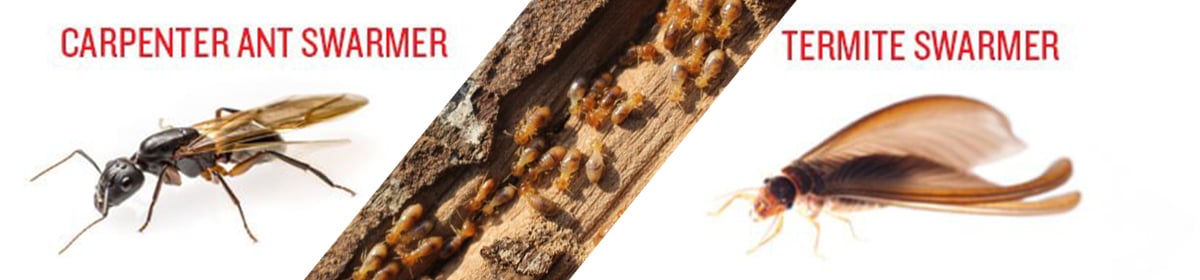
Termites have straight antennae and wide bodies without pinched waists, whereas ants' antennae are elbowed at the ends, and their abdomens narrow to a point.
Many species of both insects share similar physical characteristics: they're small (usually less than 3/8 inch long), soft-bodied, get around by walking on six legs with two other appendages used as feelers—and can be either black or brown in color.
2. Behavior Differences
Another way to tell the difference between flying ants and termite swarmers is by their behavior. Flying ants are typically more active during the day and are attracted to sweet or sugary substances.
On the other hand, termite swarmers are more active at night and are drawn to light sources. They also tend to shed their wings once they've found a place to start a colony.
3. Diet Differences
Diet also sets these two pests apart. Ants are omnivores and primarily feed on anything edible apart from wood.
Termites, on the other hand, feed on cellulose which is a nutrient-rich material found in plants. They consume mainly wood, paper, and other cellulose-based products.
4. Damage Differences
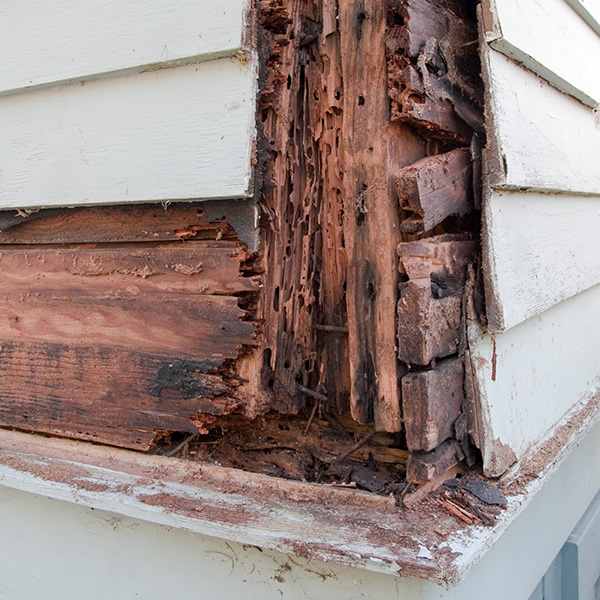
One of the biggest differences between flying ants and termite swarmers is the damage they can cause. While both insects can damage your home, termites are infamous for their ability to eat through wood and cause costly damage to the structure of your home. If you spot any signs of wood damage or hollowed-out wood, termites are likely the culprits.
Pro Tip: Keeping Your Home Safe
Acting fast is important if you suspect you have an ant or termite infestation. Both insects can quickly multiply and cause significant damage to your home. The best way to deal with the problem is by contacting a pest control professional.
They can assess the situation and recommend the best course of action, including baiting, trapping, or insecticide treatments.
Termites vs. Ants: Which is Worse?
When it comes to termites vs. ants, there's no contest. Termites are the bigger threat; you don't want them in your home. Keep an eye out for these pesky intruders, and take action if you suspect an infestation.
Here's the thing, termites are not picky eaters. They will happily munch on any cellulose-based material, including the wooden structure of your home. And the worst part? They can do it for years without you even realizing it.
In fact, termites cause more property damage than fires, floods, and storms combined.
That's why it's crucial to know the signs of a termite infestation and act fast. Look out for hollow-sounding wood, discarded wings, and mud tubes. If you suspect you have termites, don't wait to call in a professional. The longer you wait, the more damage they can do.
Hassle-Free And and Termite Control Solutions for Your Home
Regardless of which insect species is bugging you, know that winged termites and ants usually mean that there is a mature colony nearby that is ready to expand. It's important to stay vigilant regarding pest control. Don't let termites and ant swarmers take over your home. These pesky insects can cause serious damage and cost you thousands of dollars in repairs. You can protect your home and wallet by learning how to identify and deal with these pests.
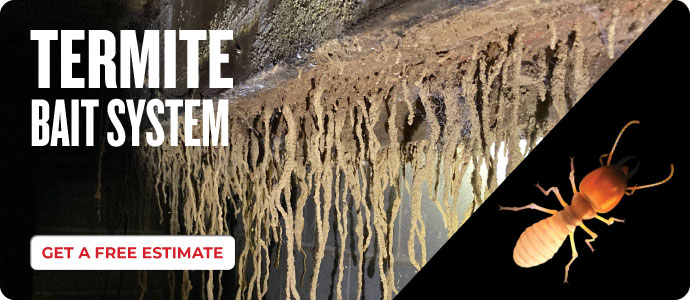
At Viking Pest, we use the latest technology and techniques to control and prevent termite and ant infestations effectively. Our termite baiting system is safe, eco-friendly, and highly effective for controlling termite populations.
We serve NJ, PA, DE, and MD, so call today at 800-618-2847 or request a free quote on our website and protect your property from these destructive pests.
Delaware's Best Pest Control
Delaware is a beautiful and exciting place to live. Its location makes it an ideal hub of business activity in the Northeastern region of the United States. As the first state, it boasts a rich history and substantial cultural significance. It has miles of shoreline and gorgeous scenery.
The state of Delaware has hot summers and cold winters, with plenty of precipitation no matter the season. However, Delaware's climate along with its diverse natural features that include everything from beaches to mountains to rivers to picturesque countryside make it a prime location for pest activity.
Delaware Pest Problems
Insects and rodents remain active year-round in Delaware. The hot and humid summers lead to big increases in populations. Once colder weather sets in, these pests begin to look for shelter and alternative food sources. Unfortunately for Delaware residents and business owners, this typically means that they attempt to find a way inside your property.
An infestation of pests is more than annoying. Their presence can cause a number of health and safety concerns, along with the risk of property damage. Thankfully, Viking Pest Control is here to help. If you notice any signs of pests in your home or business, contact the best exterminator in Delaware.
Viking Pest Control Services
Viking provides a full range of local pest control services for homes and businesses. Some of our most popular treatments and service plans include:
Home protection plans
Mosquito and tick control
Overwintering pest plans
SMART rodent control
Termite bait systems
Spotted Lanternfly treatments
We use the newest technology to create customized pest control solutions that address your needs. Whether you need help eliminating a current infestation or want to explore options for pest prevention, we can help. Our treatments are safe, sustainable, and adapted to target the pests specific to Delaware so you get excellent results.
Award-Winning Pest Control
Viking Pest Control has gained a reputation for delivering effective and efficient pest control services throughout its 40 years of business, winning multiple awards for sustainable pest control services from popular publications like Forbes Home, The Spruce, and Houzz.
For the second year, Forbes Home magazine honored Viking with three noteworthy achievements, naming it as one of the Top 10 Pest Control Companies in the Country, the Top 5 Mosquito Control Companies, and the Best Termite Control Company in the country. Viking was named the Best Pest Control Company for Sustainability by The Spruce for the third year in a row and was selected Best of Houzz by the Houzz homeowners community.
Viking works hard to deliver effective results for every customer, which shows clearly in its national and local recognition. This impressive feat solidifies Viking as one of the best pest control companies in Delaware.
Get the Best Pest Control in Delaware
At Viking, we take the stress out of keeping your home or business safe from pests. We provide customizable, superior services at affordable prices. Our solutions are designed for your unique situation, to provide a healthy environment free from bothersome pests.
Visit Viking Pest Control today for a free estimate or call 800-618-2847 and start working with the best pest control professionals to protect your property.
Viking Pest Control Wins National and Local Recognition
Viking Pest Control wins Awards for Pest Control, and Sustainability Excellence from Publications including Forbes, The Spruce, and Houzz
BASKING RIDGE, NJ, UNITED STATES, March 20, 2023 /EINPresswire.com/ -- Viking Pest Control received recognition from numerous organizations and publications at the beginning of 2023. Groups that have honored Viking include Forbes Home, The Spruce, Houzz.com, and NJ.com. Viking received three honors from Forbes Home magazine, including Top 10 Pest Control Companies in the Country, Top 5 Mosquito Control Companies, and Best Termite Control Company in the country. 2023 is the second consecutive year Viking has received these honors. The Spruce recognized Viking as the Best Pest Control Company for Sustainability, this is the third consecutive year Viking has received such recognition. NJ.com recognized Viking as one of the Best Workplaces in New Jersey, also for the third consecutive year. Houzz.com named Viking “Best of Houzz” for pest control, as selected by the homeowners in the Houzz community.
“Viking works hard to provide best-in-class results for all of our residential and commercial customers,” said Eric Gunner, Viking Pest Professional. “We are happy that our hard work to provide top-quality sustainable pest control has been recognized and that both our employees and customers appreciate our efforts. We are also pleased to see the thousands of five-star reviews from the customers we serve online.”
Viking Pest Control provides year-round pest control solutions to homes, businesses and municipalities in New Jersey, Pennsylvania, Delaware, and the Eastern Shore of Maryland. The company’s offerings include Anticimex SMART Rodent Control, the Forbes recognized Yard Guard Mosquito and Tick treatments, and Trelona termite bait stations. Customers can call Viking at (800)618-2847 for a free estimate or can learn more at Vikingpest.com.
What Does Termite Damage Look Like? Signs of Termites and How to Protect Your Home
Termites may be small, but the damage they cause can be enormous. Every year, termites are responsible for billions of dollars in property damage across the United States, silently feeding on the wooden structures that support homes and businesses. Unfortunately, many homeowners don’t realize they have a termite problem until significant damage has already occurred.
Subterranean termites — the most destructive termite species in New Jersey, Pennsylvania, Delaware, and Maryland — work quietly behind walls, beneath floors, and inside structural wood. Knowing the warning signs of termite activity can help you catch an infestation early and prevent costly repairs.
Common Signs of Termite Damage
Because termites usually remain hidden inside wood or underground, they can be difficult to detect. However, there are several warning signs homeowners should watch for.
Sagging or Warped Floors and Ceilings
As termites feed on wooden support structures, they weaken the integrity of your home. Over time, this can cause floors to sag, ceilings to warp, or doors and windows to become difficult to open and close properly.
Hollow-Sounding Wood
Termites eat wood from the inside out. If you tap on walls, flooring, or wooden furniture and hear a hollow sound, termite damage may already be present beneath the surface.
Mud Tubes Around the Home
Subterranean termites build mud tubes to travel safely between their colony and food sources while protecting themselves from predators and dry air. These pencil-sized tunnels are commonly found:
Along foundations
Near pipes
In crawl spaces
Around framing
Inside basements or attics
Mud tubes are one of the clearest signs of active termite activity.
Discarded Wings
During termite swarm season, reproductive termites leave their colony to establish new nests. After swarming, they shed their wings. Small piles of discarded wings near windowsills, doors, or light fixtures can indicate a nearby infestation.
Frass or Termite Droppings
Some termite species leave behind droppings that resemble tiny wood-colored pellets or sawdust. If you notice these materials accumulating near wood structures, termites may be feeding nearby.
Where to Look for Termite Damage
Termite infestations often go unnoticed because the damage happens behind walls or beneath surfaces. Regular inspections of vulnerable areas can help uncover problems earlier.
Areas to Inspect for Termites
Be sure to examine:
Interior walls and wooden trim
Basements and crawl spaces
Attics
Wooden decks and porches
Fence posts
Wood piles
Areas where wood touches soil
Moist or water-damaged areas
Subterranean termites are especially attracted to moisture and wood-to-soil contact.
Why Subterranean Termites Are So Destructive
Subterranean termites are the most common and destructive termites in the Mid-Atlantic region. Unlike some pests that remain visible, subterranean termites live underground and tunnel into homes from below.
Once inside, they can feed continuously for years without detection.
How Subterranean Termites Spread
These termites build underground colonies and travel through mud tubes to access food sources. When they find wood, worker termites begin feeding and recruiting other termites to the area.
One reason subterranean termites are so dangerous is because they share food through a process called trophallaxis. During this process, termites transfer food — and termite treatment materials — throughout the colony, including to the queen.
Without professional intervention, a colony can continue growing and expanding its damage over time.
Can You Hear Termites?
Most homeowners never hear termites at all.
Unlike rodents or larger pests, termites work almost silently inside walls, floors, and support beams. By the time visible damage appears, the infestation may already be extensive.
This is why preventative termite monitoring and early detection systems are so important.
How to Prevent Termite Damage
Preventing termites starts with reducing conditions that attract them and investing in proactive termite protection.
Reduce Moisture Around Your Home
Termites thrive in damp environments. To make your property less attractive:
Repair leaking pipes and faucets
Improve drainage around the foundation
Use dehumidifiers in damp crawl spaces or basements
Clean gutters regularly
Eliminate Wood-to-Soil Contact
Avoid direct contact between soil and wood whenever possible. Wooden siding, deck posts, and supports should remain elevated above soil level.
Remove Wood Debris
Clear away:
Firewood piles
Tree stumps
Mulch buildup
Scrap lumber
Dead branches
These materials can attract termites to your property.
Schedule Regular Termite Inspections
Professional termite inspections are one of the best ways to identify activity before major structural damage occurs. Trained technicians know where termites hide and can detect subtle warning signs homeowners often miss.
Professional Termite Treatment Options
If termites are discovered, professional treatment is critical for eliminating the colony and preventing future infestations.
Termite Bait Stations
Bait stations are placed in the ground around your property where subterranean termites forage. Workers carry the bait back to the colony, spreading the treatment to other termites and eventually eliminating the colony at its source.
Liquid Termite Barrier Treatments
Liquid perimeter treatments create a protective barrier around your home. As termites pass through treated soil, they transfer the product throughout the colony.
These treatments help stop termite activity before it reaches your home’s structure.
What to Do if You Suspect Termites
If you notice signs of termite damage, don’t wait. Early treatment can significantly reduce repair costs and prevent further structural damage.
Steps to Take Immediately
Schedule a professional termite inspection
Avoid disturbing visible termite activity
Address moisture issues around the home
Remove wood debris and vegetation near the foundation
Discuss preventative treatment options with a licensed pest professional
Protect Your Home with Viking Pest Control
Termites are stealthy pests capable of causing severe structural damage before homeowners even realize they’re there. The good news is that early detection and professional termite protection can help safeguard your property.
Viking Pest Control provides termite inspections, termite bait stations, and advanced termite treatment solutions for homeowners throughout New Jersey, Pennsylvania, Delaware, and Maryland. Our experienced team can identify termite activity, eliminate active infestations, and help protect your home from future damage.
If you suspect termite activity or want proactive termite protection, contact Viking Pest Control today for a free termite inspection and estimate.
Viking Pest Control Voted Top Workplace for Third Consecutive Year
BASKING RIDGE, NJ, February 21, 2023 – Viking Pest Control is proud to have been voted “Top Workplace” and achieved The Top Workplace award in New Jersey by NJ.com for the third consecutive year.
Our team was again honored to be receive the Top Workplace award for 2023. The recognition is based solely on employee feedback gathered anonymously and administered by a third party, Energage, LLC. The confidential survey uniquely measures 15 culture drivers that are critical to the success of any organization.
This award is granted to companies that create a culture where employees feel engaged, appreciated, and fulfilled. Paul Bergmann, President of Viking Pest Control, said, “Earning a Top Workplace Award is a badge of honor since it comes from our employees, and we are honored they voted this way. We are proud to share this award with our team and our customers.”
What sets Viking Pest Control apart from other companies when it comes to a career choice?
A working environment that values meaningful work, open-minded and supportive managers, and clued-in employees providing transformative solutions for customers.
Enforced background checks for all employees and a drug-free working environment to ensure a safe space for all team members.
Competitive compensation with numerous benefits, including paid vacation time, health coverage, and more.
A healthy work atmosphere with opportunities to learn about and adopt new technology and meet new challenges.
Diversity – employees feel accepted and valued at Viking Pest Control, regardless of gender or ethnicity.
Viking Pest Control has over 40 years of experience in the pest control industry, continually delivering customer service that exceeds industry norms.
President of Viking Pest Control, Paul Bergmann, says, “Creating an environment where everyone feels respected, valued, and empowered to contribute is at the heart of our culture. Viking believes a diverse team leads to different individual characteristics and perspectives, integral to company growth. As a result, our employees feel accepted and valued at Viking Pest, which, along with customer satisfaction, is our ultimate success.”
Look no further if you are searching for a job in New Jersey, Pennsylvania, Delaware, or The Eastern Shore of Maryland at a reputable company. Viking team members enjoy extensive training, competitive benefits, and a friendly and supportive work environment. Check out our job openings to learn what positions are currently hiring. Find out what it means to work at one of the Top Places to Work!
The company creates effective and efficient pest management solutions for residents and business owners in New Jersey, Delaware, Pennsylvania, and Maryland. The company is a QualityPro member, meaning that its customers are sure to receive professional pest management solutions performed by certified and qualified individuals. Viking’s employees are held to high standards. Viking is proud also to have been named Forbes Advisor one of the 10 Best Pest Control Companies for 2023; the Spruce named Viking the Best Pest Control company for Sustainability. Viking has also been awarded Best of Houzz 2023 for Customer Service 2023.
Those interested in joining the Viking Pest Control team can check out open opportunities on our website.
Press Contact:
Eric Gunner, Pest Management Professional
Phone: 800-618-2847
E-mail: pr@vikingpest.com
Website: www.vikingpest.com
Carrie Underwood Ticket Winner: How Viking's Mice Control Helped Greg Fix "A Leaky Discovery"
Viking Pest Control recently asked our customers to send us their best Viking Pest Stories to share with our friends on social media. The winning entry received four VIP tickets to Carrie Underwood's performance at the Prudential Center on February 18, 2023. Greg D. of Collingswood, NJ provided us with the winning entry about how Viking Mice Control discovered a little something more, which you can read below. Congratulations, Greg! We hope you enjoy the concert!
A Leaky Discovery
I have been a Viking customer since 2018. Our relationship began after I discovered a mouse running along my kitchen counter (eek!). I immediately searched for reputable exterminators in the area and chose Viking for their strong reputation in reviews I’d read online. Since treating my original rodent infestation, Viking has made periodic trips to my home for preventative visits as part of my service contract and I am happy to report we have been mouse-free ever since! One of these visits by Viking even helped uncover a problem in my home that had nothing to do with rodents or insects!
As part of their routine visits, Viking’s technicians will examine the rodent snap traps and bait stations which I now have located throughout my home for activity. This includes a bait station located in a crawl space in my basement. In the spring of 2021, as Viking’s technician inspected my basement crawl space area, they noticed a substantial amount of water on the floor. The basement area near the crawl space is not somewhere I regularly visit (it’s dark and creepy, so kudos to Viking for being brave enough to venture there!), so I was unaware of the water problem. Their technician immediately brought the water to my attention and got to work to determine whether the water was coming from inside or outside the house. Upon further investigation, the Viking technician determined that the water was coming from inside my home and recommended I have it looked into by a professional as soon as possible to find the cause and help prevent damage and mold.
{% module_block module "widget_1675714705688" %}{% module_attribute "child_css" is_json="true" %}{% raw %}{}{% endraw %}{% end_module_attribute %}{% module_attribute "css" is_json="true" %}{% raw %}{}{% endraw %}{% end_module_attribute %}{% module_attribute "definition_id" is_json="true" %}{% raw %}null{% endraw %}{% end_module_attribute %}{% module_attribute "field_types" is_json="true" %}{% raw %}{"default_text":"group","slides":"group","slideshow_settings":"group","styles":"group"}{% endraw %}{% end_module_attribute %}{% module_attribute "label" is_json="true" %}{% raw %}"Image Slider"{% endraw %}{% end_module_attribute %}{% module_attribute "module_id" is_json="true" %}{% raw %}98459521332{% endraw %}{% end_module_attribute %}{% module_attribute "path" is_json="true" %}{% raw %}"@hubspot/image_slider_gallery"{% endraw %}{% end_module_attribute %}{% module_attribute "schema_version" is_json="true" %}{% raw %}2{% endraw %}{% end_module_attribute %}{% module_attribute "slides" is_json="true" %}{% raw %}[{"caption":"1 An optional caption for the image that will be added to the gallery. Enter any descriptive text for this image that you would like visitors to be able to read.","img":{"alt":"Greg Image 1-1","height":382,"src":"https://6161105.fs1.hubspotusercontent-na1.net/hubfs/6161105/Greg%20Image%201-1.png","width":376}},{"caption":"2 An optional caption for the image that will be added to the gallery. Enter any descriptive text for this image that you would like visitors to be able to read.","img":{"alt":"Greg Image 3-1","height":520,"src":"https://6161105.fs1.hubspotusercontent-na1.net/hubfs/6161105/Greg%20Image%203-1.png","width":442}},{"caption":"3 An optional caption for the image that will be added to the gallery. Enter any descriptive text for this image that you would like visitors to be able to read.","img":{"alt":"Greg Image 2-1","height":404,"src":"https://6161105.fs1.hubspotusercontent-na1.net/hubfs/6161105/Greg%20Image%202-1.png","width":438}},{"caption":"4 An optional caption for the image that will be added to the gallery. Enter any descriptive text for this image that you would like visitors to be able to read.","img":{"alt":"Default image alt text","src":""}},{"caption":"5 An optional caption for the image that will be added to the gallery. Enter any descriptive text for this image that you would like visitors to be able to read.","img":{"alt":"Default image alt text","src":""}}]{% endraw %}{% end_module_attribute %}{% module_attribute "smart_objects" is_json="true" %}{% raw %}[]{% endraw %}{% end_module_attribute %}{% module_attribute "smart_type" is_json="true" %}{% raw %}"NOT_SMART"{% endraw %}{% end_module_attribute %}{% module_attribute "tag" is_json="true" %}{% raw %}"module"{% endraw %}{% end_module_attribute %}{% module_attribute "type" is_json="true" %}{% raw %}"module"{% endraw %}{% end_module_attribute %}{% module_attribute "wrap_field_tag" is_json="true" %}{% raw %}"div"{% endraw %}{% end_module_attribute %}{% end_module_block %}
Soon afterwards, I contacted a local plumber who found that the cast iron pipe attached to the bathrooms in our home was leaking and that is what caused the water in the basement. Unbeknownst to me, every time my family and I used a bathroom sink, shower, or toilet, more water would pour into my basement from this leak. My home was built in 1908 and this may have been the original pipe (clearly the home builder got their money’s worth on the cost of the pipe since it lasted over 100 years!).
After extensive work, such as knocking down a wall in my kitchen to get to the leaky pipe, the cast iron pipe was replaced with a brand new Polyvinyl Chloride pipe, and my kitchen wall was repaired and painted. If you visited my home today, you would never even know this problem existed. My basement is now once again dry and I have Viking’s technician to thank for discovering a problem in my home that I was unaware of. As my story proves, there is definitely value to being a Viking customer and the regularly scheduled preventative visits by Viking’s knowledgeable technicians can help uncover issues beyond just the scope of pests and insects!
Below are photos of the crawl space area inspected by the Viking technician where they discovered water on the basement floor, as well as the cracked cast iron pipe that caused the issue that the Viking technician discovered.
{% module_block module "widget_1675714603961" %}{% module_attribute "child_css" is_json="true" %}{% raw %}{}{% endraw %}{% end_module_attribute %}{% module_attribute "css" is_json="true" %}{% raw %}{}{% endraw %}{% end_module_attribute %}{% module_attribute "definition_id" is_json="true" %}{% raw %}null{% endraw %}{% end_module_attribute %}{% module_attribute "field_types" is_json="true" %}{% raw %}{"default_text":"group","slides":"group","slideshow_settings":"group","styles":"group"}{% endraw %}{% end_module_attribute %}{% module_attribute "label" is_json="true" %}{% raw %}"Image Slider"{% endraw %}{% end_module_attribute %}{% module_attribute "module_id" is_json="true" %}{% raw %}98459521332{% endraw %}{% end_module_attribute %}{% module_attribute "path" is_json="true" %}{% raw %}"@hubspot/image_slider_gallery"{% endraw %}{% end_module_attribute %}{% module_attribute "schema_version" is_json="true" %}{% raw %}2{% endraw %}{% end_module_attribute %}{% module_attribute "slides" is_json="true" %}{% raw %}[{"caption":"1 An optional caption for the image that will be added to the gallery. Enter any descriptive text for this image that you would like visitors to be able to read.","img":{"alt":"Greg Image 3-1","height":520,"src":"https://6161105.fs1.hubspotusercontent-na1.net/hubfs/6161105/Greg%20Image%203-1.png","width":442}},{"caption":"2 An optional caption for the image that will be added to the gallery. Enter any descriptive text for this image that you would like visitors to be able to read.","img":{"alt":"Greg Image 1-1","height":382,"src":"https://6161105.fs1.hubspotusercontent-na1.net/hubfs/6161105/Greg%20Image%201-1.png","width":376}},{"caption":"3 An optional caption for the image that will be added to the gallery. Enter any descriptive text for this image that you would like visitors to be able to read.","img":{"alt":"Greg Image 2-1","height":404,"src":"https://6161105.fs1.hubspotusercontent-na1.net/hubfs/6161105/Greg%20Image%202-1.png","width":438}},{"caption":"4 An optional caption for the image that will be added to the gallery. Enter any descriptive text for this image that you would like visitors to be able to read.","img":{"alt":"Default image alt text","src":""}},{"caption":"5 An optional caption for the image that will be added to the gallery. Enter any descriptive text for this image that you would like visitors to be able to read.","img":{"alt":"Default image alt text","src":""}}]{% endraw %}{% end_module_attribute %}{% module_attribute "smart_objects" is_json="true" %}{% raw %}[]{% endraw %}{% end_module_attribute %}{% module_attribute "smart_type" is_json="true" %}{% raw %}"NOT_SMART"{% endraw %}{% end_module_attribute %}{% module_attribute "tag" is_json="true" %}{% raw %}"module"{% endraw %}{% end_module_attribute %}{% module_attribute "type" is_json="true" %}{% raw %}"module"{% endraw %}{% end_module_attribute %}{% module_attribute "wrap_field_tag" is_json="true" %}{% raw %}"div"{% endraw %}{% end_module_attribute %}{% end_module_block %}
As a proud partner of the Prudential Center, Viking is happy to offer our fans and customers chances to win tickets to concerts, sporting events, and more throughout the year. Keep an eye on our social media channels to see what's next!
Pest Control vs. Exterminator: Which is Viking? What is the difference?
If you're like most homeowners, you're undoubtedly familiar with the terms "pest control" and "exterminator" — and you've probably also heard them used interchangeably for years. However, these two terms do not mean quite the same thing, even though they're often used in exactly the same way in conversation and in written material. Let's discuss the difference between the two terms and what they mean to homeowners looking to minimize the number of pests in their homes.
What Is an Extermination Service?
An extermination service kills unwanted pests in a quick and efficient manner, typically, though not always, with heavy applications of commercial products. Although this definitely provides immediate or nearly immediate relief from pest infestations, aggressive solutions to pest problems can result in an unhealthy indoor home environment and can also cause pests to build up a resistance to commonly used active compounds.
The main problem with extermination-first services is that they fail to play the long game necessary for keeping a home consistently pest-free. The time will come when pest populations build up again, leading to another extermination using the same types of products.
What Is a Pest Control Service?
Don't be confused, pest control services are exterminators. They just offer so much more. Pest control involves a multi-tiered strategy to dealing with household pests. Although pest elimination treatments may sometimes play a part in this approach, it's far from the only piece of the overall pest control puzzle. To put an even finer point on things, effective pest control strategies use a system known as integrated pest management.
What Is Integrated Pest Management?
Integrated pest management is a comprehensive pest control approach involving a range of targeted practices designed to work in tandem with one another. Typically an ongoing process, the end goal of integrated pest management is to keep household pests to a minimum or to even eliminate them from the environment on a long-term basis. Benefits of integrated pest management are that the approach is cost-effective, is better for the environment than repeated exterminations, allows for more customized solutions to pest problems for each individual household, and reduces the probability that pests will build up a resistance to the active compounds in commercial treatments
An example of integrated pest management for rodents includes the following strategies:
Sealing up all possible exterior entry points
Keeping indoor and outdoor trash contained in rodent-proof receptacles
Keeping vegetation trimmed near the home exterior to discourage nesting
Keeping gutters clean to prevent water buildup
Regular inspection of food preparation areas for signs of rodents
Conservative use of commercial treatments
Unique to Viking in our service area, SMART rodent control
Contact Viking Pest Control for More Information
Don't trust the comfort and safety of your household to a single-skill specialist like a pure exterminator. Viking Pest Control takes the kind of nuanced approach that modern homeowners need and appreciate. We bring cutting-edge, non-toxic smart technology to the table in the form of Anticimex SMART, which provides 24-hour monitoring and prevention.
Viking Pest Control has recently been honored by inclusion by The Spruce and Forbes on their lists of leading pest control companies — contact us today to let us show you why.
Why Viking Provides the Best Pest Control in Pennsylvania
Pennsylvania is a great place to live. It offers residents anything they could ask for: a temperate climate with four seasons, some of the country’s most beautiful scenery, greatest cities, richest history, and biggest opportunities. However, all those benefits come at a small cost: Pennsylvania has a unique set of pest problems that residents and businesses have to deal with on a regular basis. While these problems may be annoying, they are manageable if you know who to call. Viking Pest Control should be your go-to company for the best pest control company in Pennsylvania. Below are a few reasons why.
Forbes Home rated Viking Pest Control as one of the country’s 10 best pest control companies top five best mosquito control companies, and the overall best termite control company in the country. The primary reason Forbes gave for why Viking wasn’t rated higher overall was simply due to the lack of states in which our services are available, which is not a problem for Eastern Pennsylvania. In addition to the Forbes honors, Viking received The Spruce’s accolade for being the Best Pest Control Company for Sustainability. Viking offers a wide variety of environmentally friendly and low-impact pest control solutions, including the innovative SMART Rodent Control system that monitors homes and businesses for rodent activity 24/7 and organic pest control solutions.
Viking offers a variety of home and business protection plans that serve the unique problems faced by residents of the Keystone state. Pennsylvania is the state with the highest per capita incidence of Lyme Disease in the country. Viking understands this issue and offers Yard Guard tick and mosquito protection services to help keep your home, family, and business safe. Pennsylvania is also the first state in the country to suffer from the spotted lanternfly invasion and Viking offers a carefully crafted spotted lanternfly control service that takes the needs of your plants and the safety of beneficial insects and wildlife into account.
Viking is the only pest control company to offer Anticimex SMART pest control in Pennsylvania. What is SMART pest control? It’s a technologically advanced and environmentally friendly rodent control system that monitors rodent activity 24/7 without the use of cameras. SMART devices can find and help prevent rodent infestations before they can become a problem. SMART is also designed to scale upward to business and even municipal levels with advanced SMART devices keeping homes, businesses, and communities safer.
While Viking Pest takes pride in our work and makes efforts to be thorough in every visit, sometimes pest problems require more than one visit to get fully under control. For that reason, a variety of Viking Pest Control services offer unlimited callbacks. Have more ants snuck into your home since our initial treatment? Call Viking and we will come back and finish what we started at no additional cost.
Viking Pest Control has been providing high-quality, reliable pest control services for more than forty years. Citizens of Pennsylvania know they can call Viking to handle any pest problem big or small. To schedule a free quote, dial 800-618-2847 or visit the Viking website today!
What Are Sugar Ants and Why Are They in My House?
Few household pests are more frustrating than opening your pantry or walking into your kitchen to find a trail of tiny ants marching across the counter. Commonly called “sugar ants,” these small pests are constantly searching for sweet foods, grease, crumbs, and moisture inside homes.
Despite the nickname, “sugar ant” is not actually a specific ant species. It’s a general term people use to describe several small ants that invade homes in search of food. In New Jersey, Pennsylvania, Delaware, and the Eastern Shore of Maryland, the most common sugar ants are typically odorous house ants and pavement ants.
Once they discover a food source inside your home, they leave behind scent trails that quickly attract even more ants — turning a small problem into a large infestation fast.
Common Types of Sugar Ants Found in Mid-Atlantic Homes
Odorous House Ants
Odorous house ants are one of the most common ants homeowners encounter indoors. These tiny brown or black ants are especially attracted to sugary foods and moisture. When crushed, they emit a strong rotten coconut-like smell, which is how they got their name.
Odorous house ants often nest:
Inside wall voids
Under flooring
Around sinks and pipes
Beneath mulch and landscaping outdoors
They frequently invade kitchens, bathrooms, laundry rooms, and basements searching for food and water.
Pavement Ants
Pavement ants are another common “sugar ant” species. These ants typically build nests under sidewalks, driveways, patios, foundations, and concrete slabs. From there, they find their way indoors through tiny cracks and gaps.
Pavement ants are attracted to:
Sugary foods
Pet food
Grease
Crumbs
Spilled drinks
They are especially active in kitchens and pantry areas.
Why Sugar Ants Invade Homes
Sugar ants are constantly searching for reliable food and water sources. Even tiny crumbs, sticky residue, or moisture around sinks can attract them indoors.
Some of the most common causes of ant infestations include:
Dirty dishes left in sinks
Crumbs on counters or floors
Open food containers
Garbage buildup
Pet food left out overnight
Leaky pipes or faucets
Cracks around windows and doors
Once a scout ant finds food, it leaves behind a pheromone trail that hundreds or even thousands of other ants can follow.
How to Help Prevent Sugar Ants
Preventing sugar ants usually starts with making your home less attractive to them.
Keep Kitchens Clean
Good sanitation is one of the best ways to discourage ants. Wipe down counters regularly, sweep floors, and clean up food spills immediately.
It’s also important to:
Store food in sealed containers
Take out trash regularly
Wash dishes promptly
Clean pet feeding areas
Avoid leaving sugary drinks or fruit exposed
Eliminate Moisture
Many ants are just as attracted to water as they are to food. Repair leaking faucets, pipes, or drains and reduce excess moisture around sinks, bathrooms, and basements.
Seal Entry Points
Sugar ants can squeeze through extremely tiny openings. Sealing cracks and crevices around doors, windows, foundations, and utility lines can help limit their access into your home.
Trimming shrubs and tree branches away from the house may also help reduce ant activity near entry points.
DIY Sugar Ant Treatments
Many homeowners try do-it-yourself ant remedies before calling a professional. Some common DIY methods include:
White vinegar and water sprays
Peppermint or citrus essential oils
Diatomaceous earth
Boric acid bait mixtures
Store-bought bait stations
While some of these methods may temporarily reduce visible ants, they often fail to eliminate the entire colony. In many cases, the nest remains hidden behind walls, beneath floors, or outside near the foundation.
Improper use of repellents can sometimes make the problem worse by causing colonies to split and spread into multiple nesting locations.
Professional Sugar Ant Control From Viking Pest Control
If ants keep returning no matter how much you clean or spray, there’s a good chance the colony is established somewhere in or around your home. Professional treatment is often the fastest and most effective way to stop the infestation at its source.
At Viking Pest Control, our experienced technicians identify the specific ant species invading your home, locate nesting areas, and create customized treatment plans designed to eliminate ants and help prevent future infestations.
With over 40 years of experience serving homeowners throughout New Jersey, Pennsylvania, Delaware, and the Eastern Shore of Maryland, Viking Pest Control provides safe, effective solutions for sugar ants and many other household pests.
Call Viking Pest Control at 800-618-2847 to learn more about professional ant control and extermination services, or get a fast, free quote online today!
A Guide to Mid-Atlantic Wasps: Types of Wasps and What You Need to Know About Them
Warm weather in New Jersey, Pennsylvania, Delaware, and Maryland means more time spent outdoors — but it also means wasps, hornets, and yellow jackets are becoming active again. Whether you’re grilling in the backyard, gardening, or relaxing on the patio, the last thing you want is to accidentally disturb a nest of aggressive stinging insects.
Not all wasps behave the same way. Some are relatively docile and rarely sting, while others can become highly aggressive if they feel threatened. Knowing which type of wasp you’re dealing with can help you better understand the risks around your home and when it’s time to call the professionals at Viking Pest Control.
Yellow Jackets
Yellow jackets are among the most aggressive stinging insects homeowners encounter. These social wasps live in large colonies and are notorious for defending their nests aggressively. They are easy to recognize by their bright yellow and black coloring and compact bodies.
Unlike bees, yellow jackets can sting multiple times and often attack in groups. Their nests are commonly found underground, inside wall voids, beneath decks, or attached to shrubs and structures around the home. During late summer and early fall, yellow jackets become especially aggressive as food sources become scarce.
If you notice yellow jackets repeatedly flying in and out of the same area of your yard, there’s a good chance a nest is nearby.
Hornets
Hornets are technically a type of wasp, but they are larger and often more intimidating than yellow jackets. Most hornets in the Mid-Atlantic region build large, enclosed paper nests high in trees, under rooflines, or attached to homes and sheds.
Hornets are social insects that live in organized colonies with queens, workers, and drones. While they generally won’t sting unless provoked, disturbing a hornet nest can trigger an aggressive swarm response.
Their stings are painful and may be dangerous for anyone with allergies to stinging insects. Because hornet nests are often located high above the ground, attempting DIY removal can be especially risky.
Paper Wasps
Paper wasps are slightly less aggressive than yellow jackets, but they can still sting when they feel threatened. These wasps are known for their long legs, slender waists, and brown or reddish coloring with yellow markings.
Their nests resemble upside-down umbrellas and are often found hanging beneath eaves, porch ceilings, railings, shutters, and deck structures. Paper wasps create these nests by chewing wood fibers into a paper-like material.
While paper wasps tend to be less confrontational away from the nest, they are very protective once someone gets too close to their colony.
Mud Daubers
Mud daubers are one of the less aggressive wasps homeowners may encounter. These solitary wasps build small tube-shaped nests out of mud in garages, sheds, attics, under eaves, and along porch ceilings.
Mud daubers are recognizable by their long, thin bodies and metallic black or blue coloring. Unlike social wasps, they do not live in large colonies and rarely sting humans unless directly handled.
Although they are less dangerous than yellow jackets or hornets, their nests can still become a nuisance around the home.
Cicada Killers
Cicada killers are large ground-nesting wasps commonly seen during the summer months. Despite their intimidating size, these wasps are generally not aggressive toward people.
Female cicada killers dig burrows in the soil and use paralyzed cicadas as food for their young. You’ll often spot them around bare patches of dirt, gardens, sidewalks, or landscaped areas.
Male cicada killers may appear territorial, but they do not have stingers. Females can sting but rarely do unless physically threatened.
Why Wasps Around Your Home Can Become Dangerous
While wasps do help control other insect populations, they become a serious concern when they nest near homes, patios, playgrounds, walkways, or outdoor gathering spaces.
Stinging insects can be especially dangerous because:
Many species can sting multiple times
Some wasps attack in swarms
Their nests are often hidden underground or inside structures
Stings can trigger severe allergic reactions
Aggressive species become more active in late summer and fall
Attempting to remove a nest yourself can quickly escalate the situation, especially with yellow jackets and hornets. DIY sprays often fail to eliminate the entire colony and may provoke surviving wasps into becoming even more aggressive.
How to Help Prevent Wasps Around Your Property
Homeowners can reduce the chances of attracting wasps by taking a few preventative measures:
Keep trash cans tightly sealed
Clean up fallen fruit and sugary spills outdoors
Avoid leaving pet food outside
Seal cracks and gaps around siding and rooflines
Fill ground holes that could become nesting sites
Trim overgrown shrubs and tree branches
Remove old nests during the winter months
Regular inspections around decks, eaves, sheds, and attics can also help catch nests before colonies grow larger.
Professional Wasp Control From Viking Pest Control
If you’ve noticed wasps flying around your property or discovered a nest near your home, it’s best not to take chances. Some species become extremely aggressive when disturbed, and removing nests without proper equipment can be dangerous.
Viking Pest Control has decades of experience helping homeowners throughout New Jersey, Pennsylvania, Delaware, and the Eastern Shore of Maryland safely eliminate wasps, hornets, yellow jackets, and other stinging insects. Our trained technicians can identify the species, locate hidden nests, and provide safe, effective treatment solutions designed to protect your family and property.
Call Viking Pest Control at 800-618-2847 to learn more about professional wasp and stinging insect control services, or get a fast, free quote online today!