
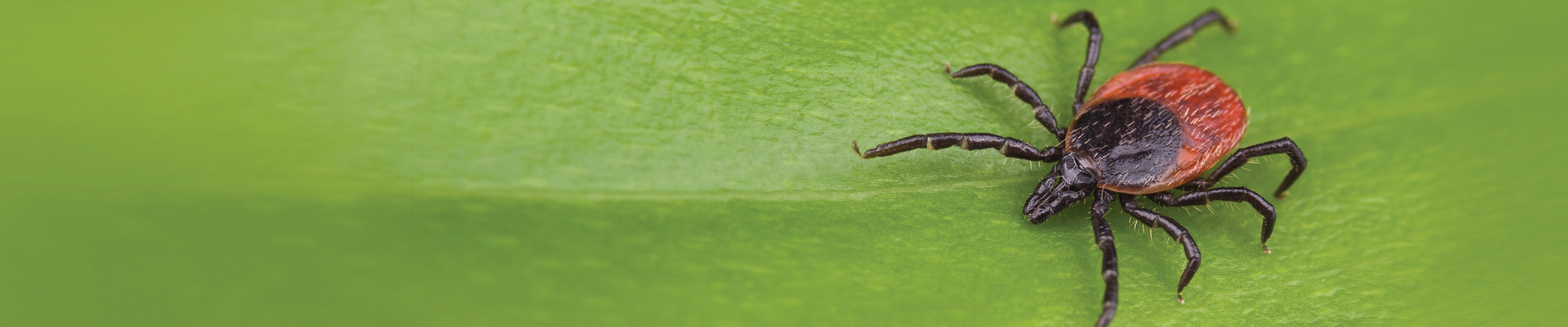

Tick Control and Extermination Services
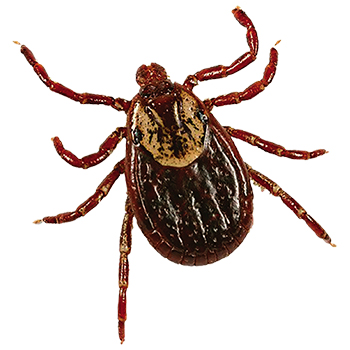
For effective tick control and pest management in New Jersey, Pennsylvania, Delaware, and Maryland, many homeowners turn to Viking Pest Control. Ticks are small, hard-to-detect pests that can pose serious health risks to both people and pets. These parasites attach to a host and feed on blood, often going unnoticed for hours or even days.
Because of their size and painless bites, ticks are especially dangerous. They are known to transmit diseases such as Lyme disease, Rocky Mountain spotted fever, and tularemia, making professional tick pest control and prevention essential for homes and businesses.
With over 45 years of experience, Viking Pest Control provides advanced mosquito & tick control solutions designed to reduce mosquito and tick populations and help protect your property year-round. Our mosquito and tick pest control services include tailored treatment for your needs.
Table of Contents
- What are Ticks?
- Common Tick Species in NJ, PA, DE, & MD
- Tick Risks
- Tick Prevention
- Tick Removal
- Tick Treatment
What are Ticks?
Ticks are parasitic arachnids that feed on the blood of humans and animals. They attach by inserting specialized mouthparts into the skin and can remain attached for several days while feeding.
Some tick species may remain attached for as much as 3-10 days before dropping off to continue their life cycle. Because they feed slowly and often painlessly, many people don’t realize they’ve been bitten.
Ticks are medically important pests because they can transmit a wide range of diseases, particularly in the Northeast and Mid-Atlantic regions, where tick populations are dense and active year-round.
How to Identify Ticks
A little-known fact is that ticks are arachnids, like spiders, but are often mistakenly referred to as insects.
- Larval ticks have 6 legs, while adults have 8 legs
- They are typically flat, oval-shaped, and brown before feeding
- They become larger, rounder, and grayish when engorged
Unlike many pests, ticks do not bite and leave; instead, they remain attached and feed for extended periods. Proper removal is critical to reduce the risk of disease transmission.
Where Do Ticks Live?
Ticks thrive in environments with moisture, shade, and access to hosts. Common tick habitats include:
- Wooded areas and forest edges
- Tall grass and overgrown vegetation
- Leaf litter and brush piles
- Landscaped yards near tree lines
Ticks do not jump or fly. Instead, they use a behavior called “questing,” where they wait on vegetation and latch onto passing hosts.
Certain species, like brown dog ticks, can survive and reproduce indoors and infest kennels, carpets, and pet bedding.
How Do You Get Ticks?
Ticks are commonly picked up when you:
- Walk through tall grass or wooded areas
- Brush against vegetation where ticks are waiting
- Encounter pets or wildlife carrying ticks
Ticks can also be introduced into your yard by deer, rodents, and birds, which serve as hosts.
How Long Do Ticks Live?
Ticks have a multi-stage life cycle (larva, nymph, adult) and can live up to 2–3 years, depending on environmental conditions and host availability.
They require a blood meal at each life stage to survive and progress.
Common Tick Species in NJ, PA, DE, & MD
Several species of ticks can be found in Viking’s service areas. The most common are:
Black-Legged Ticks
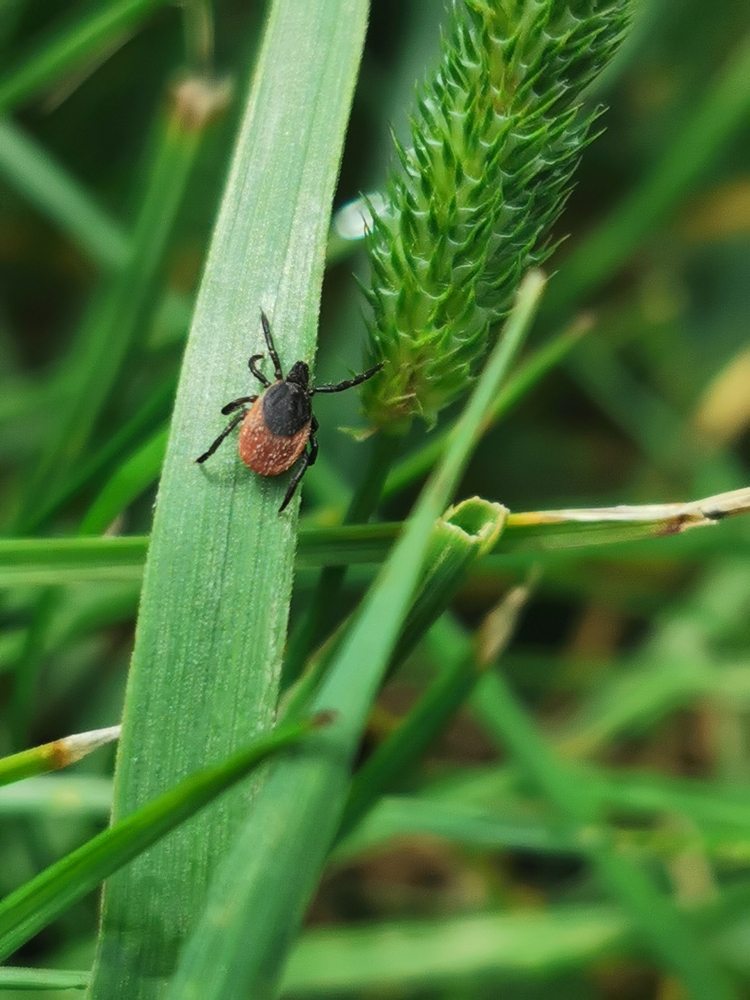
Also known as deer ticks, black-legged ticks are reddish-brown with a black shield below the head. They have small, flat, oval-shaped bodies. They are responsible for transmitting several diseases to humans and pets, such as:
- Lyme disease
- Anaplasmosis, which primarily sickens cattle, sheep, and dogs, but humans can also be infected. Symptoms of this disease resemble the flu and include fever, muscle aches, and fatigue.
- Babesiosis, which causes similar symptoms to anaplasmosis but may be fatal to the elderly and people with compromised immune systems.
American Dog Ticks
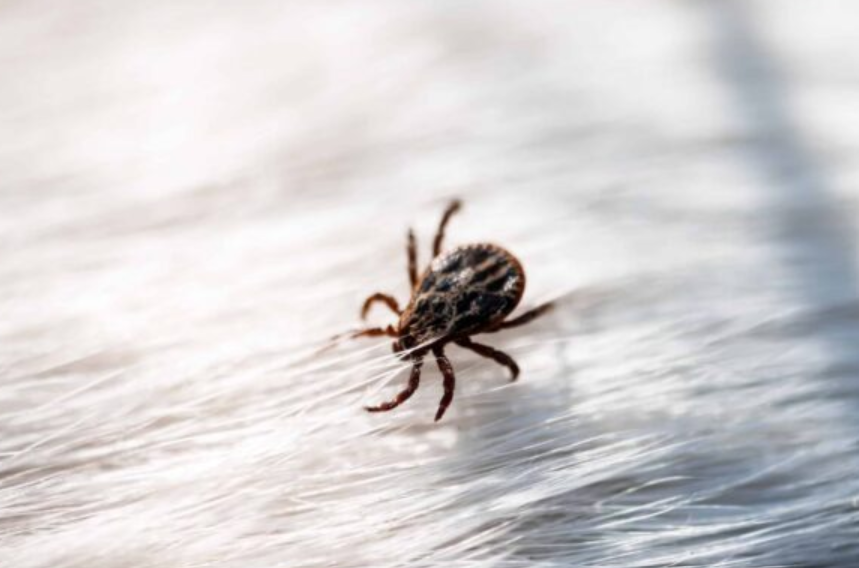
American dog ticks have an oval body shape and a reddish-brown color with grey or white markings. This tick species transmits Rocky Mountain Spotted Fever to humans and animals. Common symptoms involve fever, headache, muscle aches, and a spotted rash that initially develops on the wrists and ankles but can spread to other parts of the body.
Brown Dog Ticks
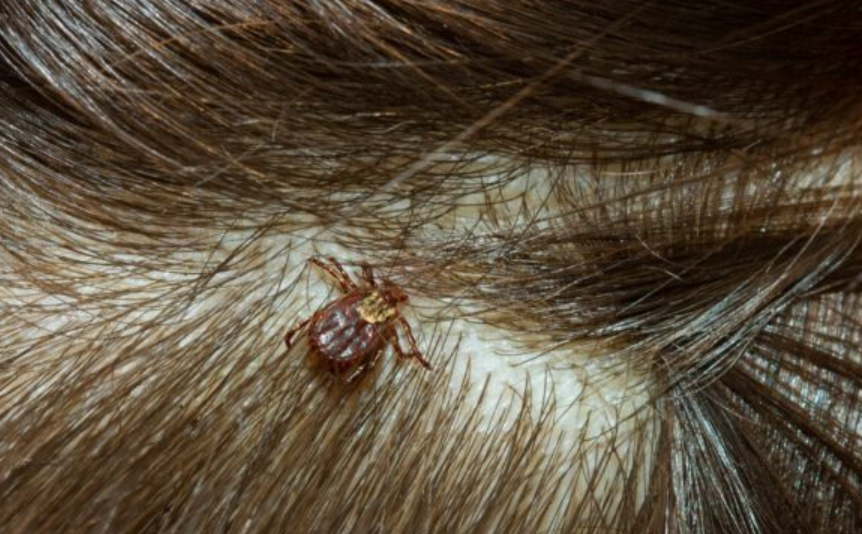
Brown dog ticks are reddish-brown, lack distinct markings, and can be either oval or teardrop-shaped. This tick species has adapted to living and reproducing indoors. Dogs staying in kennels are particularly vulnerable to brown dog ticks. Diseases transmitted by this type of tick include:
Lone Star Ticks
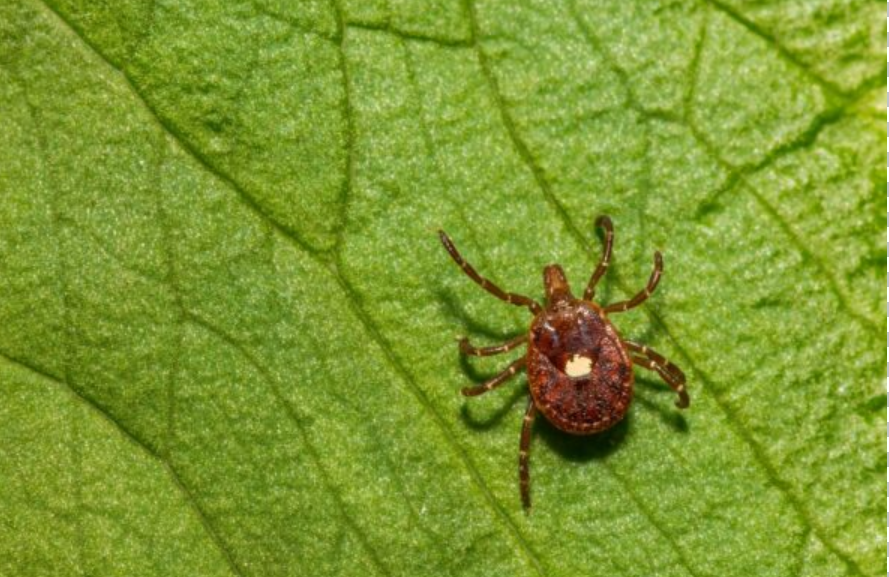
Lone star ticks are common in eastern, south-central, and southwestern U.S. They are another reddish-brown tick. Females have a white spot on their back, and males have white streaks or spots along the edges. This tick species often transmits Alpha-gal syndrome, which causes hives, severe stomach issues, and anaphylaxis, typically 2-6 hours after eating beef, pork, or lamb.
Tick Risks
Ticks around your home or place of business can pose serious risks to you, your family, your pets, and your customers. Ticks can spread serious diseases to humans, including Lyme disease, Rocky Mountain spotted fever, and tularemia. The Maryland Department of Health provides fact sheets on each of these tick-borne diseases to help you recognize the potential symptoms. Some tick bites are harmless, but others can cause symptoms such as skin irritation, headache, fever, abdominal pain, swelling, and neurological problems.
“People are rightly worried about Lyme disease,” says Craig Sansig, Public Health Entomologist and Viking Pest Vice President of Operations “In recent years, milder winters led to an increased distribution of tick-borne diseases.”
Tick-Borne Diseases
Ticks can transmit serious illnesses, including:
- Lyme disease
- Rocky Mountain spotted fever
- Anaplasmosis
- Babesiosis
- Tularemia
- Alpha-gal syndrome
Symptoms may include fever, fatigue, rash, muscle aches, and neurological issues.
Milder winters and changing climate conditions have contributed to longer tick seasons and expanding populations across the Mid-Atlantic.
Tick Prevention
Integrated Pest Management (IPM) is a highly effective and environmentally responsible approach to cockroach control used by Viking Pest Control. Rather than relying solely on reactive treatments, IPM focuses on long-term prevention by combining thorough inspections, targeted treatments, and proactive measures such as sanitation, exclusion, and moisture control. Viking’s technicians identify the specific cockroach species, locate hiding and breeding areas, and address the underlying conditions that allow infestations to thrive. By reducing food, water, and shelter sources while applying precise, professional-grade treatments only where needed, IPM delivers lasting results while minimizing environmental impact and disruption to your home or business.
Tick-Proofing Your Property
While a tick prevention company is the best way to fight ticks, some of the things you can do on your own include:
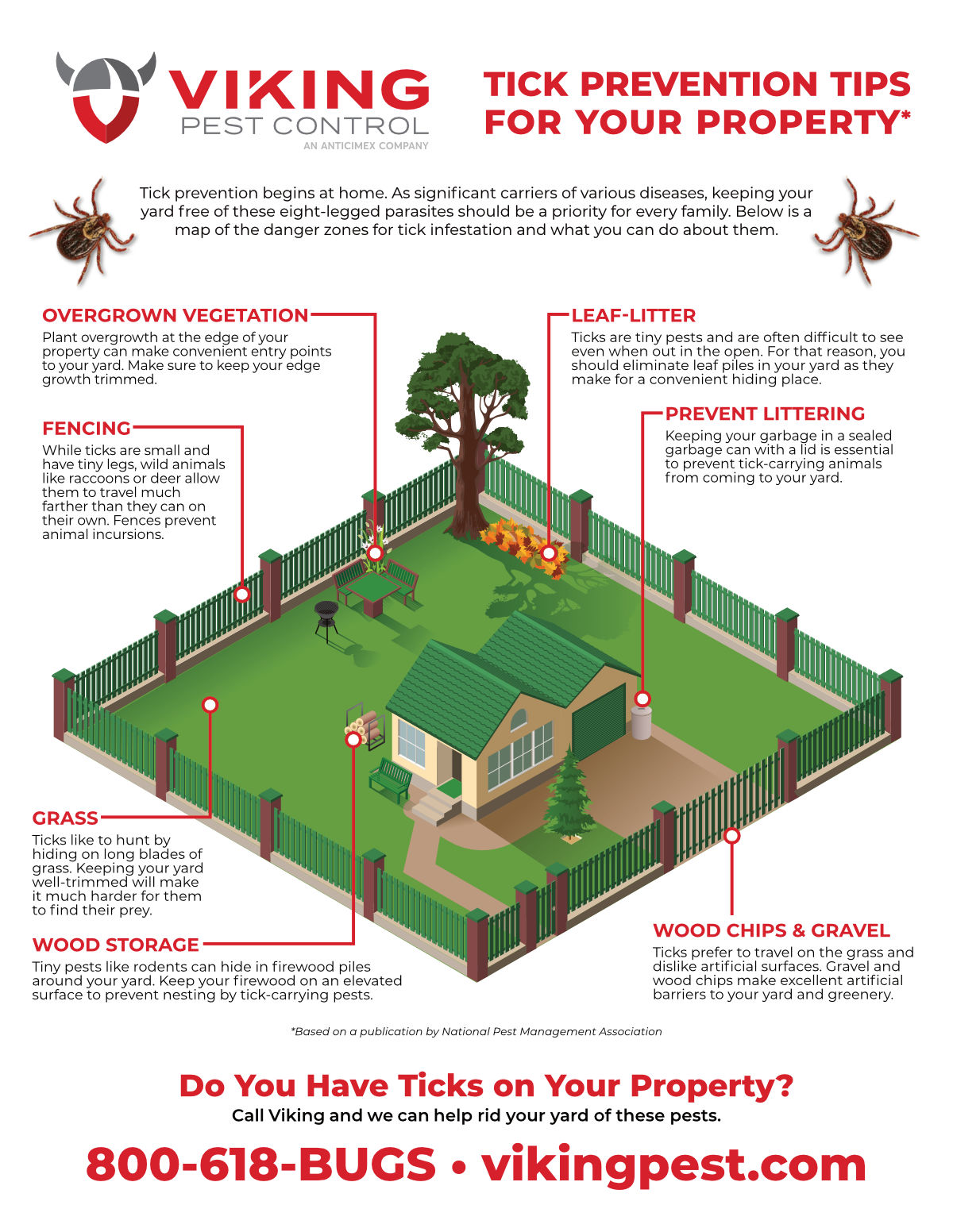
- Keep any tall grass mowed and keep vegetation neatly trimmed
- Remove any leaf litter or weeds on the edge of your lawn
- Remove all brushes and leaves around stone walls and woodpiles
- Move wood piles away from the house
- Start to rake when leaves eventually fall
- Pets and kids should stay out of the woods to avoid bringing ticks back to your home
- Move swings or sandboxes away from the woodland edge
- Wash clothes in hot water after returning from a tick-ridden area
What Repels Ticks?
Many insect repellents work to deter ticks from latching onto people. These products typically contain DEET, picaridin, permethrin, and other active ingredients.
How Do You Prevent Ticks?
Tick prevention includes a combination of outdoor maintenance efforts, personal protection, and intervention or recommendations from a tick exterminator. Ticks thrive in wooded areas. If you have overgrown vegetation near your house or business, cutting it back can help with tick control. Pest control experts recommend creating space between wooded areas and the places where your family or customers move about.
How to Avoid Tick Bites
Anything you do to reduce wildlife in your yard will help reduce the number of ticks. Ticks generally won’t make it into your yard on their own. They ride into your yard on animals. Keep your exterior trash cans sealed and protect any food sources that are growing in your yard to deter larger animals. Make sure shrubs are trimmed neatly and reduce or remove vegetation near your foundation walls to deter rodents. Ticks can also fly into your yard, but not on their own. They use birds as hosts, and that means your bird feeders might be increasing the tick population.
Here are a few ways to avoid tick bites:
- Wear closed-toe shoes and long-sleeved clothing
- Tuck your pants into your socks. You’ll look a bit ridiculous, but it works!
- Wear light-colored clothing, which will help you spot potential ticks easily
- Wash off as soon as you get home to get rid of any loose ticks
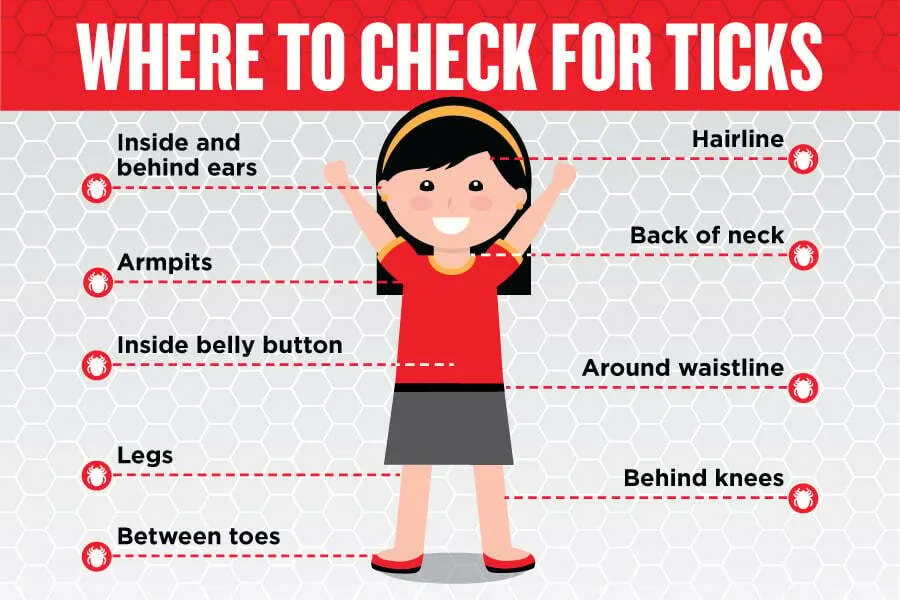
- Do a full-body check of yourself, your kids, and your pets if you’ve come back from a tick-prone location
How to Keep Ticks Off of Your Kids and Pets
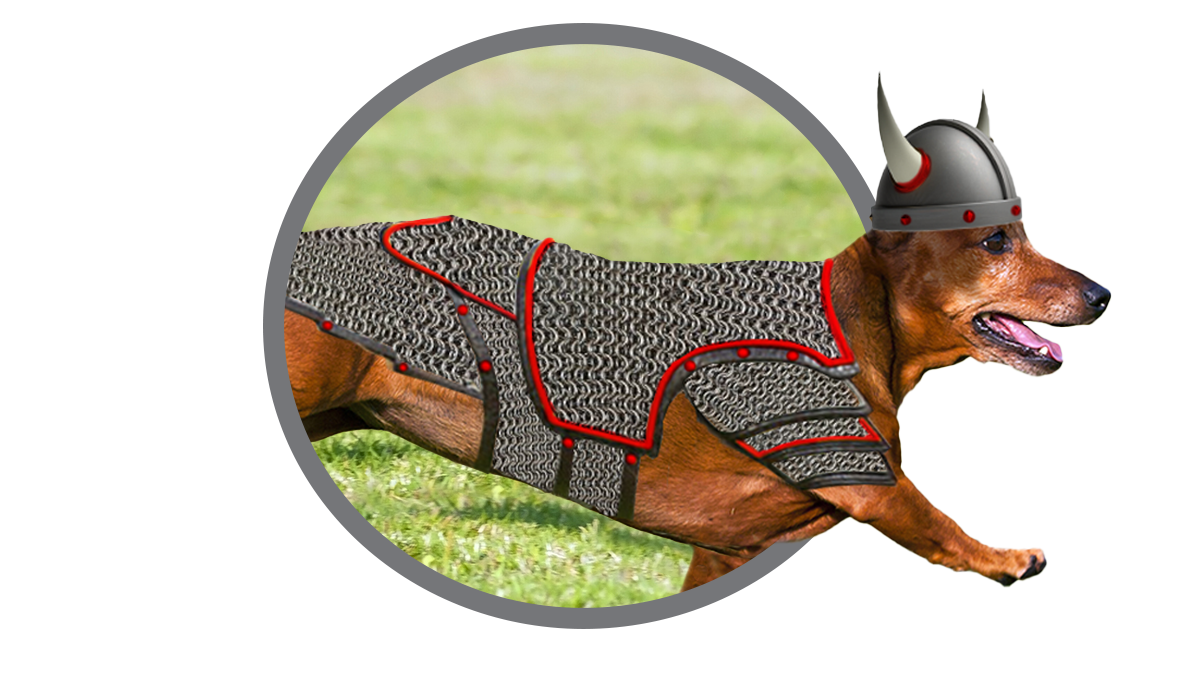
- Avoid Tick-Prone Areas: Stay away from tall grass and wooded areas where ticks are commonly found. Check for tick sightings in the area before going on hikes or camping trips.
- Keep Your Yard Tidy: Regularly maintain your yard by cleaning up debris like leaves and keeping grass trimmed. This reduces tick hiding spots and decreases the chances of tick encounters for both humans and pets.
- Professional Tick Control: Consider hiring a professional tick pest control service to effectively manage tick populations on your property. They can use treatments or products designed to eliminate ticks and minimize the risk of tick-borne diseases.
Tick Removal
If a tick bites you, a family member, or a pet, follow safe removal steps or contact a tick removal service. Professional assistance ensures complete, careful removal and guidance on monitoring symptoms.
How to Remove Ticks from Your Body
- Grasp the tick close to the skin. Be sure to apply steady, even pressure without jerking or twisting, as squeezing too hard can force the tick to regurgitate into you, increasing the risk of disease.
- Gently pull the tick upward with the tweezers until it comes out.
- Identify whether you’ve removed the entire tick or if the mouth remains embedded in the skin. If it’s still there, use the tweezers to remove it.
- Thoroughly wash the bite wound with soap and water.
- Monitor yourself for rashes or other flu-like symptoms for the next several weeks. These could indicate a tick-borne disease, and if they occur, they warrant a medical appointment.
How to Remove Ticks from Dogs
Removing ticks from dogs follows the same steps as removing them from human hosts. However, you might need a second person to keep your pet still and keep its fur spread out during the removal process.
Tick Treatment
Professional tick extermination services can significantly reduce activity with a customized treatment for yard spaces, focusing on high-risk areas. Our tick exterminator services combine granular applications in shaded areas with targeted liquids where ticks are active, forming a comprehensive yard tick treatment plan.
Last Bite Tick & Mosquito Control
A great way to control ticks is through Viking’s Last Bite program. This solution involves using sprays or granular treatments to make your yard and home uninhabitable for ticks. Our Last Bite tick exterminators use state-of-the-art tools and chemicals to keep your yard pest-free so you can enjoy spending time outdoors without worry.
Granular & Liquid Treatments
We use a combination of:
- Granular applications for shaded, dense areas
- Targeted liquid treatments for active tick zones
Treatment plans are customized based on your property, season, and environmental conditions.
During cooler seasons, such as early spring and fall, there is less foliage. This makes granular tick control more effective than liquid treatments. Tick control granules are also very useful in:
- High foliage areas
- Wooded areas
- Dense tree lines
Learn More About Ticks
- Dangerous Tick-Borne Disease Babesiosis Spreads to Delaware and Maryland
- Ticks Vs. Bed Bugs: How to Tell the Difference
- Viking Pest Control Reports Substantial Uptick in Tick Activity in New Jersey, Pennsylvania, Delaware, and Maryland
- Tick and Mosquito Diseases: You Need a Game Plan for This Summer
- How Are Ticks Getting Inside My Home?
Frequently Asked Questions
Protecting Your Home or Business From Ticks With Viking Pest Control
Viking Pest offers expert treatment designed to effectively and efficiently control and prevent pests from invading your home or business in New Jersey, Pennsylvania, Maryland, and Delaware. Our use of Integrated Pest Management (IPM) techniques focuses on finding the core of the pest concern and controlling Ticks from the source. Through IPM, pest control materials are selected and applied in a manner that minimizes risks to human health, pets, and the environment. Call Viking today for your FREE and NO OBLIGATION estimate at 1-800-618-2847 or Schedule Online today!
Schedule Service Today & Get Unlimited Service Requests*
* Some restrictions apply
Buy Online
Customer Login