How to Get Rid of Cicada Killers, Mining Bees, and Other Ground Bees
What options do home and business owners have for safely and permanently eliminating large populations of cicada killers and ground bees that live rent-free in their yards?
Although cicada killers, mining bees, ground bees, and other stinging insects pollinate plants and aerate the soil, nobody wants a large population of them right outside their back door. People who are allergic to bee or wasp stings could suffer anaphylactic reactions (facial swelling, difficulty breathing, rapid heartbeat).
Also, it's no fun to hold backyard get-togethers or sit on your front porch in the evening when the chance of a bee or wasp attack is all too real. If you're a business owner, customers won't enjoy being chased by buzzing, irate bees while attempting to enter your building.
If you try any of the following bee-eliminating methods, be aware they do involve getting perilously close to bees. For the most part, bees will leave humans alone but when they sense someone invading their personal space--look out! Your risk of suffering a sting or two--or three-- increases dramatically.
Why not play it safe and let Viking Pest handle your bee infestation issues? We use the most effective treatments available to rid your property of stinging cicada killers and ground bees so you don't have to take a chance on riling up (literally!) a hornet's nest.
How to Get Rid of Cicada Killers
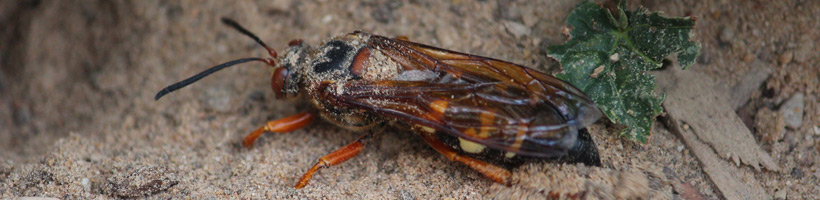
A large species of wasp with black, yellow-banded bodies and orange wings, cicada killers can capture cicadas in mid-air and paralyze them with venomous stings. However, cicada killers rarely sting humans unless they are aggressively provoked. But, if you are stung by a cicada killer, the pain and swelling it causes will likely require a doctor's attention.
As diggers and tunnelers, cicada killers can destroy plant root systems and make landscape ground unstable. Getting rid of a cicada killer infestation involves targeting the holes they make in the ground:
After dark, pour boiling water into holes and place containers over the holes. Wasps will either drown or suffocate while trapped under containers. However, boiling water won't kill eggs.
Pour boric acid into holes. While boric acid kills eggs and adult wasps, it won't prevent another group from returning next year.
How to Get Rid of Mining Bees
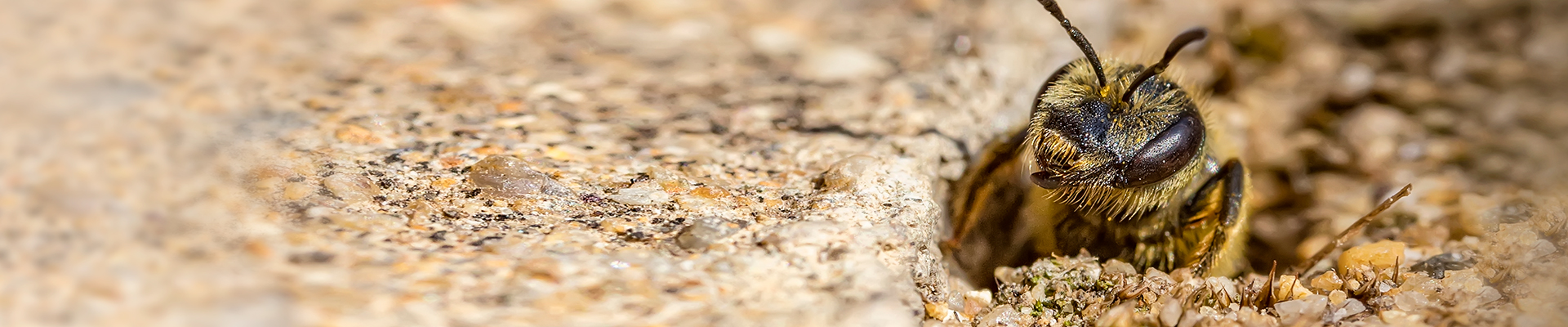
Female mining bees excavate burrows underground in which to lay their eggs. They leave behind mounds of dirt nicknamed "soil volcanoes" that may look like molehills with a hole at the top of the "hill". Although brushing down these soil volcanoes won't get rid of mining bees, they will leave your lawn or garden free of soil volcano eyesores, but only temporarily.
You can try to rid your yard of mining bees by:
Growing geraniums, marigolds, lavender, and other bee-repelling plants around your yard
Letting your lawn remain thicker than normal during spring and summer. Mining bees tend to gravitate towards sparser areas of grass where it is easier to dig into the ground.
Trapping them by placing a stone or brick over the entrance to their burrow.
Although the sting of a mining bee is less painful than the sting of a cicada killer, people who are sensitive or allergic to bee stings could experience serious medical issues if stung by a mining bee.
How to Get Rid of Other Ground Bees
Most bees don't build mud or paper nests under a building's eave or in trees. In fact, 70% of all bee species build nests underground. One of the most common ground bees in the midwestern and northeastern areas of the U.S. is called Colletes inaequalis.
It's a solitary bee but females are famous for their sociable nesting behavior. Hundreds or even thousands of female C. inaequalis bees will build their nests right next to each other, as long as there is enough suitable ground that accommodates their gregariousness.
Methods for discouraging a ground bee takeover of your property include:
Making the ground less attractive to females by irrigating heavily and placing mulch or another ground cover where grass is sparsest.
Mix equal parts vinegar and water and spray where ground bees are nesting. Always wear protection when spraying ground bees with vinegar and water. This spray doesn't provide a contact-kill and will initially agitate them.
Bug zappers won't exterminate the entirety of a ground bee city but may help minimize a large ground bee population.
If Nothing Works to Rid Your Home or Business of Soil Volcanoes and Stinging Bees...
Contact Viking Pest for professional solutions to your most difficult bee problems. Like other insects, a bee's determination to procreate and make thousands of other little bees is often more powerful than bespoke bee repellant. That's why we've developed evidence-based treatments to resolve your most bewildering bee brain-teasers.
Call Viking Today at 800-618-2847 today for professional pest control services or visit us at vikingpest.com.
Tips to Avoid Stinging Insects This Summer
Summer in New Jersey brings longer days, warmer weather, and more time outdoors—but it also means an increase in stinging insects. Bees, wasps, hornets, and yellow jackets become highly active during this season, making backyard activities, barbecues, and outdoor gatherings more difficult and sometimes dangerous.
While there are steps homeowners can take to reduce stinging insect activity around their property, heavy infestations should always be handled by a professional pest control company.
Common Stinging Insects Found in New Jersey
Many people refer to all stinging insects as “bees,” but several different species are commonly found around homes in the Northeast.
These include:
Bumble bees
Honey bees
Wasps
Hornets
Yellow jackets
Carpenter bees
Some of these insects are beneficial pollinators, while others are more aggressive and territorial. Because of this, correctly identifying the species is important before attempting any removal. Misidentification can lead to unnecessary harm to beneficial insects—or dangerous encounters with aggressive stinging insects.
How to Prevent Stinging Insects Around Your Home
Reducing stinging insect activity starts with making your property less attractive to them. These insects are constantly searching for food, water, and safe nesting sites.
Keep Food and Trash Secure
Stinging insects are strongly attracted to food sources, especially meats and sugary substances. To reduce activity:
Keep trash cans tightly sealed
Clean up outdoor food and spills quickly
Avoid leaving food uncovered during outdoor gatherings
Remove rotting fruit, garden waste, or debris from your yard
Eliminate Standing Water
Stinging insects need water to survive. Check your property regularly for:
Standing water in buckets or containers
Clogged gutters or poor drainage areas
Bird baths or pet water bowls left outside
Reduce Attractive Scents and Colors
Certain scents and visuals can attract stinging insects:
Avoid wearing perfumes or scented lotions outdoors
Skip bright, floral-patterned clothing when possible
Use caution with sweet-smelling products during outdoor activities
Stay Aware Outdoors
Awareness is key when spending time outside:
Watch for ground nests, especially yellow jackets
Avoid swatting or sudden movements near stinging insects
Be cautious when mowing lawns or working near brush or wood piles
How to Prevent Yellow Jacket Nests
Yellow jackets are one of the most aggressive stinging insects during summer months. They often build nests underground or in hidden voids, making them difficult to detect.
To help prevent nests:
Inspect your yard regularly for holes or ground activity
Seal cracks and gaps in siding, foundations, and eaves
Check vents, chimneys, and utility entry points
Keep grass trimmed and landscaping well maintained
Avoid disturbing potential nesting areas
Even small vibrations—like mowing the lawn—can trigger defensive behavior if a nest is nearby.
Professional Stinging Insect Removal
When stinging insects establish a nest on your property, DIY removal is risky and often ineffective. Disturbing a nest can trigger aggressive swarming behavior and increase the risk of multiple stings.
A professional pest control company can:
Identify the type of stinging insect
Locate hidden nests
Safely remove active colonies
Provide preventative treatments to reduce future activity
Offer long-term inspection and maintenance plans
Professional inspection also helps identify conditions around your home that may be attracting stinging insects in the first place.
First Aid for Stings and Bites
Even with precautions, stings can still happen. Most reactions are mild, but proper care can help reduce discomfort and prevent complications.
If you are stung:
Remove any visible stinger if present
Wash the area with soap and water
Apply a cold compress to reduce swelling
Use hydrocortisone cream or calamine lotion for itching
Take an antihistamine if needed for allergic response
Seek medical attention if symptoms worsen or an infection develops
In cases of severe allergic reactions, immediate medical attention is required.
Protecting Your Home From Stinging Insects with Viking Pest Control
Stinging insects are more than a seasonal nuisance—they can pose a serious risk to families, especially for those with allergies. Preventative maintenance and professional pest control are the most effective ways to reduce the risk of infestations.
Regular inspections and proactive treatments help ensure your home remains safe, comfortable, and pest-free throughout the summer season. Contact Viking today!
Why You Should Call Professionals for Stinging Insect Control
Stinging insects like yellow jackets, wasps, hornets, bumblebees, and carpenter bees are more than just a nuisance during warmer months in New Jersey, Pennsylvania, Delaware, and the Eastern Shore of Maryland. They can quickly turn a normal day in your yard into a stressful—and potentially dangerous—situation, especially when nests are nearby.
While some stinging insects are relatively docile, others become highly aggressive when threatened. Attempting to deal with them on your own can easily escalate the situation and increase the risk of multiple stings.
This is why pest control professionals strongly recommend addressing infestations early and properly, before they become a serious hazard.
Common Stinging Insects You May Encounter
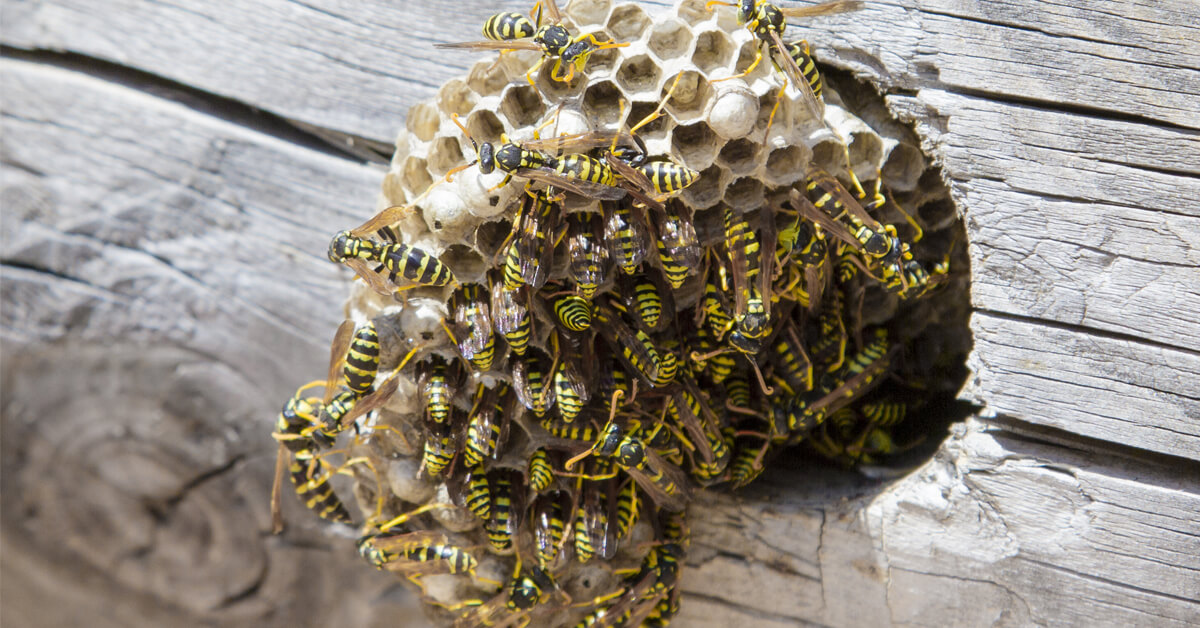
Yellow jackets and wasps are among the most aggressive stinging insects homeowners deal with. They are extremely territorial and will defend their nests aggressively, often stinging multiple times. They are also highly attracted to sugary drinks and food, which makes outdoor gatherings, barbecues, and pool days especially risky. A single misplaced sip from an open can or cup can quickly turn into a sting incident.
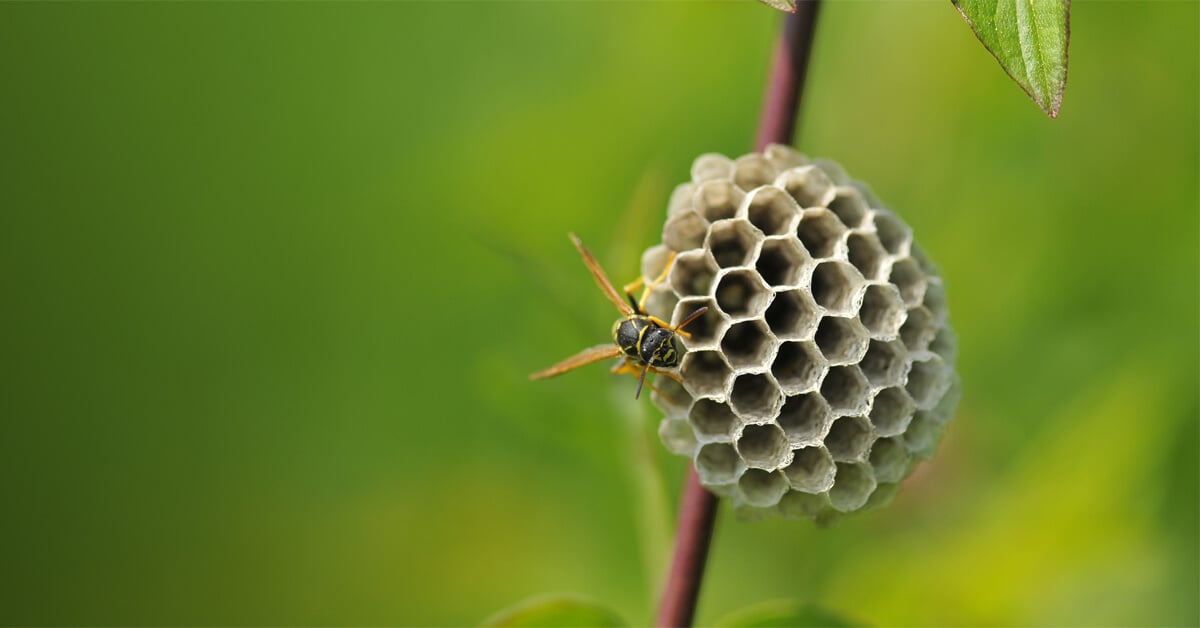
Their nests are typically made of a paper-like material and can be found in trees, shrubs, wall voids, eaves, and other sheltered outdoor areas.
Bumblebees are generally less aggressive, but they will sting if their nest is disturbed or they feel threatened. Unlike honeybees, they can sting more than once, making accidental encounters painful and unpredictable. Their nests are often located in the ground, under decks, or in protected cavities.
Bald-faced hornets are among the most defensive stinging insects. Their nests can grow large and are often suspended in trees or attached to structures. These insects will respond quickly and aggressively if their nest is approached, sometimes swarming in large numbers.
Carpenter bees may appear intimidating as they hover around wood structures, decks, and eaves. While males cannot sting, they can be persistent and territorial, and females can sting if handled or provoked. Their real threat is structural damage, as they bore tunnels into untreated or unpainted wood, weakening it over time.
Why DIY Stinging Insect Removal Is Risky
Many homeowners consider handling nests themselves, but this often leads to dangerous outcomes. Stinging insects react quickly to disturbances, and even a small disruption can trigger a swarm response. This can result in multiple stings in seconds, especially with yellow jackets and hornets.
Over-the-counter sprays may not reach the nest effectively, and incomplete treatment can make the colony more defensive and harder to control later. In addition, misidentifying the insect can lead to destroying beneficial pollinators like honeybees, which should be relocated—not eliminated.
The reality is simple: once a nest is active, especially in high-traffic areas, DIY removal is rarely worth the risk.
Signs You May Have a Stinging Insect Problem
You may be dealing with a nest if you notice:
Increased insect activity in one specific area of your yard
Repeated flying patterns in and out of the same hole, crack, or structure
Buzzing sounds near eaves, decks, or sheds
Visible paper-like nests in trees, shrubs, or building overhangs
Wood damage or small holes (common with carpenter bees)
If any of these signs are present, it’s best not to investigate closely—especially during peak activity hours.
How Professionals Handle Stinging Insects Safely
Professional pest control technicians are trained to:
Identify the exact species involved
Locate hidden nests in walls, ground areas, and structures
Apply targeted treatments designed for complete elimination
Reduce the chance of reinfestation
Safely remove or neutralize nests without putting homeowners at risk
This approach is significantly safer and more effective than DIY methods, especially for aggressive species like yellow jackets and hornets.
Protect Your Home and Yard Before the Problem Escalates
Stinging insect activity tends to increase through late summer and fall as colonies grow and food sources become more competitive. That means nests that seem “manageable” early in the season can quickly become much more aggressive and dangerous.
If you suspect stinging insects around your home, delaying treatment often makes the problem worse—not better.
The Viking Pest Control Advantage
When stinging insects take over your yard, the safest move is to bring in experienced professionals who know how to handle them correctly the first time. Viking Pest Control provides targeted stinging insect control designed to eliminate nests safely and help prevent them from returning.
Instead of risking painful stings or incomplete DIY treatments, homeowners can rely on trained technicians who understand where these insects hide, how they behave, and how to remove them effectively.
If you’re dealing with yellow jackets, hornets, wasps, or carpenter bees, Viking Pest Control can help restore your outdoor space so you can actually enjoy your yard again—without constantly watching the air or avoiding certain areas.
To learn more or schedule service, visit Viking Pest Control or call 800-618-2847.