

Termite Control & Protection Services
Termites are called silent destroyers for a reason. They can feed on the structural wood of your home for months or even years before you notice a single sign of activity. By the time damage becomes visible, repair costs can easily reach into the thousands.
And, while termites don’t typically present a significant risk of disease, they can spread like an infection through your NJ, PA, MD, or DE home or business. The good news is that termites do leave clues. Knowing what to look for can help you catch an infestation early and protect your home before serious damage occurs. In this guide, we walk through the most common signs of termites, where to look for them, and what to do if you find evidence of activity in or around your property.
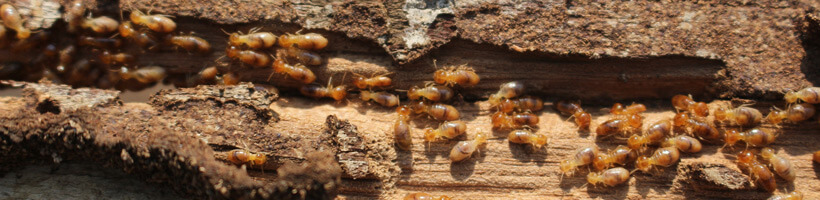
Eastern subterranean termites are the most common species in New Jersey, Pennsylvania, Delaware, and the Eastern Shore of Maryland. They live in underground colonies that can number in the hundreds of thousands and remain active year-round, especially in heated homes where indoor conditions stay warm and humid.
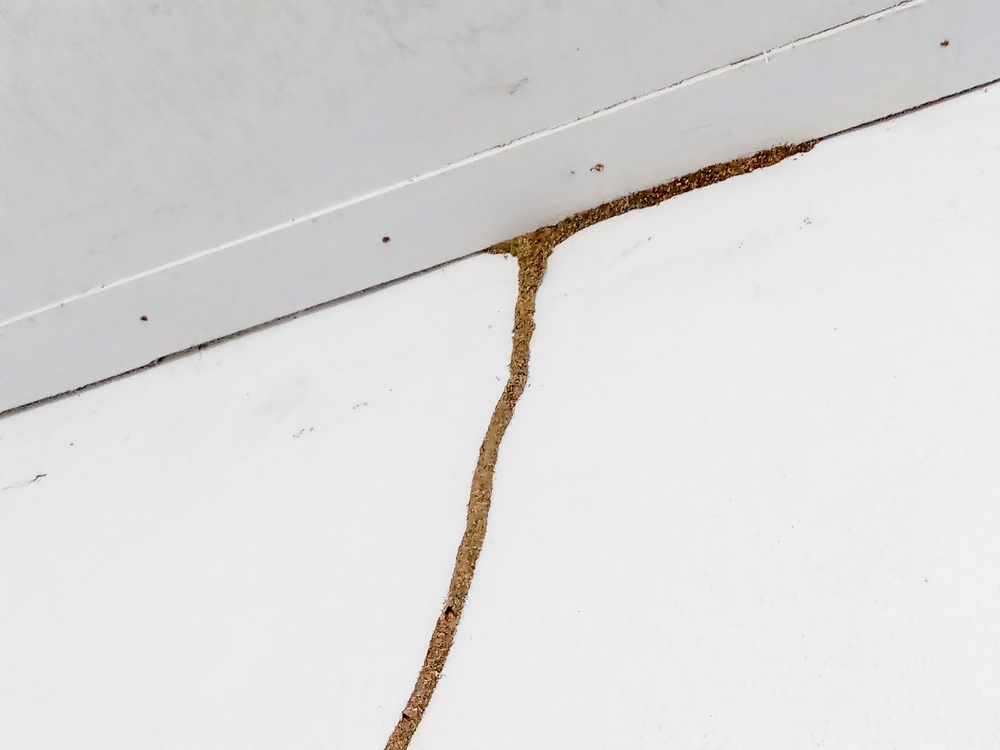
Termite Mud Tubes on Walls and Foundations
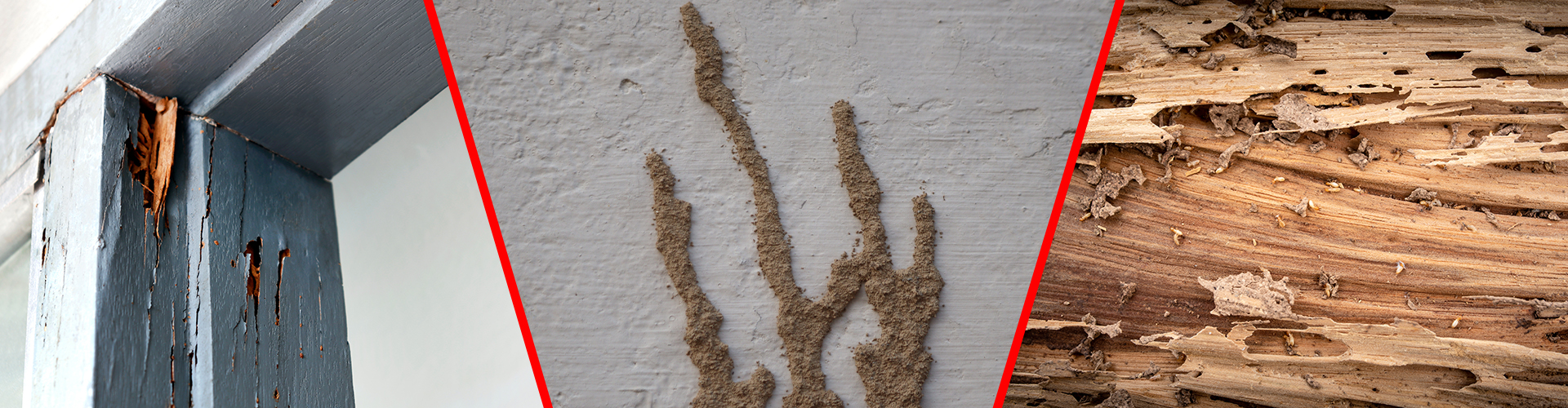
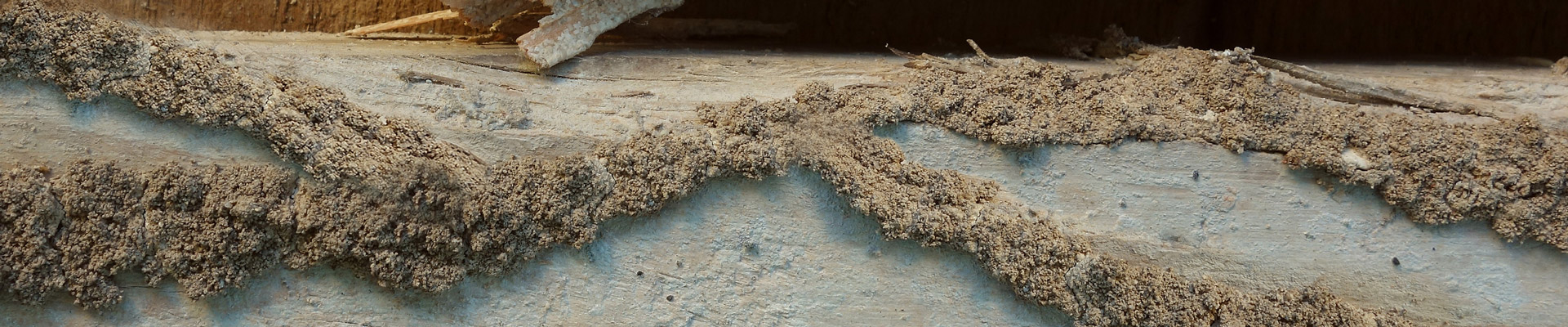
Mud tubes are one of the most recognizable signs of a termite problem. These pencil-width tunnels are built by subterranean termites to travel safely between their underground colony and the wood they feed on. The tubes are made from a mixture of soil, wood particles, and saliva that protects the termites from open air and dehydration.
You will most commonly find mud tubes along foundation walls, in crawl spaces, on basement walls, around plumbing penetrations, and along exterior siding near ground level. In more advanced infestations, mud tubes may appear on interior walls or hang from ceiling beams and floor joists.
If you spot a mud tube, try breaking a small section open. If live termites are visible inside, the tube is active. If the tube is empty, the colony may have moved to a different area of the structure. Either way, the presence of mud tubes warrants a professional inspection because termites rarely travel far from their food source.
Termite Droppings and Frass
Termite droppings, also called frass, are a telltale sign of termite activity. As termites consume wood from the inside, they push their fecal pellets out through small holes called kick-out holes. These pellets collect in small piles that are often mistaken for sawdust or ground pepper.
Termite frass pellets are tiny, oval-shaped, and typically have six concave sides. They range in color from light tan to dark brown depending on the type of wood being consumed. You are most likely to find frass on windowsills, along baseboards, beneath wooden furniture, near door frames, and on the floor below any wooden structure.
Subterranean termites handle their waste differently. Rather than expelling pellets, they use their droppings as part of the material in their mud tubes. So if you are finding small granular piles near wood surfaces, you are likely dealing with termites.
Termite droppings vs. carpenter ant droppings: Carpenter ants produce frass that includes wood shavings mixed with insect body parts. Termite frass consists only of the uniform, pellet-shaped droppings without any debris mixed in. If you are unsure which pest is responsible, a professional inspection can confirm the species and determine the best course of action.
Damaged or Hollow-Sounding Wood
Termites eat wood from the inside out, which means a beam, door frame, or baseboard can look perfectly normal on the surface while being almost entirely hollow inside. Tapping on wood that sounds hollow or papery is one of the classic signs of termite damage.
Other visual indicators include blistering or darkened areas on wood surfaces, paint that appears uneven or bubbly, and wood that crumbles easily when you probe it with a screwdriver or sharp tool. In severe cases, you may notice that floors feel spongy underfoot or that door and window frames no longer close properly because the structural wood behind them has been compromised.
This type of hidden damage is exactly why termite problems can go undetected for so long. Termites tend to leave the outermost layer of wood, paint, or varnish intact, which is why the damage often resembles water damage at first glance. Making matters worse, most homeowner insurance policies do not cover termite damage, so catching the problem early can save you thousands in out-of-pocket repair costs. If you notice any of these signs, do not wait to get a professional assessment. You can learn more about what termite damage looks like and the risks it poses to your home in our full termite damage guide. [INSERT LINK]
Swarmers and Discarded Wings
Finding winged termites inside your home, or discovering small piles of discarded wings near windowsills, doors, or light fixtures, is one of the most visible signs of an active termite colony. These winged termites, called swarmers or alates, are the reproductive members of a mature colony. They emerge in large numbers during spring and early summer to mate and establish new colonies.
In the Mid-Atlantic region, swarming events typically occur between March and June, often triggered by warm, humid weather following spring rains. Swarmers are drawn to light, so they are frequently found clustered near windows and exterior doors.
It is common to confuse termite swarmers with flying ants. The key differences are straightforward:
- Termite swarmers have straight antennae whilst flying ants have elbowed antennae
- Termites have a broad waist, ants a narrow pinched waist
- Termites have two pairs of wings that are equal in size and longer than their body, ants also have two pairs of wings but the front pair is noticeably larger than the back pair.
TIP: If you are finding discarded wings that are all the same size, they most likely came from termites.
Clicking Sounds and Noises in Walls

Although termites are often called silent destroyers, they are not completely silent. If you listen carefully in a quiet room, especially at night, you may hear faint clicking or rattling sounds coming from inside your walls. This noise is caused by soldier termites banging their heads against the walls of their tunnels to warn the rest of the colony when they sense a disturbance. You can sometimes trigger this response by tapping on a wall or piece of trim where you suspect activity.
Worker termites are also noisy eaters. As they chew through wood fibers, they produce a soft rustling or papery sound that can be heard through drywall or thin wood panels when the house is quiet. During spring swarming season, you may also notice a faint buzzing as winged termites move around inside wall cavities before finding their way out.
If you can hear termite activity without pressing your ear to the wall, that typically indicates a large and well-established colony. At that point, professional treatment is not just recommended but urgent. Keep in mind that other pests like mice and carpenter ants can also produce wall noises, so a professional inspection is the best way to confirm the source.
Squeaky Floors and Buckling Floorboards
Subterranean termites often target the subfloor and floor joists before any visible signs appear on the surface. As these support structures weaken, you may notice that certain areas of your floor have become unusually squeaky, feel spongy or springy underfoot, or seem to dip slightly when you walk across them.
With hardwood floors, termite damage can show up as buckling, blistering, or a wavy appearance on the surface that looks similar to water damage. If you have tile flooring, the moisture that termites introduce into the subfloor can loosen the grout and make individual tiles feel unstable. Laminate flooring may start to bubble or separate at the seams for the same reason.

These flooring issues are easy to dismiss as normal wear or a plumbing leak, which is exactly why termite damage to subfloors can go unnoticed for so long. If the squeaking or softness is concentrated near exterior walls or in rooms at ground level, a termite inspection should be on your list.
Tight-Fitting Doors and Windows
If your doors or windows have suddenly become difficult to open or close, and it is not seasonal humidity causing the issue, termites may be the reason. As subterranean termites tunnel through the wood framing around doors and windows, they produce moisture and excrement that causes the surrounding timber to swell and warp. Over time this changes the shape of the frame just enough to make the door or window stick.
This is one of the more commonly overlooked signs of termites because most homeowners attribute sticky doors and windows to foundation settling or weather changes. The difference is that termite-related warping tends to be localized to specific door or window frames rather than affecting the entire house evenly. If one particular door has started jamming and you also notice bubbling paint or fine cracks near the frame, it is worth having a professional take a closer look.
Signs of white ants
If you have heard the term “white ants,” you are not alone. Many homeowners use the name interchangeably with termites because worker termites are pale, soft-bodied insects that bear a passing resemblance to ants. However, termites and ants are entirely different pests with different behaviors, colony structures, and risks to your property.
The signs of white ants are the same signs of termites covered throughout this guide: mud tubes, frass, hollow-sounding wood, swarmers, and structural damage. If someone tells you they found white ants in their home, what they are describing is almost certainly a termite infestation that needs professional attention.
Signs of Termites in Your Home
Termites can hide in several different places in your home. Here are a few of the most common:
In Your Walls
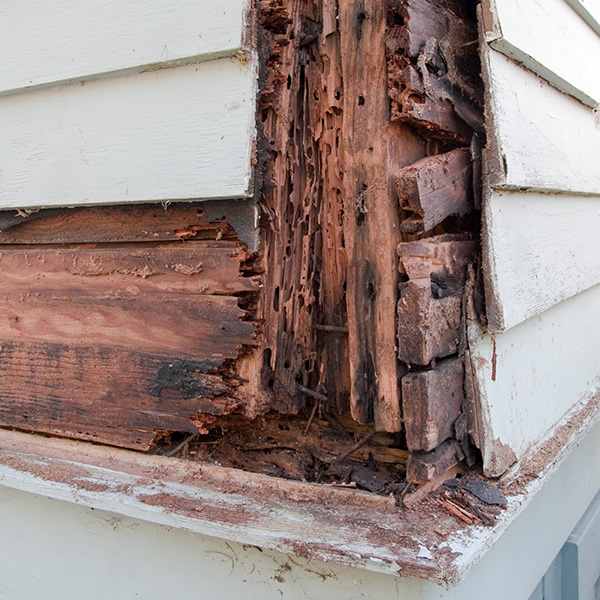
Bubbling or peeling paint that mimics water damage is often one of the first signs of termites behind drywall. You may also notice small pinholes in plaster or drywall where swarmers have exited, or faint lines running along the wall surface where mud tubes are forming just behind the paint. Tapping along the lower portion of an interior wall and listening for a hollow sound can help identify sections where termites have been feeding.
In Your Ceiling
Ceiling damage from termites can show up as sagging or buckling sections, cracks in the plaster, or discoloration that looks like water staining. In homes with wooden beam construction, termites may travel through interior wall cavities to reach ceiling joists and rafters, especially in older properties across New Jersey and Pennsylvania where structural wood is more exposed
In Baseboards
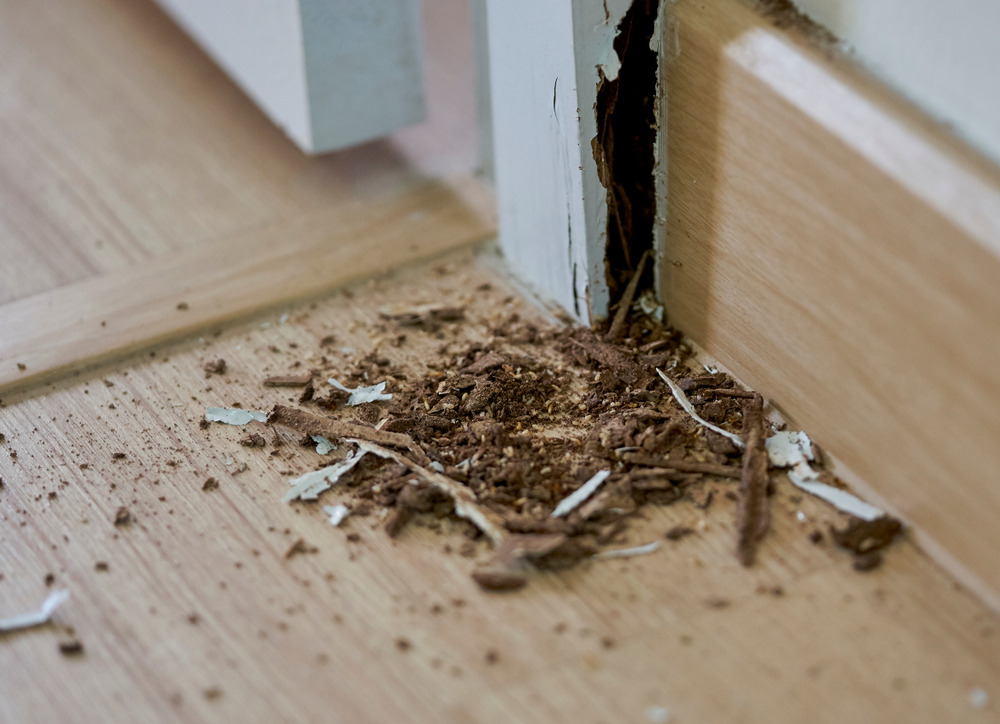
Baseboards are a common target because they sit directly against the wall and close to the floor, giving subterranean termites easy access from below. Signs include wood that sounds hollow when tapped, visible cracking or splintering along the surface, and small mud deposits between the baseboard and the wall. You may also find frass accumulating along the bottom edge if termites are involved
Can I Identify an Active Infestation in My Yard?
Termite activity does not always start inside the house. Mud tubes on tree stumps, fence posts, or landscape timbers are a clear sign of subterranean termites foraging in your yard. Damaged deck boards, soft or crumbling firewood, and termite activity in mulch beds, particularly wood-chip mulch placed against the foundation, are all outdoor indicators worth taking seriously.
Living trees on your property deserve attention as well. Termites can infest trees from the base up, feeding on the interior wood while the bark remains intact. To check a tree, look for small holes or wood shavings near the base, and use a shovel to inspect the soil line around the roots. A tree weakened by termites can become a safety hazard if it falls during a storm, and it also confirms that an active colony is operating within foraging distance of your home.
Finding termites in the yard does not mean your house is infested yet, but it does mean a colony is active nearby and a preventive inspection is a smart next step.
Frequently Asked Termite Questions

Schedule Service Today & Get Unlimited Service Requests*
* Some restrictions apply
Buy Online
Customer Login