

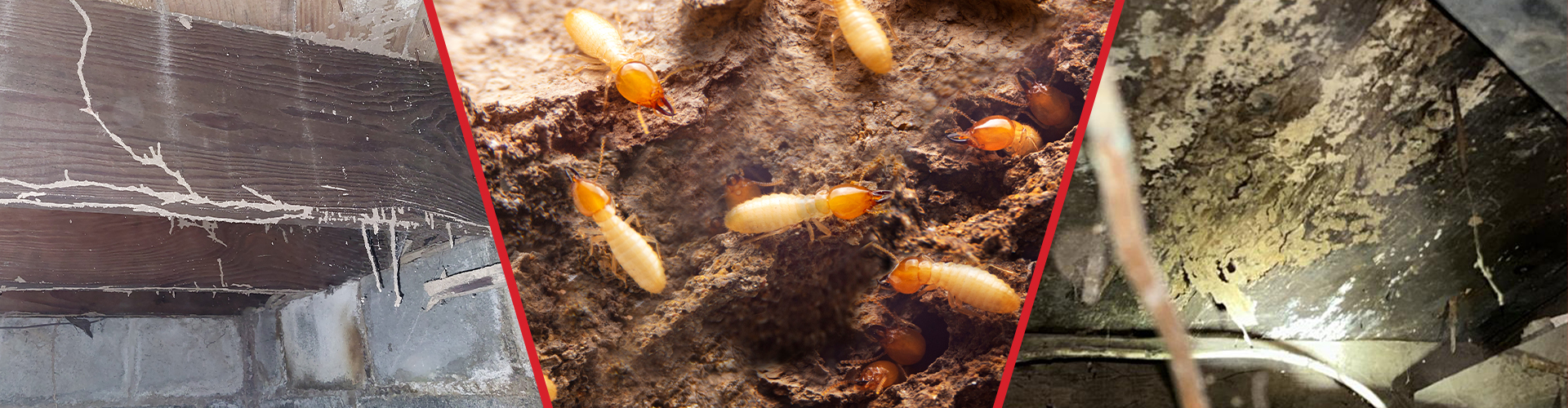

Termite Control & Protection Services
Search “how to get rid of termites” and you will find no shortage of sprays, foggers, and home remedies promising a do-it-yourself fix. Some of those products can kill the termites you can actually see. Almost none of them reach the part of the problem that actually matters, which is the colony itself, often tens of thousands of termites living in the soil beneath or beside your home.
This guide walks through what DIY termite treatments can and cannot do, what is actually legal for a homeowner to buy and apply, and what a licensed professional does differently. If you already suspect an active infestation, the honest answer is that professional treatment is the only reliable way to eliminate a colony. If you are still trying to confirm whether you have termites at all, start with our guide to the signs of termites, or go ahead and schedule a free inspection.
Why Termites Are So Hard to Eliminate on Your Own
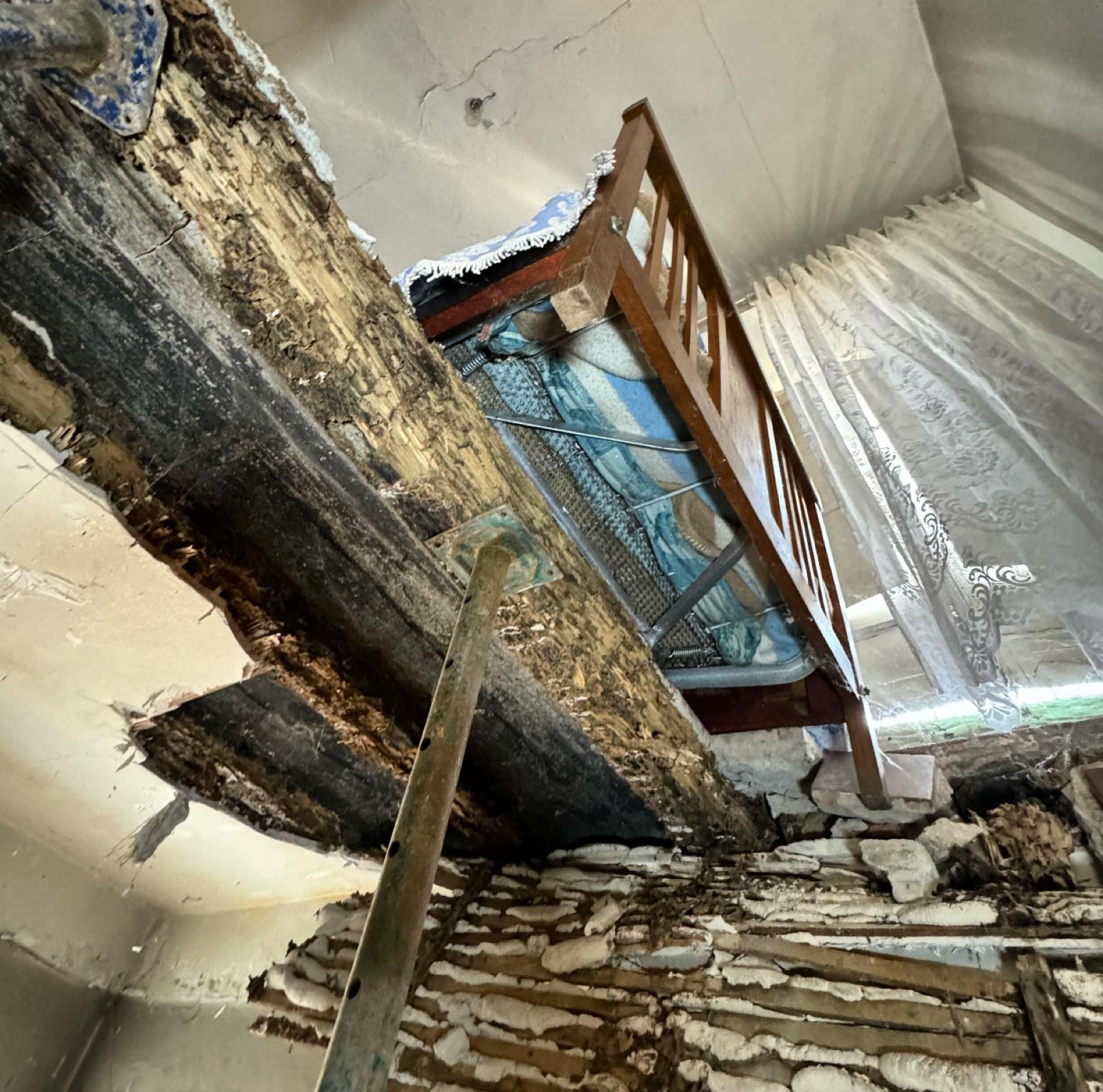
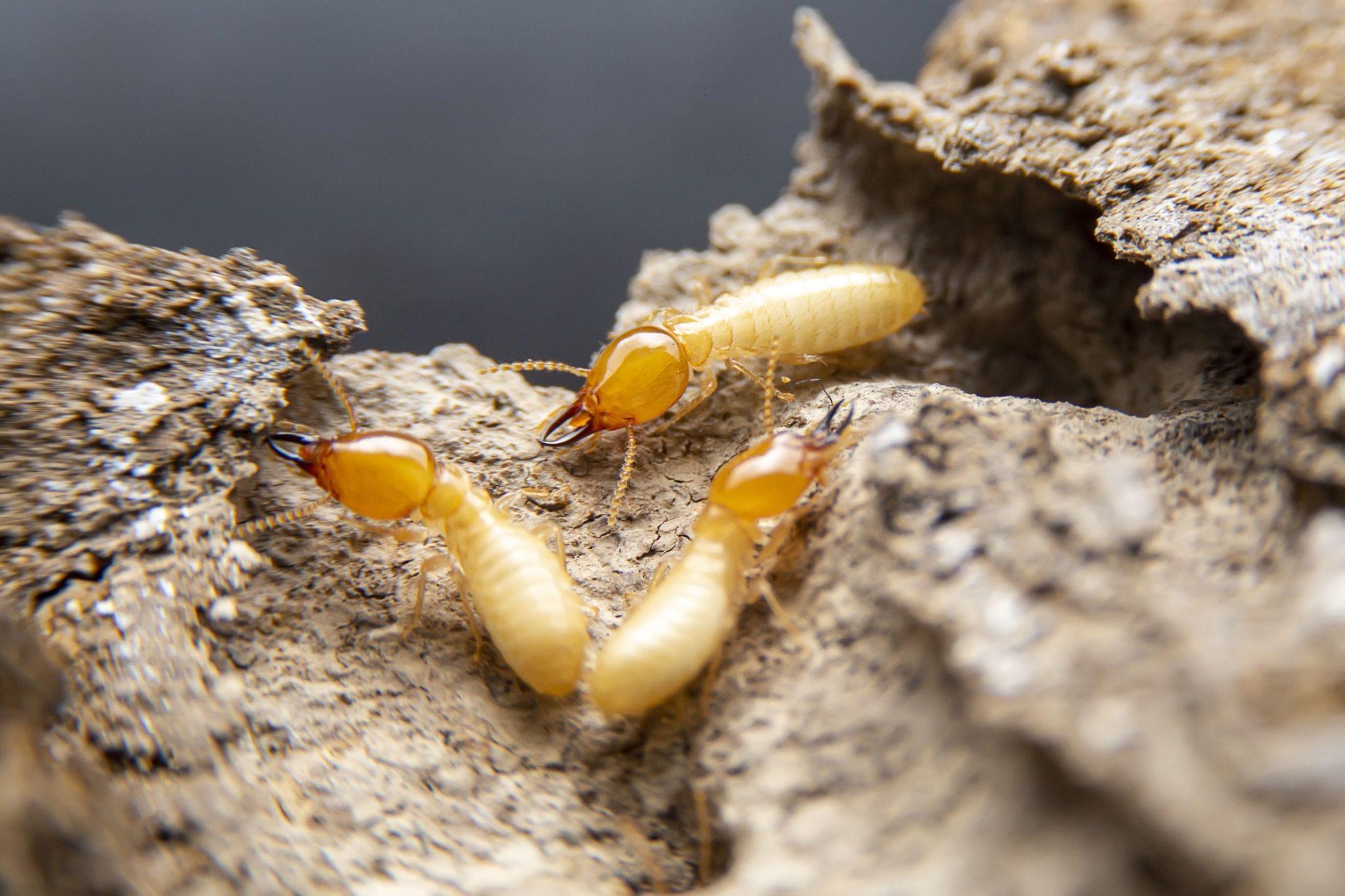
A mature subterranean termite colony can include anywhere from a few thousand to well over a million workers, living in an underground nest you cannot see and usually cannot reach. The termites you spot on a windowsill or crawling across a mud tube are a small fraction of that colony. The queen, who is the one producing the workers that keep the colony alive, stays buried deep in the nest and is rarely anywhere near the surface activity a spray or bait stake could reach.
Termites present a different problem. Instead of one underground nest, they live in small, isolated colonies inside the wood they are eating, and a single home can have several separate colonies at once. Treating one piece of furniture or one section of trim does nothing for a colony living in the attic framing on the other side of the house.
Because of this, killing visible termites, even a large number of them, rarely affects whether the colony as a whole survives.
Do DIY Termite Treatments Actually Work?
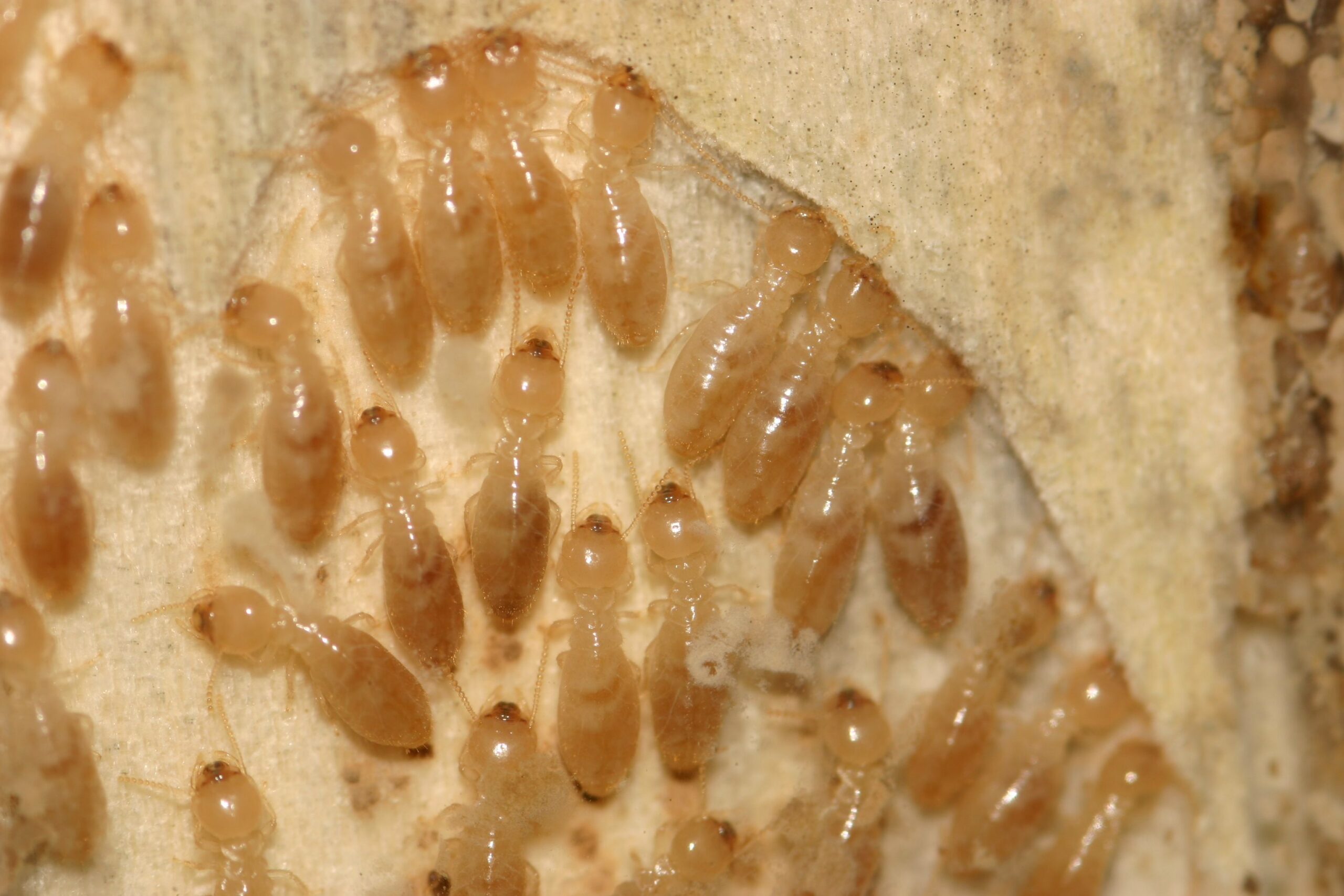
Most of what is marketed to homeowners falls into a few categories, and each one has the same basic limitation: it can only affect termites it directly contacts.
- Contact sprays and foams. These kill on contact but do not travel through the colony the way a professional non-repellent termiticide or bait matrix does. They also cannot reach termites that are underground or sealed inside wood.
- Store-bought bait stakes. Consumer bait products use much lower concentrations of active ingredient than professional bait systems, and without a technician monitoring and adjusting station placement, they rarely intercept enough of the colony to matter.
- Foggers and bug bombs. These are built for flying and crawling insects that are exposed in open air. They do not penetrate soil, wall cavities, or wood, which is exactly where termites live.
- “Natural” remedies. Orange oil, vinegar, and similar products can kill individual termites in direct, concentrated contact, but there is no reliable field evidence that they eliminate an established colony.
There is also a real risk to disturbing termites without treating them properly. Breaking open a mud tube or spraying visible workers can cause a colony to scatter or split into smaller satellite groups elsewhere in the structure, a behavior sometimes called budding. That can make an infestation harder to find and treat later, not easier.
Termite Home Remedies People Ask About
These are the products homeowners search for most often. Here a short answer for each.
- Does bleach kill termites? Only the ones it directly touches. Bleach breaks down quickly and does not reach termites underground or inside wood, and it can damage finished surfaces.
- Does vinegar kill termites? In a concentrated, direct application, vinegar’s acidity can kill individual termites on contact. It has no effect on a colony you cannot see.
- Does boric acid or borax kill termites? Boric acid is genuinely toxic to termites when ingested, and it is used as an ingredient in some professional wood treatments. The concentrations and application methods sold to homeowners are rarely enough to reach or eliminate a full colony on their own.
- Does diatomaceous earth kill termites? It dehydrates soft-bodied insects on contact, but only where the powder physically touches them. It will not reach termites in a below-grade nest or sealed wood galleries.
- Do beneficial nematodes work on termites? Lab studies show some promise against subterranean termites in soil, but field results are inconsistent, and nematodes are not considered a standalone substitute for professional treatment.
Is it Legal to Apply Termiticide Yourself?
Not always, and this is one of the most overlooked parts of DIY termite control. Many of the most effective termiticide products, including the soil-applied liquid termiticides and non-repellent formulations professionals rely on, are registered by the EPA as restricted-use pesticides. Under federal pesticide law, restricted-use products can only be purchased and applied by someone holding a state pesticide applicator license or certification.
States can add further requirements on top of that federal baseline, and rules vary. New Jersey, for example, requires a state-certified applicator in the termite subcategory to be present for the full duration of any commercial termite treatment application. Pennsylvania, Delaware, and Maryland each regulate structural pest control through their own state agriculture department, and specific product and application rules can differ. If you are unsure what you are legally allowed to buy and apply where you live, your state department of agriculture’s pesticide regulation division can confirm current requirements before you purchase anything.
General-consumer termite products sold at hardware stores are typically weaker, repellent-type formulations that are legal for homeowner use, but they were never designed or tested to eliminate an established colony on their own.
What You Can Safely Do While You Wait For a Professional Termite Control Technician
None of the following will eliminate an existing colony, but they reduce the conditions that attract termites and help protect the rest of your property in the meantime.
- Reduce wood-to-soil contact around the foundation, including fence posts, deck supports, and stored lumber.
- Fix leaks, improve drainage, and keep gutters clear so moisture does not collect near the foundation.
- Remove stumps, mulch piles, and firewood stacked directly against the house.
- Photograph anything you find, including mud tubes, frass, or damaged wood, so a technician has a record of what changed over time.
- Do not disturb mud tubes or spray visible termites. Leave them intact until a professional can assess them.
- Schedule a professional inspection as soon as possible rather than waiting to see if the problem gets worse.
What Professional Termite Treatment Actually Looks Like
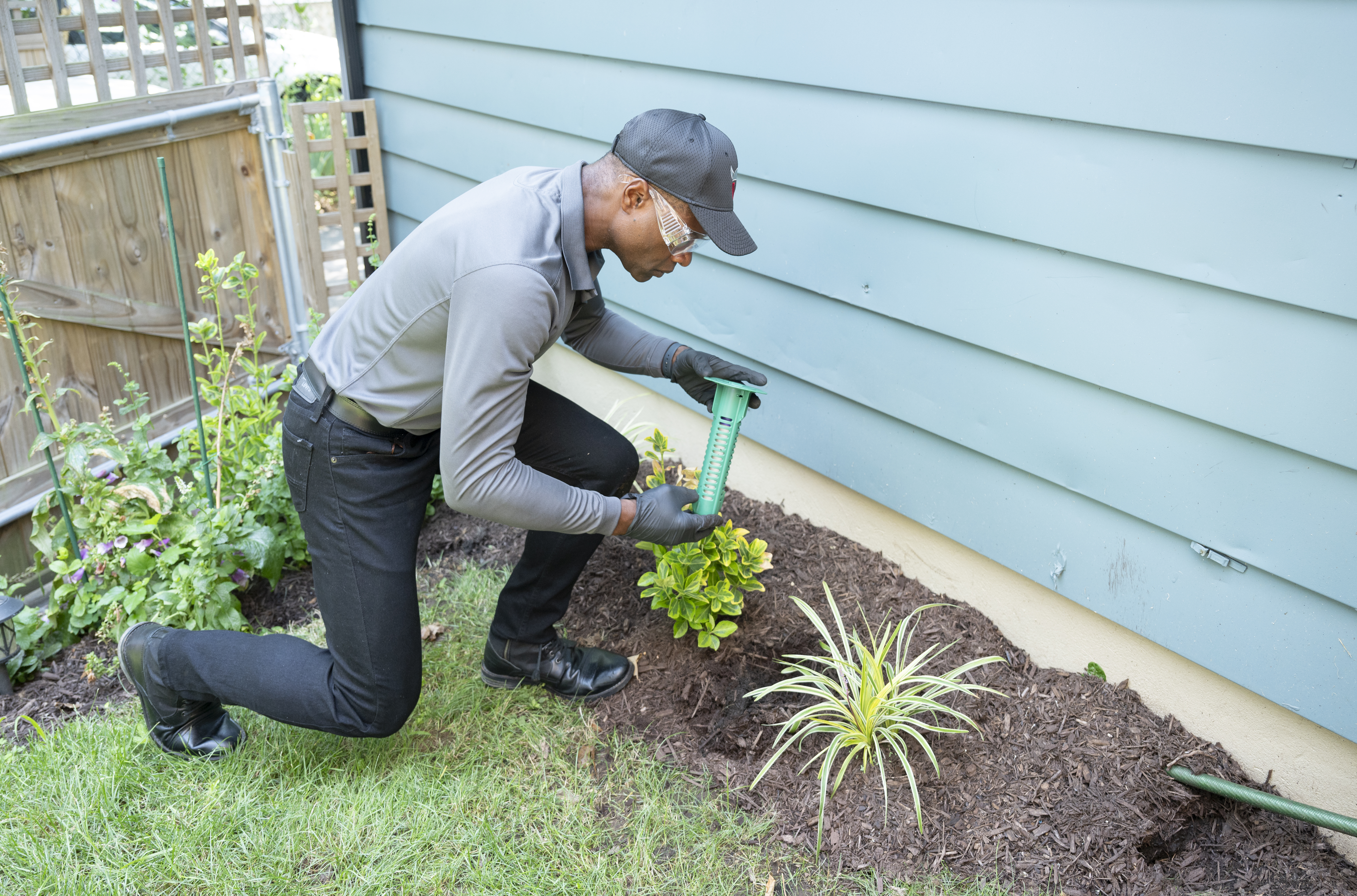
A licensed technician starts with a full inspection to confirm the species involved and map out where activity is occurring, not just where it is visible. From there, treatment is usually built around one of two approaches: a liquid termiticide barrier applied to the soil around the structure, or a bait station system installed around the perimeter that eliminates the colony over time. The right choice depends on your property’s construction, the severity of activity, and the termite species involved. Professional treatment is also backed by a service agreement, so if activity returns, you are covered instead of starting over with another one-time product.
DIY Termite Control vs. Professional Termite Management
A bottle of termiticide spray or a box of consumer bait stakes costs relatively little upfront, which is a large part of the appeal. The problem is that termite damage keeps accumulating while a partial or ineffective treatment buys time for termites without buying results for you. Professional treatment carries a higher upfront cost, but it is priced against actually solving the problem, backed by a warranty, and scoped to your specific property rather than a generic retail product.
When to Stop Trying DIY and Call a Professional Termite Exterminator
A call for professional help is recommended right when noticing termite activity, rather than another trip to the hardware store. Here are the signs to look for:
- You have found more than one mud tube, or tubes in more than one location.
- You have seen winged swarmers inside your home, which usually signals an established colony.
- Wood sounds hollow when tapped, or you can see visible structural damage.
- A neighboring property has confirmed termite activity.
- You are buying or selling a home and need a wood-destroying insect inspection report.
If any of these apply, a DIY product is not going to be the deciding factor between a small problem and a big one. A professional inspection will.
Frequently Asked Questions About Getting Rid of Termites
Skip the Guesswork. Get a Free Termite Inspection with Viking Pest Control Today!
DIY products can buy you a false sense of progress while a colony keeps growing out of sight. If you are seeing any signs of termite activity, the fastest way to know what you are actually dealing with is a professional inspection, and Viking Pest Control offers those free of charge across New Jersey, Pennsylvania, Delaware, and the Eastern Shore of Maryland.
Call 1-800-618-2847 or request your free termite inspection online. Termite protection is available on its own or as part of Viking Pest’s Gold Shield home protection plan.

Schedule Service Today & Get Unlimited Service Requests*
* Some restrictions apply
Buy Online
Customer Login