If you’ve spotted large black ants roaming around your kitchen or bathroom, it’s time to pay attention. While they might look like just another bug, these pests could be carpenter ants—one of the most common and destructive wood-damaging insects found in homes across the Mid-Atlantic.
So how do you know if these ants have set up shop inside your walls? And more importantly, what should you do about it? Here's what every homeowner needs to know about how to get rid of carpenter ants.
5 Signs You Have An Infestation and Need Carpenter Ant Control
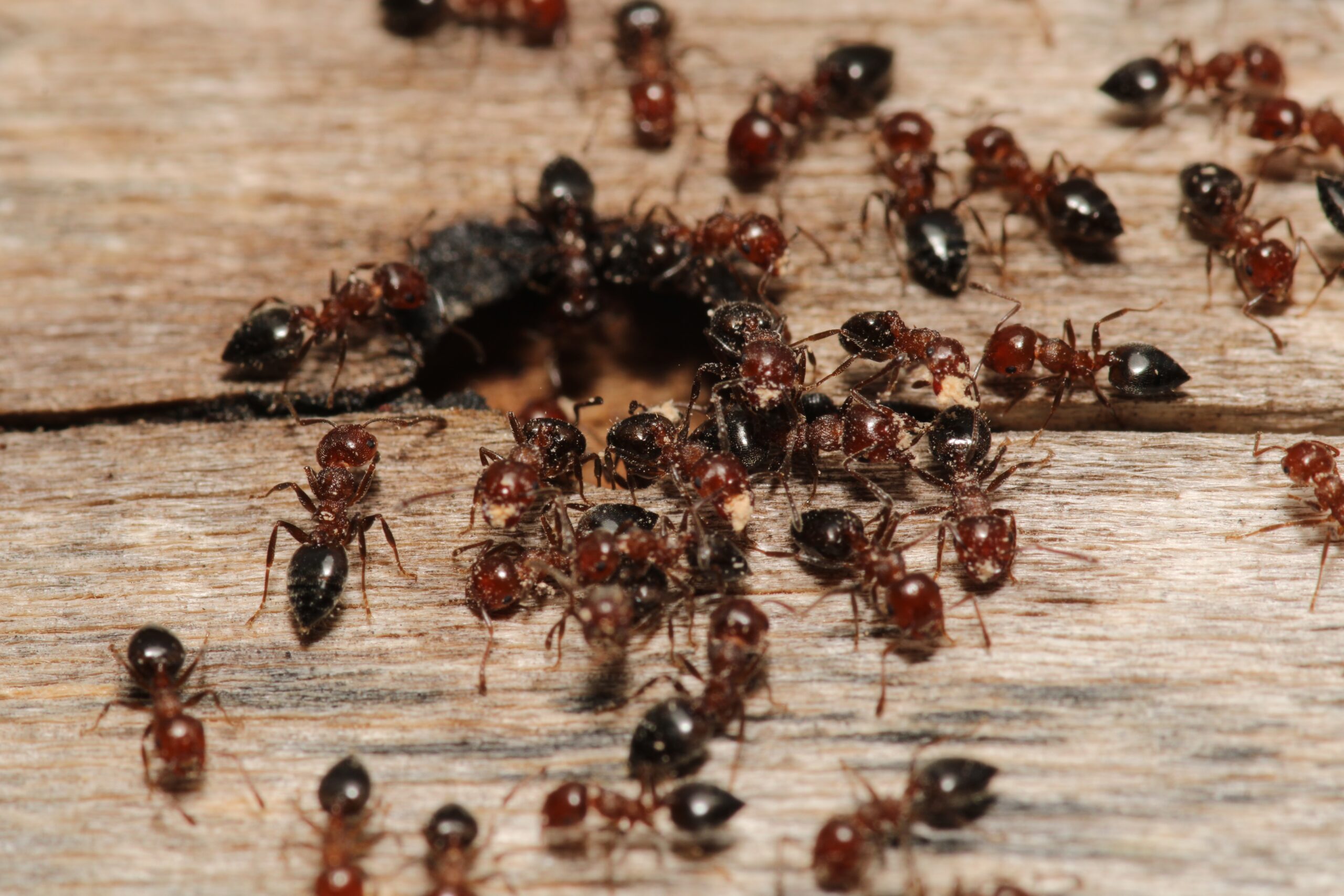
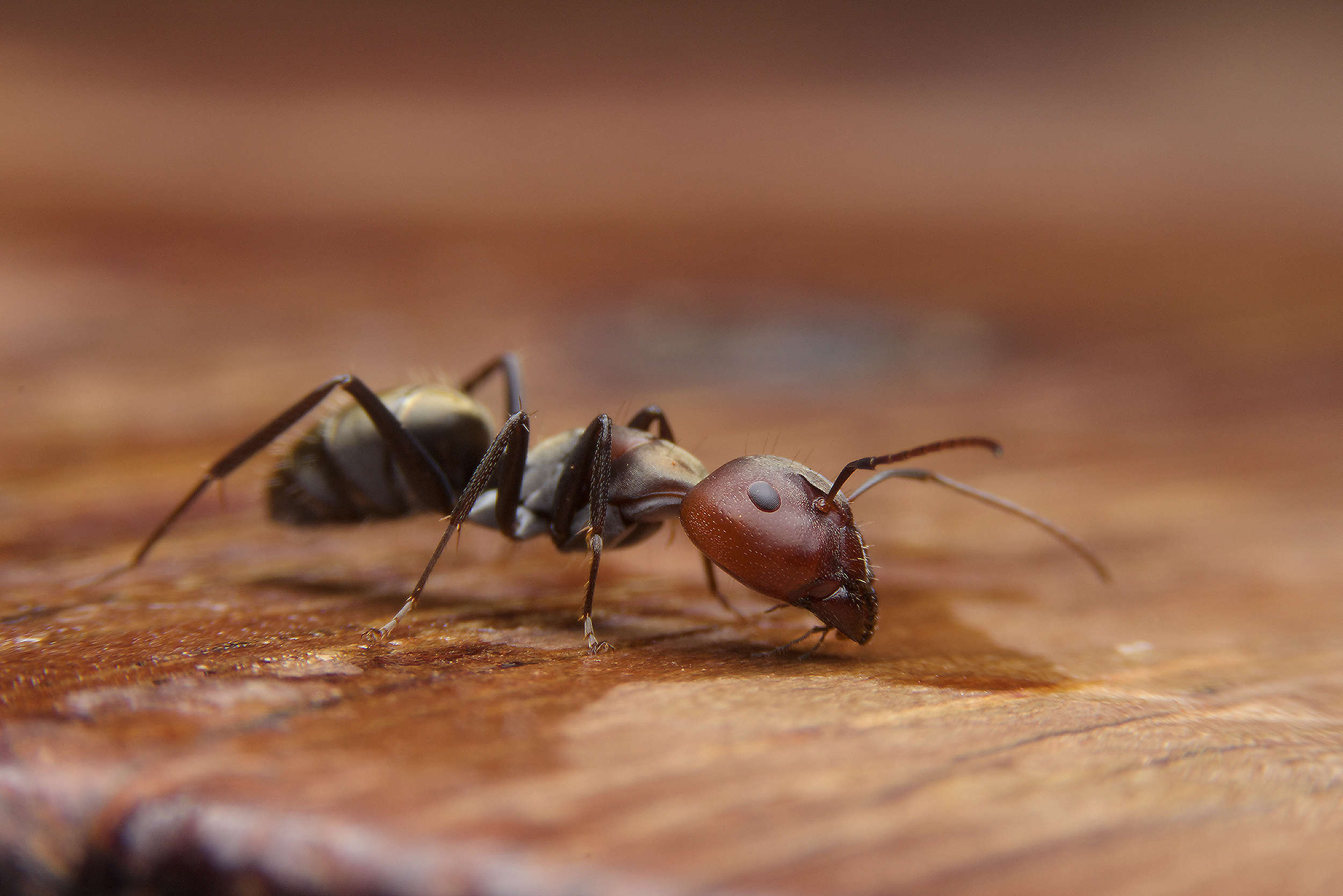
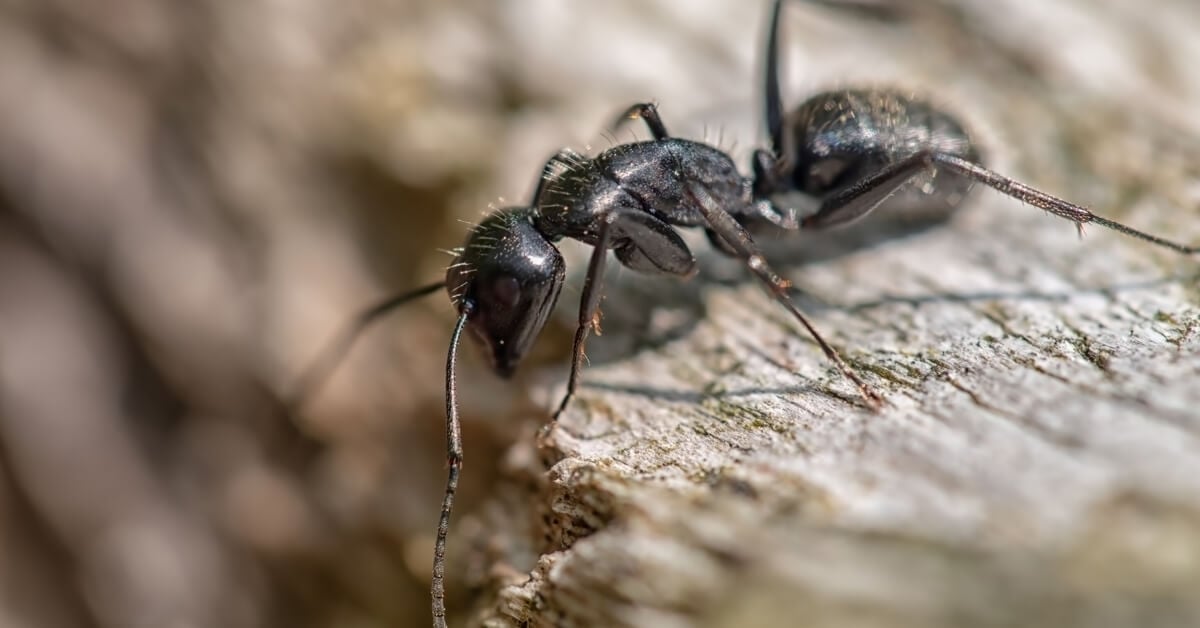
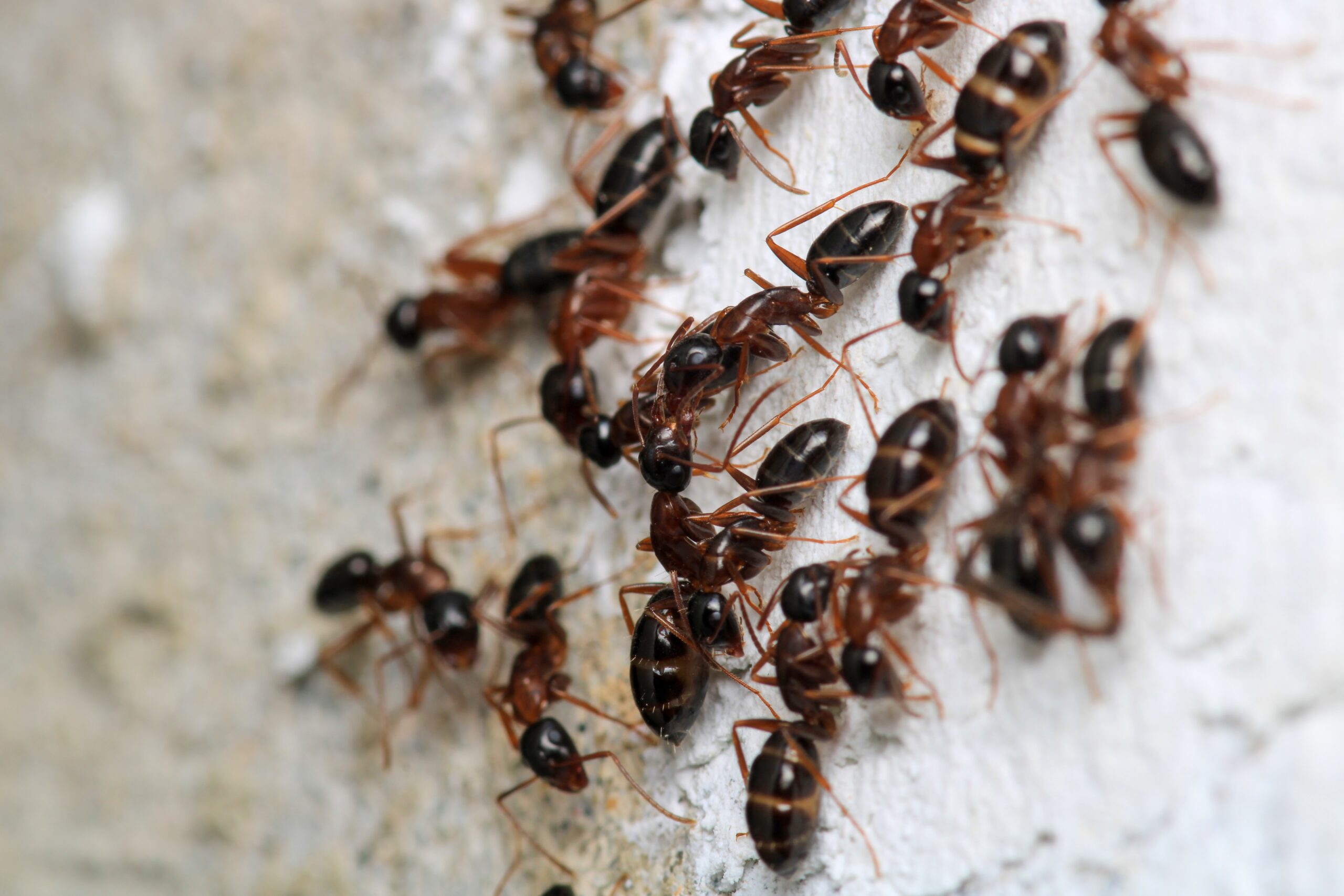
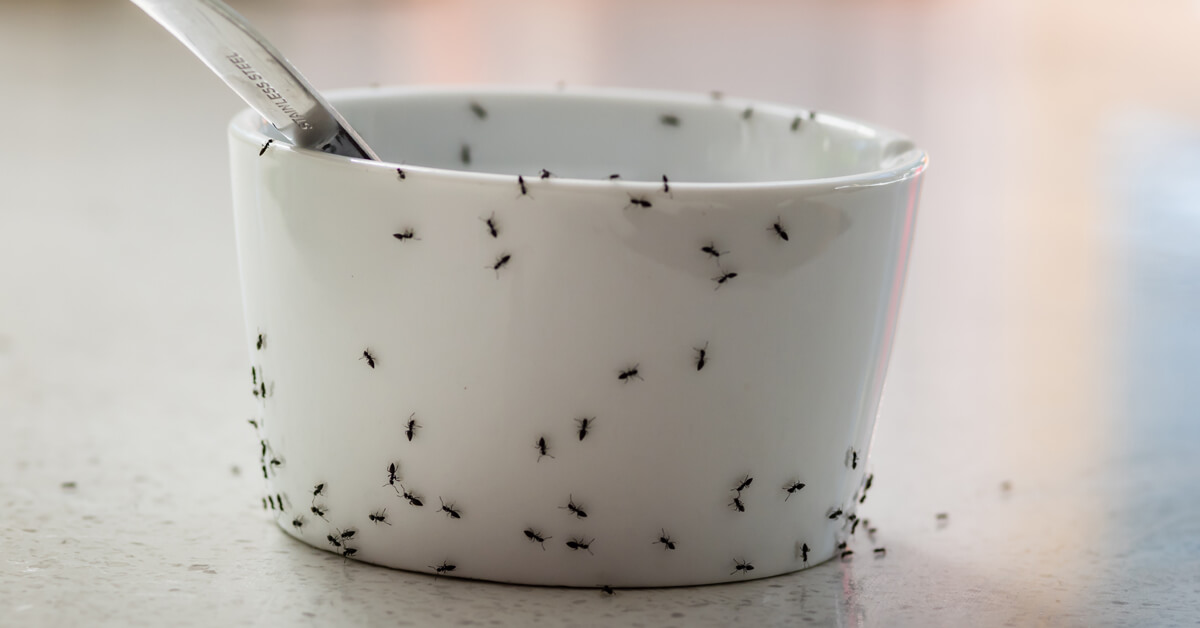
The Ants Themselves The most obvious sign is seeing carpenter ants inside your home. These ants are typically large (up to ½ inch) and either all black or black with red coloring. They’re especially active in the late afternoon and early evening, particularly during warm summer days. If the weather turns cold or rainy, they may become even more active indoors.
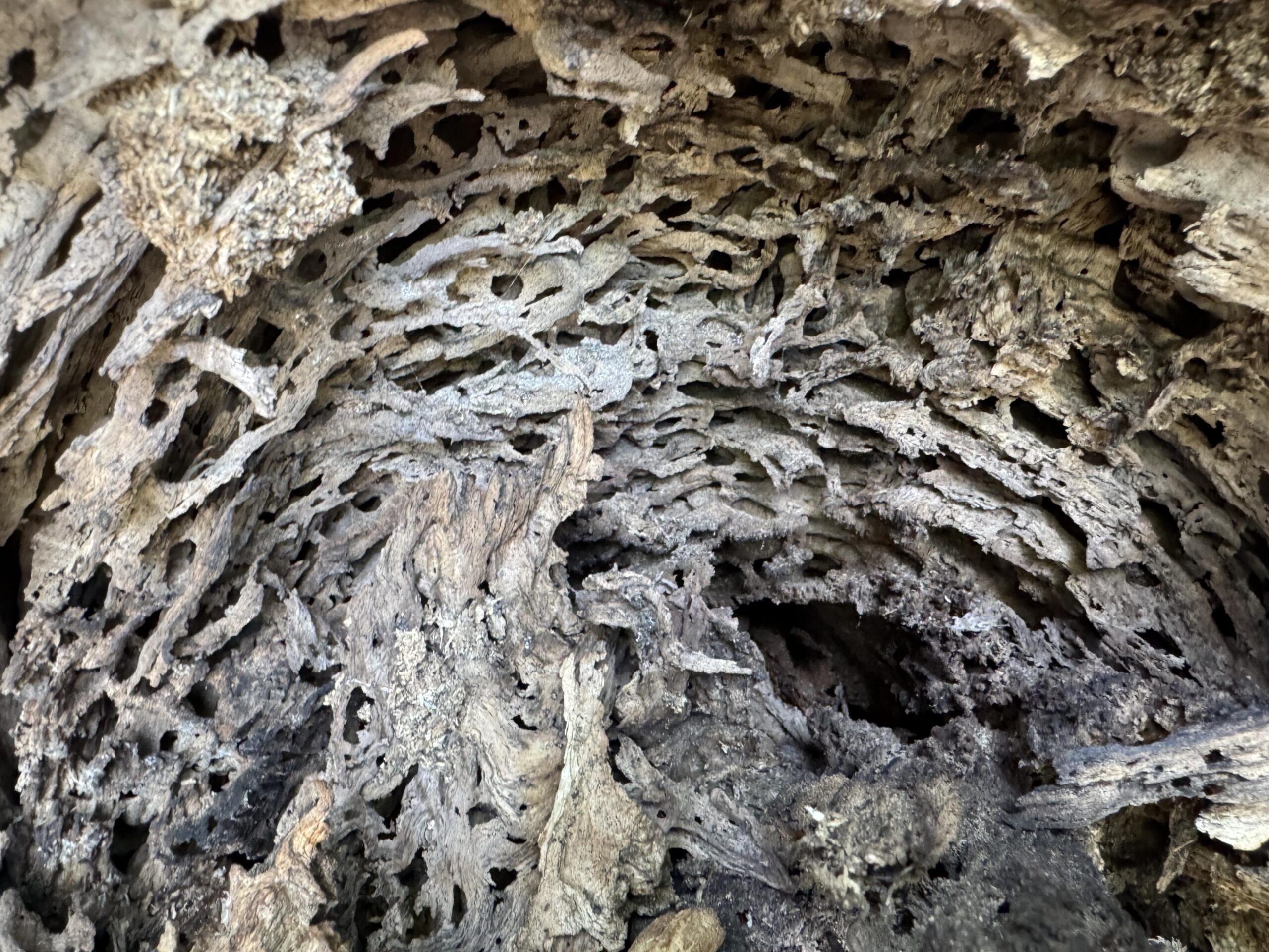
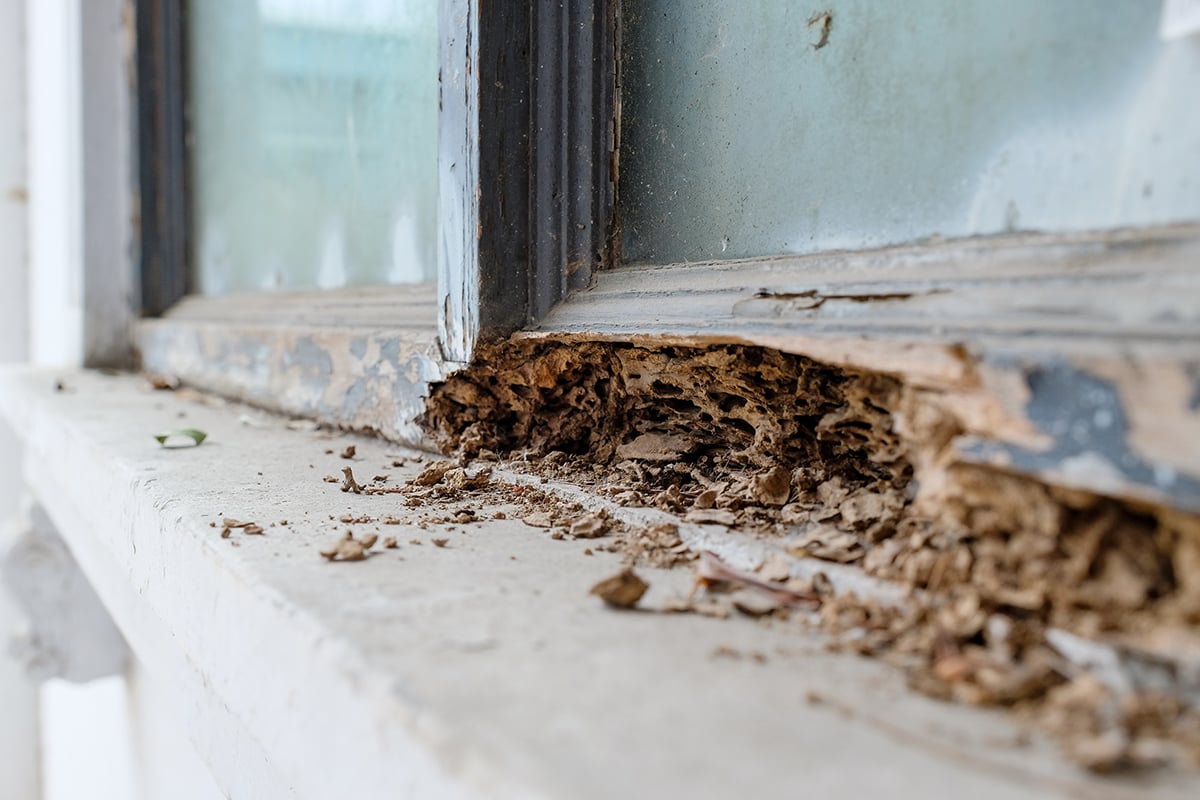
Piles of Frass (Sawdust-Like Debris) Carpenter ants don’t eat wood like termites do. Instead, they chew through it to create nesting galleries, leaving behind small piles of wood shavings and insect parts near the nest entrance. This debris, called frass, is often found in attics, basements, or behind baseboards and window frames.
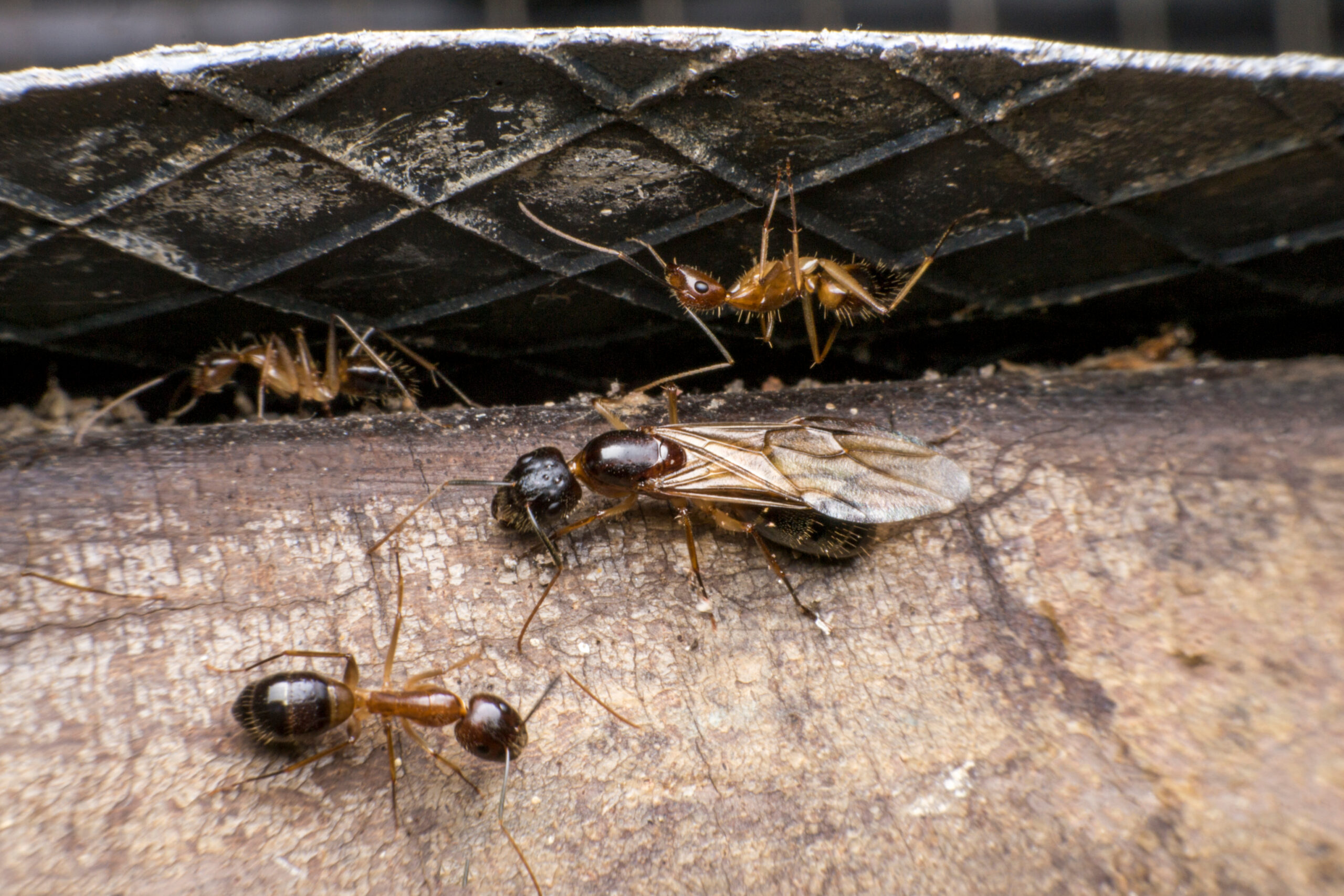
Winged Swarmers During the summer, carpenter ant colonies may produce winged swarmers—ants that leave the nest in large groups to mate and establish new colonies. These swarmers are frequently mistaken for termites. If you spot winged ants inside your home, it’s a strong sign of an active indoor nest.
Rustling Noises in Walls In quiet areas of the home, like a bedroom or attic, you might hear faint rustling or tapping noises coming from inside the walls. That could be ants moving through their tunnels or expanding the nest.
Moisture-Damaged Wood Carpenter ants are drawn to areas with excess moisture or previous water damage. If you’ve had leaks near rooflines, windowsills, chimneys, or plumbing, these areas can become prime nesting sites for a growing colony.
Why Are Carpenter Ants a Problem?
While they may not eat wood like termites, carpenter ants still cause serious structural damage by hollowing out wooden beams, insulation, and even foam. Their colonies can grow quite large, often branching into multiple satellite nests that quietly cause damage in different parts of the house.
Common nesting areas include:
Inside: Rooflines, kitchens, bathrooms, window and door frames, and chimneys.
Outside: Decks, porches, fences, firewood piles, and even trees.
The longer they’re allowed to expand, the more extensive—and expensive—the damage can become.
DIY Treatments: Do They Work?
If you're researching how to get rid of carpenter ants, you've probably looked into do-it-yourself methods for carpenter ant extermination. While it’s tempting to grab an over-the-counter spray and try to tackle the problem yourself, most DIY treatments don’t work on carpenter ants. Here’s why:
Store-bought sprays are repellents, meaning they only kill on contact and cause ants to retreat deeper into walls—making them harder to reach.
Baits from the store are usually designed for smaller ant species, using sweet attractants that carpenter ants often ignore.
Carpenter ants nest in inaccessible areas, like wall voids, making it nearly impossible to reach them without professional tools and knowledge.
In short, DIY solutions often prolong the problem and can end up costing more in the long run.
When to Call Viking Pest Control
If you suspect carpenter ants—or any wood-destroying insect—have invaded your home, the safest, fastest, and most effective option is to call a carpenter ant control company like Viking Pest Control.
At Viking, our licensed technicians:
Know how to identify and locate primary and satellite nests
Use targeted treatments that reach deep into walls and structural voids
Help prevent future infestations by identifying moisture issues and sealing entry points
Don’t wait until you see damage—act early.
Carpenter ants may be silent, but they’re could be eating away at your home’s structure. If you're in New Jersey, Pennsylvania, Delaware, or the Eastern Shore of Maryland, and think you might have a problem, reach out to Viking Pest Control today for carpenter ant extermination and prevention.
Those Big Ants in Your House and Yard Might Be Carpenter Ants! What to Look for and What to Do
Ants come in many different sizes. Some are borderline microscopic, some are as big as an inch and a half long. That said, the biggest ant in one part of the world might be a different species than the biggest ant in another. In the mid-Atlantic states, including New Jersey, Pennsylvania, Delaware, and Maryland, the most notorious big ant is the carpenter ant, and while it might not be the most threatening of big ants, it can be the most damaging to your home and wallet.
The Risk of a Carpenter Ant Infestation
Ants are rarely welcome guests in peoples’ homes, but those big, wood-shredding carpenter ants should be evicted extra-quickly. In their natural environment, Carpenter Ants can be helpful creatures. They break down dead wood from injured and dead trees and put them to more productive use, enriching soil and allowing new life to grow. Unfortunately, most homes are built out of dead wood, which makes carpenter ants anything but helpful during an infestation. The damage they do can be extensive, expensive and is generally not covered by homeowners’ insurance.
Characteristics of Carpenter Ants
So how do you know if the big ants you’re seeing in your home are carpenter ants? Not all big ants in our area are carpenter ants are big, but very few non-Carpenter species are likely to enter your house. Carpenter ants like houses more than the average ant by quite a lot. Second sign that you have a carpenter ant is the presence of frass- the piles of accumulated chewed up wood that can look like a pile of saw dust. You should also check the trees in your yard. Carpenter ants are often found climbing up and account trees, especially trees that are injured or dead as they build their homes into lifeless wood. If there are Carpenter Ants in your yard, they have an excellent chance of finding their way over to your home.
Carpenter ants, like most creatures, prefer the easy route when it comes to building their homes. Instead of working harder than necessary, they look for soft, damaged wood that’s already started to break down—like a tree that’s been weakened by water. The moisture makes the wood easier to carve out and provides the perfect humid environment for their colony to thrive.
Unfortunately, the same thing happens in homes. Areas with water damage—like doorframes, window frames, porch columns, and roof decking—become prime real estate for carpenter ants. They’re also drawn to dark, hidden spaces with little airflow, making certain parts of your home an ideal spot for them to settle in.
Most infestations actually start outside, often in trees that have been quietly housing carpenter ants for years. But as space in the tree gets tight, they expand, forming satellite colonies—sometimes inside homes. In many cases, homeowners don’t even realize there’s a problem until the ants have already moved in.
That’s why keeping an eye on the trees in your yard is so important! Catching an infestation early can save you from the much bigger (and more expensive) headache of dealing with carpenter ants inside your home later on.
Contact Viking Pest Control for Comprehensive Carpenter Ant Extermination and General Pest Control
Dealing with a carpenter ant infestation? This is definitely a job best left to the pros. These ants can nest in so many different places that trying to find and eliminate them all on your own can feel like an impossible task.
Pest control experts have specialized tools to tackle the problem effectively. They use dust applicators to reach deep into hidden voids, ultra-low volume machines to inject pesticide into tiny gaps, and even tools like drills and moisture meters to track down hard-to-find nests. And here’s the kicker—there’s often more than one nest in a single home!
If the ants are coming from outside, treatments like residual sprays around the foundation can help keep them from getting in. But if their main colony is in a tree nearby, just spraying your home’s exterior might only buy you some time before they find another way inside.
Bottom line? If you’re dealing with carpenter ants, bringing in a professional carpenter ant exterminator from Viking Pest can save you a lot of time, frustration, and potential damage in the long run.
Carpenter Ants in Your Home? Here's What You Need to Know
Carpenter ants may seem like just another household nuisance, but these destructive pests can cause serious structural damage if they invade your home. Unlike termites, carpenter ants do not eat wood. Instead, they tunnel through it to build nests, weakening wooden structures over time and creating costly repair issues for homeowners.
Knowing how to identify carpenter ants, recognize the warning signs of an infestation, and prevent them from moving in can help protect your home from long-term damage.
What Do Carpenter Ants Look Like?
Carpenter ants are much larger than many common household ants, usually measuring between 1/4 and 3/4 of an inch long depending on their role within the colony.
Some common identifying features include:
Black, dark brown, red, or red-and-black coloring
Segmented bodies with narrow waists
Elbowed antennae
Large mandibles used for chewing through wood
Rounded thorax profiles
Winged carpenter ants may also appear indoors during mating season. Spotting flying ants inside your home can sometimes indicate a mature nest nearby.
Why Carpenter Ants Are Dangerous
Carpenter ants can become a major problem once they establish satellite colonies inside homes. Over time, they tunnel through damp or damaged wood to create smooth, hollow galleries for nesting.
They commonly target:
Support beams
Window frames
Roof structures
Flooring
Cabinets
Wall voids
Crawl spaces
Attics
Large colonies can contain thousands of worker ants continuously expanding tunnels through wooden structures. Left untreated, carpenter ant activity may weaken parts of your home and lead to expensive structural repairs.
Signs of a Carpenter Ant Infestation
Carpenter ants are often active at night, making infestations difficult to detect early. Some common warning signs include:
Small Piles of Sawdust
Carpenter ants leave behind wood shavings known as frass as they tunnel through wood. These small piles often appear beneath walls, windowsills, baseboards, or wooden structures.
Rustling or Tapping Sounds
You may hear faint rustling noises inside walls or ceilings at night as ants move through their galleries.
Large Ants Indoors
Finding large black ants regularly inside your kitchen, bathroom, or basement may indicate a nearby nest.
Flying Ants Inside the Home
Winged reproductive ants emerging indoors can signal a mature infestation hidden within walls or wooden structures.
Smooth Tunnels in Wood
Unlike termites, carpenter ants create smooth and clean galleries inside wood rather than rough or mud-filled tunnels.
Ant Trails
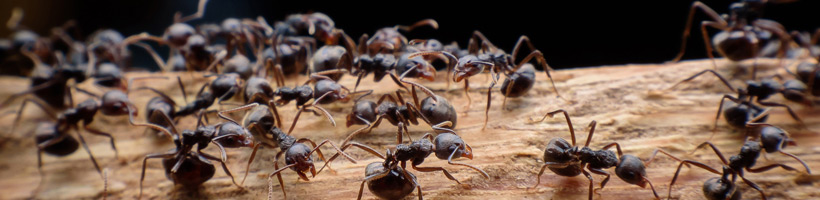
Worker ants often travel in visible trails while searching for food sources, especially during the evening hours.
What Attracts Carpenter Ants
Carpenter ants are strongly attracted to moisture-damaged or decaying wood. Homes with water issues are especially vulnerable to infestations.
Common attractants include:
Roof leaks
Plumbing leaks
Damp crawl spaces
Rotting wood
Water-damaged window frames
Wet basements
Firewood piles
Tree stumps
Decaying logs
Food sources also play a role. Carpenter ants feed on:
Sugary foods
Grease
Protein-based foods
Honeydew produced by aphids
Other insects
Even small crumbs or spills inside the home can attract foraging ants.
How to Help Prevent Carpenter Ants
Reducing moisture and removing nesting opportunities can help lower your risk of infestation.
Eliminate Damp Wood
Repair leaks promptly and replace rotting or water-damaged wood around the home.
Store Firewood Properly
Keep firewood elevated off the ground and stored away from the home in a dry location.
Trim Vegetation
Cut back shrubs, bushes, and tree branches that touch your home to reduce access points.
Remove Yard Debris
Old stumps, logs, leaves, and decaying wood can become nesting sites near your property.
Seal Entry Points
Inspect your home for cracks, gaps, and openings around windows, doors, siding, and foundations.
Reduce Indoor Moisture
Use dehumidifiers in basements or crawl spaces and improve ventilation where needed.
Why DIY Carpenter Ant Treatments Often Fail
Many homeowners attempt to eliminate carpenter ants using over-the-counter sprays or bait products. While these products may kill visible ants, they often fail to eliminate the entire colony.
Carpenter ants frequently establish hidden satellite nests behind walls, under floors, or inside structural wood. Treating only the ants you see rarely solves the root of the problem.
Improper use of store-bought pesticides can also create safety concerns for children and pets and may even cause colonies to spread into new areas of the home.
Professional Carpenter Ant Control with Viking Pest Control
Successful carpenter ant treatment requires locating the nest, eliminating the colony, and addressing the conditions attracting the ants in the first place.
Viking Pest Control provides carpenter ant control services throughout New Jersey, Pennsylvania, Delaware, and the Eastern Shore of Maryland. Their pest management professionals can inspect your home, identify nesting activity, and create a customized treatment and prevention plan designed to protect your property long-term.
What is the Difference Between Termites and Carpenter Ants?
Protecting your home or business from invasive species is a must, as even national franchises can suffer significant losses due to a lack of adequate pest control and prevention. Carpenter ants and termites are prevalent species that cause quite a lot of damage to homes and businesses over time if not caught early. But catching it early requires knowing the signs of an infestation and which pest is damaging your property.
Given that termites and carpenter ants are detrimental in similar ways, how do you know which one is which? How do you identify carpenter ant damage to termite damage?
That's what we're here to look at today. Read on to find out how you can differentiate between these two when calling a home or commercial pest control company.
What is Causing Wood Damage?
If you aren't sure about whether your property has a termite or carpenter ant problem, there are a few different factors to help you narrow everything down. Let's start with what they look like.
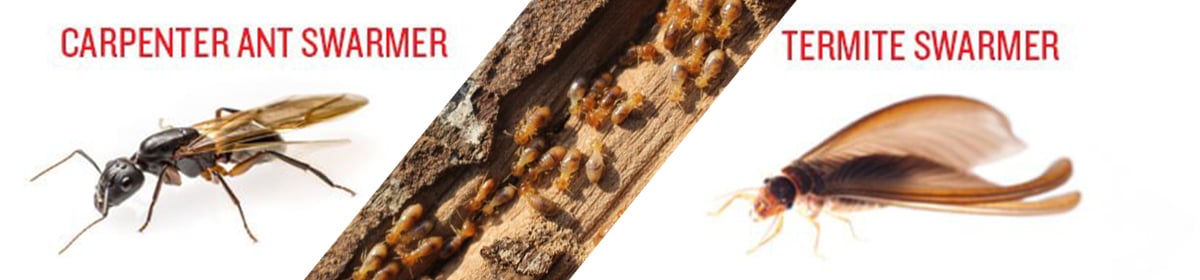
Termites have shorter, two-segment bodies consisting of a head and thorax, while carpenter ants have three segments: a head, abdomen, and thorax.
Another difference is that termites eat wood while carpenter ants, as the name suggests, deliver the wood they chip at to build nests. Both, however, rely on moisture to survive.
Termite and Carpenter Ant Swarmers
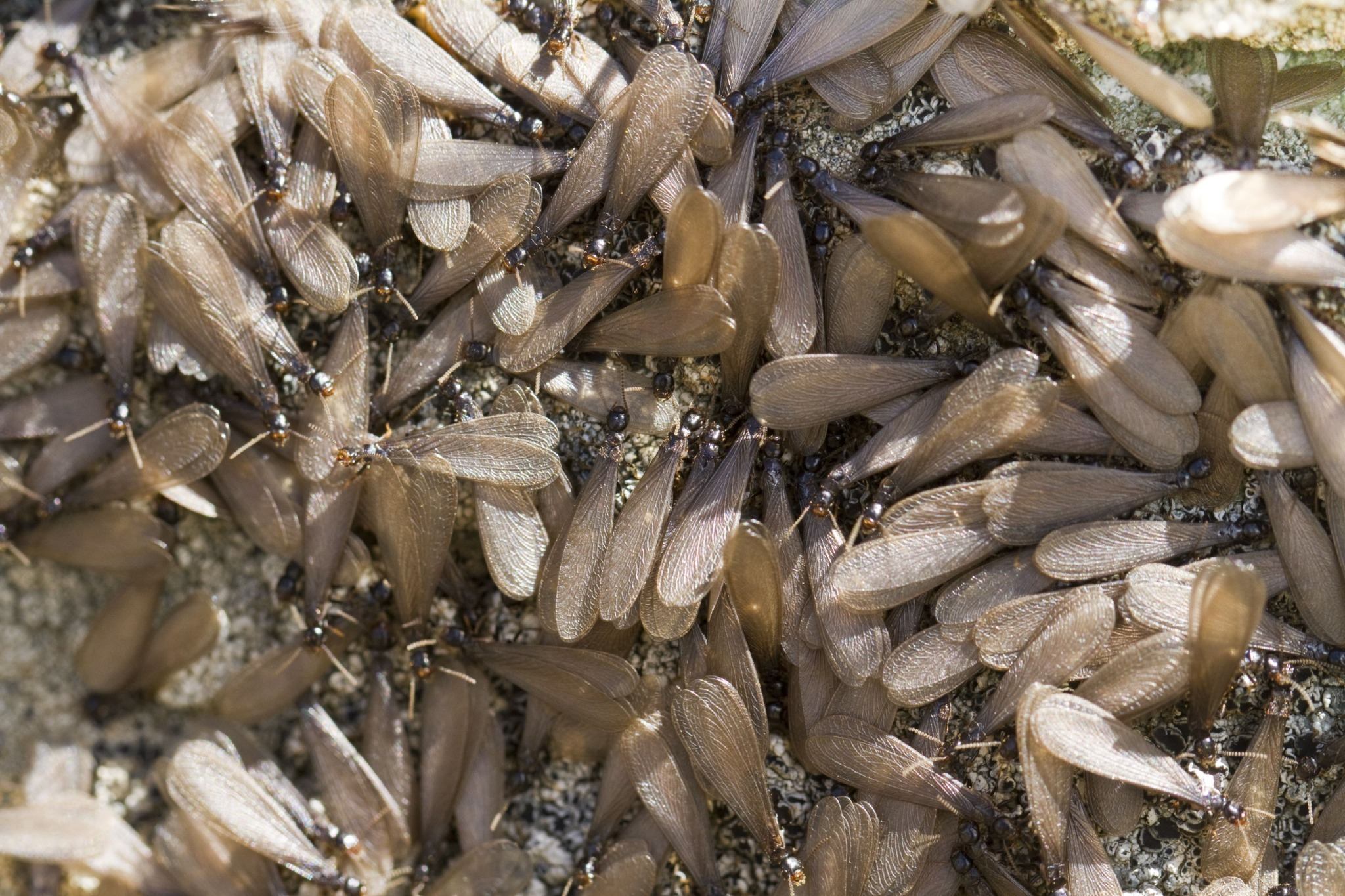
Both ant and termite colonies include reproductives that grow wings and become swarmers. This happens when colonies become too large. While this phenomenon usually occurs during the Spring, it has been known to happen during other times of the year.
The difference between termite and ant swarmers is when they come out to look for new colonies. Termites often come out during the day, while carpenter ant swarmers come out after the sun comes down. Ant swarmers also have much shorter wingspans than termite swarmers.
Having a trained residential or commercial insect exterminator around can help you identify them.
Signs of Termite Infestation
The rare case where you see termites come out from the ground is when they're looking for a place to start a new colony. Sometimes the reproductive termites leave their wings or their dead bodies on windowsills.
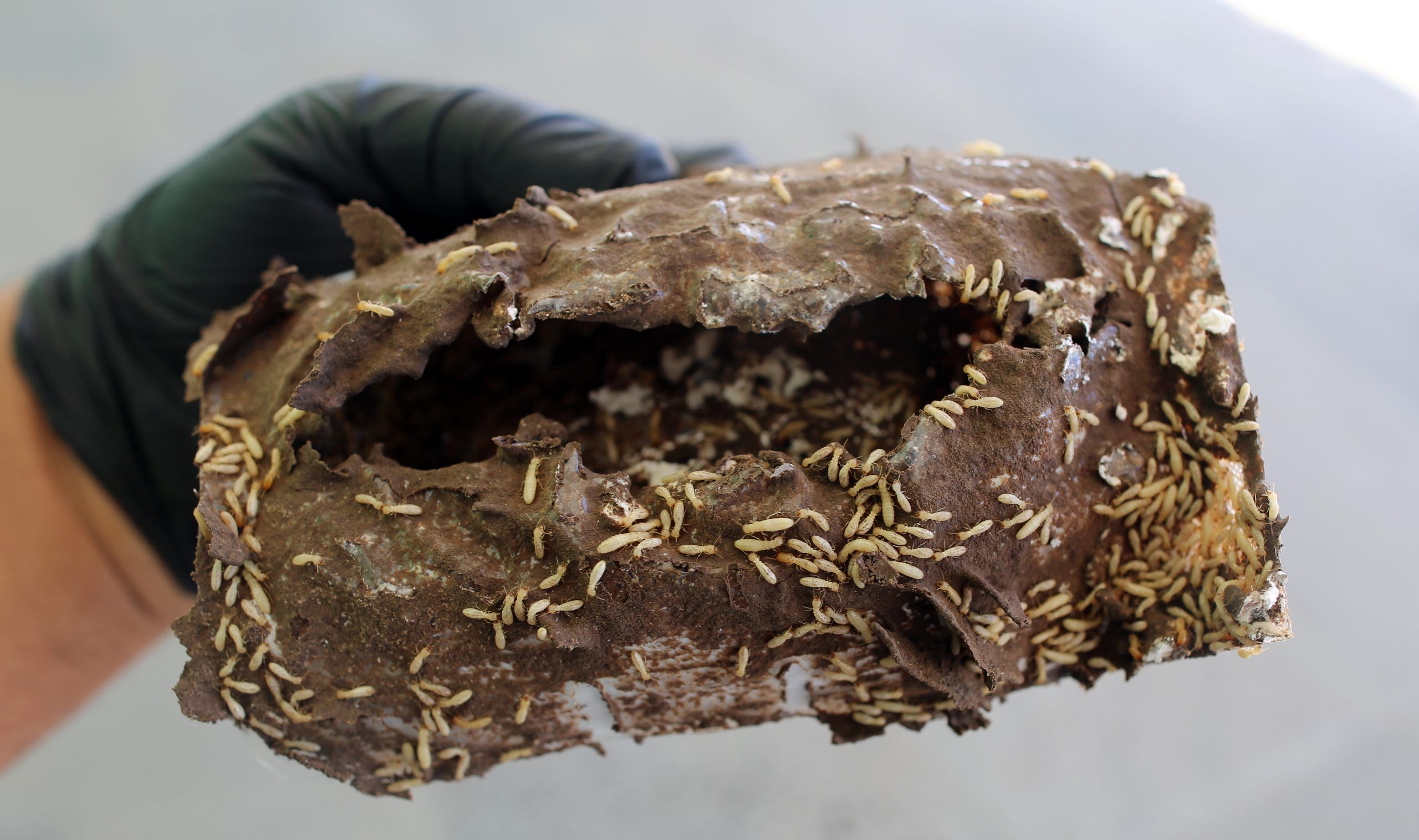
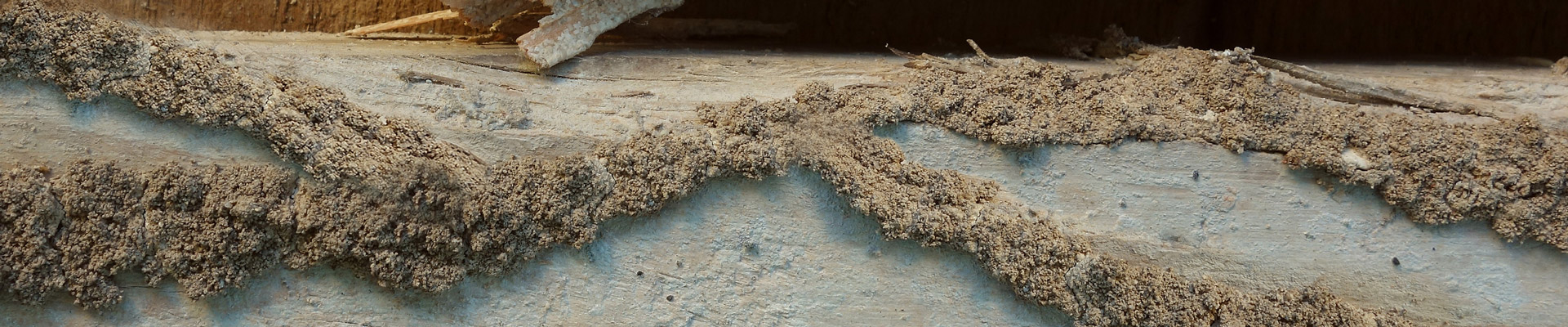
If you can’t see these termites or their wings, you can look for mud tubes. These are made up of saliva, wood, waste, and soil to provide moisture to a colony.
While you won't see much external damage on your wood, it's essential to know that termites consume wood from the inside out. If you suspect a termite infestation, knock on the wood to find out. If you hear a hollow sound, it's a good sign that termites are in there. These signs can be hard to pinpoint, so calling a pest control professional can help you narrow it down.
Signs of Carpenter Ant Infestation
A frequent sign of a carpenter ant infestation is small holes in your wooden structures with sawdust right outside of them. If the sawdust contains wood, dust, and insect parts, it's likely carpenter ants.
You probably won't hear much rustling or other sounds since carpenter ants work in relative silence.
Calling a Pest Control Company
Preventive pest protection is crucial if you want your property to remain healthy and avoid unwanted health risks and complications in your daily life. Use this guide to help you identify and eventually eliminate both termites and carpenter ants. Viking recommends annual termite inspections during the late Spring.
Are you looking for reliable carpenter ant control or termite extermination? Contact Viking Pest Control for a free estimate!
Termite Swarmers vs Carpenter Ant Swarmers
Seeing flying insects around your home in spring can be alarming, especially when they resemble termites. Because termite swarmers and carpenter ant swarmers look similar at first glance, many homeowners struggle to tell them apart.
Knowing the difference is important. While both pests can signal a larger infestation nearby, termites can cause serious structural damage if left untreated.
This guide explains how to identify termite swarmers, how they differ from carpenter ant swarmers, and what signs of infestation homeowners should watch for.
What Are Termite Swarmers?
Termite swarmers are reproductive termites that leave an established colony to mate and start new colonies.
Unlike worker termites that remain hidden underground or inside wood, swarmers emerge in large numbers during spring and early summer. Because they leave the colony, they are the termites homeowners are most likely to notice.
If you suddenly see flying termites indoors or around your property, it may indicate an active termite colony nearby.
What Do Termites Look Like?
There are several types of termites within a colony, each with different appearances and responsibilities.
Worker Termites
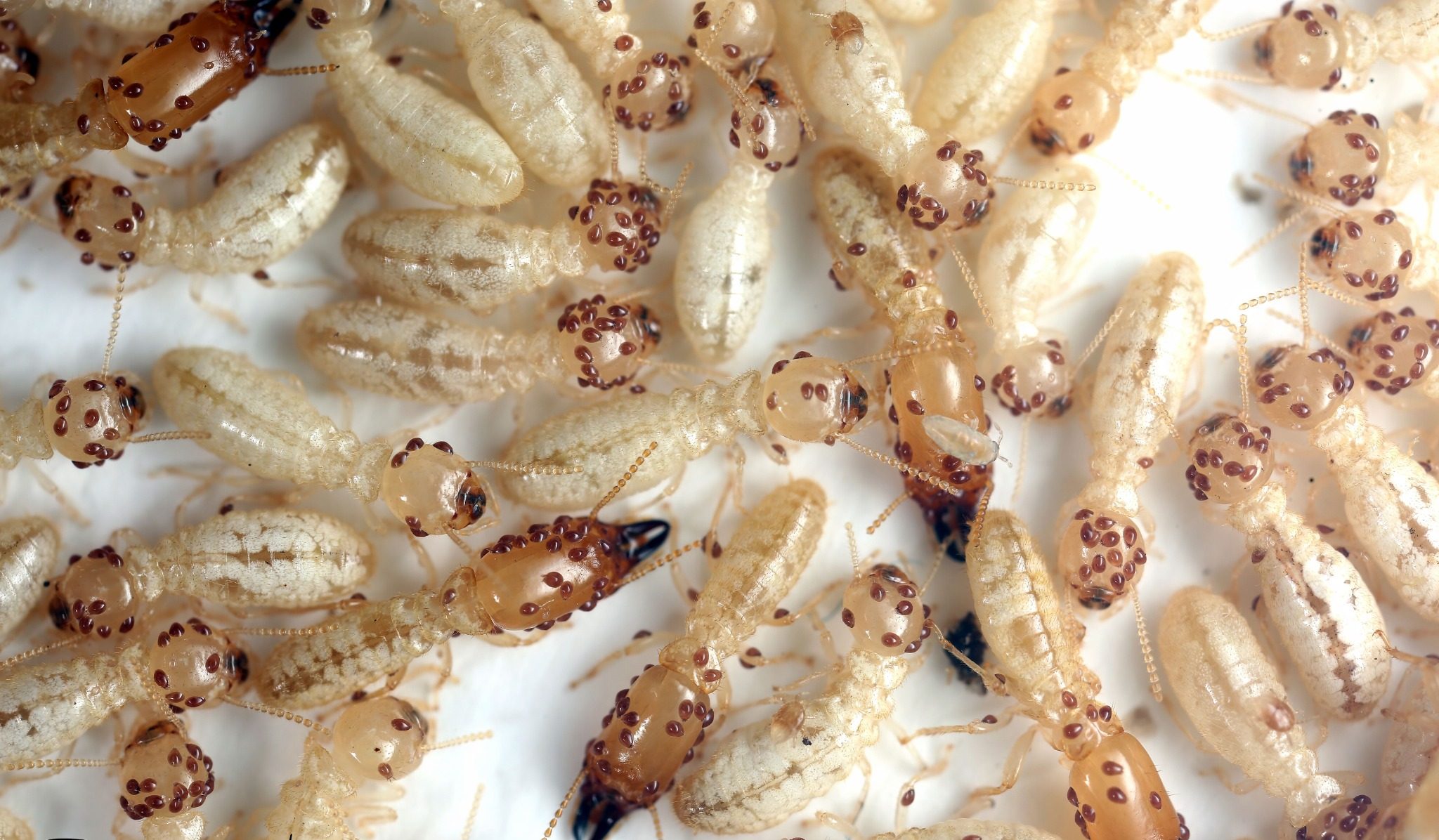
Worker termites are small, pale insects responsible for feeding and maintaining the colony.
Characteristics include:
Cream or off-white coloring
Soft bodies
No wings
No visible eyes
Approximately 1/8 to 3/8 inch long
Soldier Termites
Soldier termites protect the colony from threats.
They typically have:
Cream-colored bodies
Large brown heads
Strong jaws
No wings
No visible eyes
Termite Swarmers
Swarmers are the reproductive termites homeowners most commonly see.
They feature:
Dark brown or black bodies
Straight antennae
Two pairs of long wings
Wings longer than the body
Visible eyes
Swarmers are usually about one inch long including their wings.
Carpenter Ant Swarmers vs. Termite Swarmers
Because both insects swarm during warmer months, they are commonly confused with one another.
However, there are several important differences.
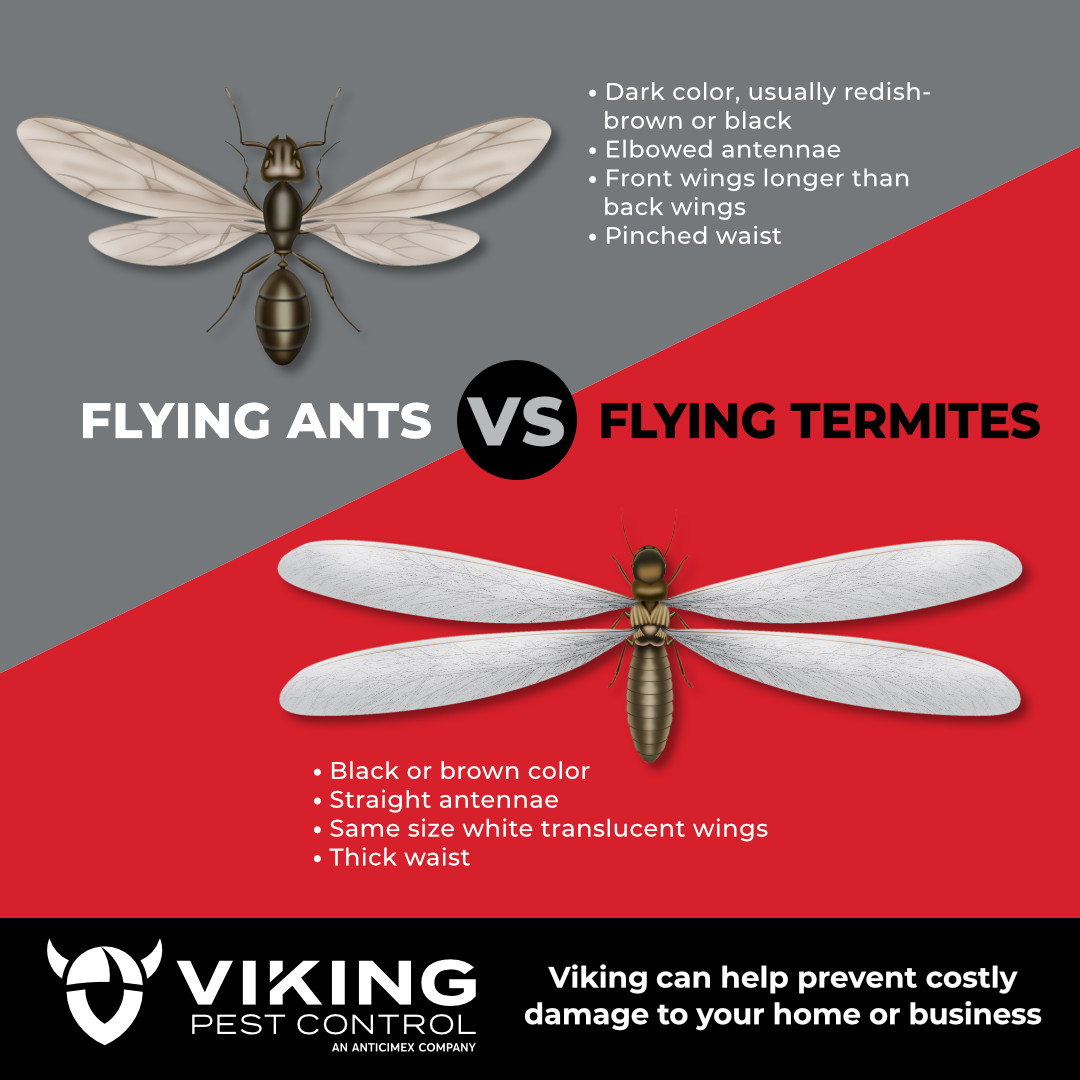
Wing Size
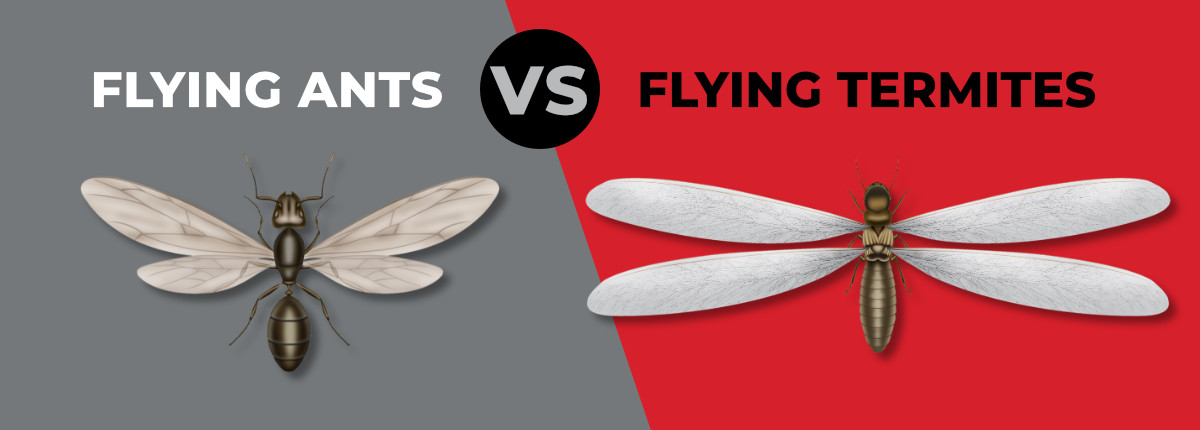
Termite swarmers have long wings that extend well beyond their body length.
Carpenter ant swarmers have smaller wings that are only slightly longer than their bodies.
Antennae Shape
Termites have straight antennae
Carpenter ants have bent or elbowed antennae
Body Shape
Termites have broad bodies that appear mostly straight.
Carpenter ants have narrow “pinched” waists that clearly separate body segments.
Color
Termite swarmers are usually dark brown or black with lighter wings.
Carpenter ant swarmers are often darker overall and may appear shinier.
Signs of a Termite Infestation
Because termites spend most of their lives hidden, homeowners often notice the damage before they see the insects themselves.
Mud Tubes
Subterranean termites build mud tubes to travel between the soil and wood structures while protecting themselves from exposure.
These tubes may appear along:
Foundation walls
Basement surfaces
Crawl spaces
Support beams
Discarded Wings
After swarming, termites shed their wings.
Small piles of discarded wings near windows, doors, or light sources may indicate nearby termite activity.
Wood Damage and Frass
You may notice damaged wood, hollow-sounding surfaces, or small piles of debris and termite waste near infested areas.
Seasonal Swarming Activity
Swarming activity is most common during spring and early summer when reproductive termites leave colonies to establish new nests.
What to Do If You See Termite Swarmers
If you discover termite swarmers inside or around your home, avoid disturbing the area too much before an inspection.
Helpful steps include:
Vacuuming visible swarmers and discarded wings
Marking where swarmers appear to be emerging
Avoiding tearing into walls or wood structures
Contacting a professional termite exterminator promptly
Marking the activity area can help technicians locate the source of the infestation more efficiently.
Why Professional Termite Control Is Important
Although swarmers themselves do not damage structures directly, they indicate an established colony may already be present.
Professional termite treatment helps:
Identify active colonies
Prevent structural damage
Eliminate existing infestations
Protect against future termite activity
Because termites often remain hidden for long periods, early detection and treatment are critical.
Professional Termite Control From Viking Pest Control
Viking Pest Control provides professional termite control services throughout New Jersey, Pennsylvania, Delaware, and Maryland.
Our termite specialists can:
Inspect your property for termite activity
Identify swarmers and nesting areas
Create customized treatment plans
Help prevent future infestations
Schedule a Termite Inspection Today
If you’ve spotted flying termites, discarded wings, mud tubes, or signs of wood damage, it’s important to act quickly before the infestation worsens.
Learn more about Viking Pest Control and request a free termite inspection today.
Carpenter Ants vs. Odorous House Ants: How to Identify & Control Them
Ants are among the most common household pests homeowners encounter throughout the year. While many species may seem harmless at first glance, certain ants can create major problems once they establish colonies inside or around your home. Two of the most common species homeowners deal with are carpenter ants and odorous house ants.
Although these pests share some similarities, they differ greatly in appearance, behavior, and the level of threat they pose. Understanding how to identify carpenter ants versus odorous house ants can help you determine the best course of action before an infestation worsens.
How to Identify Different Types of Ants
Before identifying a specific ant species, it’s important to observe a few key characteristics. Ants rarely travel alone, so spotting one ant often means there are many more nearby. Most ants travel along established trails that lead back to their nest or food source.
When inspecting ants around your home, pay attention to:
Body size and color
Ant trails and nesting locations
Worker ant size variations
General behavior and feeding habits
These details can help distinguish carpenter ants from odorous house ants and determine how serious the infestation may be.
What Do Carpenter Ants Look Like?
Carpenter ants are one of the largest ant species commonly found in homes. Worker ants typically range from ¼ to ½ inch long and may appear black, brown, or reddish-black.
Key carpenter ant characteristics include:
Large body size
Rounded, smooth thorax profile
Single-node waist (pedicel)
Workers of varying sizes within the colony
Winged swarmers during reproductive periods
Unlike termites, carpenter ants do not eat wood. Instead, they tunnel through damp or decaying wood to create galleries and nesting areas for their colonies.
Where Do Carpenter Ants Nest?
Carpenter ants prefer moist, damaged, or decaying wood. Common nesting locations include:
Tree stumps and fallen logs
Woodpiles
Decks and porches
Window frames
Attics and basements
Wall voids with moisture damage
As colonies mature, carpenter ants often expand into satellite nests, which can spread throughout a structure.
Are Carpenter Ants Dangerous?
Yes, carpenter ants can cause structural damage over time. While they do not consume wood like termites, their tunneling weakens wooden structures and may lead to costly repairs if left untreated.
Signs of a carpenter ant infestation may include:
Rustling noises inside walls
Piles of sawdust-like frass
Winged swarmers indoors
Large black ants appearing at night
Because carpenter ants are attracted to moisture, infestations often indicate underlying water damage or excess humidity.
How to Prevent Carpenter Ants
Reducing moisture and removing attractive nesting areas are critical for carpenter ant prevention.
Helpful prevention tips include:
Repair leaking pipes and faucets
Clean gutters and improve drainage
Replace water-damaged wood
Store firewood away from the home
Trim tree branches touching the structure
Use dehumidifiers in damp areas
Seal cracks and gaps around windows and doors
Professional ant control is often necessary to fully eliminate carpenter ant colonies and prevent future infestations.
For long-term protection, homeowners can learn more about Viking Pest Control’s ant control services and home protection plans.
What Do Odorous House Ants Look Like?
Odorous house ants are much smaller than carpenter ants, measuring about 1/16 to 1/8 inch long. They are usually dark brown or black and have smooth bodies with very little hair.
One of their most recognizable traits is the unpleasant odor they release when crushed, often described as rotten coconut or licorice-like.
Other identifying features include:
Small body size
Single hidden node between thorax and abdomen
Strong odor when crushed
Long indoor ant trails
Attraction to sugary foods
Where Do Odorous House Ants Nest?
Odorous house ants commonly nest in moist environments both indoors and outdoors. Typical nesting locations include:
Under mulch and stones
Beneath floors
Inside wall voids
Around sinks and plumbing
Under debris or outdoor objects
Near moisture-damaged wood
During rainy periods or extreme weather, these ants often invade homes searching for food and water.
Are Odorous House Ants Dangerous?
Odorous house ants are considered nuisance pests rather than structural pests. They do not damage wood like carpenter ants, but they can become a major frustration when large colonies invade kitchens and pantries.
Potential concerns include:
Contamination of food surfaces
Bacteria transfer from unsanitary areas
Persistent indoor ant trails
Strong odor when crushed
Although bites are rare and generally harmless, infestations can quickly become difficult to control without professional treatment.
How to Prevent Odorous House Ants
Odorous house ants are strongly attracted to moisture and sugary foods. Preventing infestations starts with removing easy access to these resources.
To help keep odorous house ants away:
Store food in airtight containers
Wipe up spills and crumbs quickly
Reduce moisture around the home
Repair plumbing leaks
Seal entry points around windows and foundations
Trim vegetation away from exterior walls
Eliminate standing water around the property
If colonies are already established indoors, professional ant treatments are often the most effective solution.
Professional Ant Control with Viking Pest Control
Whether you’re dealing with destructive carpenter ants or persistent odorous house ants, early treatment is important to prevent infestations from spreading.
Professional pest control specialists can properly identify the species, locate nesting sites, and apply targeted treatments designed to eliminate colonies at the source.
Homeowners looking for year-round pest protection can explore Viking Pest Control’s Home Protection Plans for ongoing coverage against ants and other common household pests.
To schedule an inspection or learn more about professional ant control solutions, visit Viking Pest Control.
Carpenter Ants vs Termites: Which is Worse?
Every year insects like termites and carpenter ants cause an estimated $5 billion dollars in property damage in the United States. And once you realized you've been the victim of an infestation, it's time to take action.
But that's not so easy when you're unsure of what type of pest is damaging your home. In some cases, you won't see the insect themselves, but rather the destruction they leave behind.
How can you tell if the infestation is caused by carpenter ants vs termites? We want to help educate you on the difference between carpenter ants and termites and to recognize the types of damage they cause.
Keep reading to learn how to determine if termites vs ants are the problem.
Carpenter Ants Vs Termites
Termites and carpenter ants do share some similarities but they're also quite different from each other.
Antennae
Termites have straight antennae, though some may be curved slightly. Ants have elbowed antennae that have a sharp-elbowed bend that's easy to spot.
Body
You'll see that ants have three distinct body segments thanks to their narrow waists. Termites instead have a broad waste that makes then look like they have a long body and head.
Wings
Termites and carpenter ants both send out winged swarmers. But ants have front wings that are longer than their back wings.
Termites, however, have wings of equal length.
Wood and Termites
Termites like materials containing cellulose. Because cellulose is an organic compound, termites can digest wood and paper products thanks to the types of bacteria growing in their abdomens.
Protozoa in their guts help them break down wood in their digestive systems. But termites do prefer digesting wood with decent levels of moisture. Doing so helps hydrate them.
Wood Termites Prefer
As a result, the types of wood most likely to attract termites are:
Yellow pine
Birch
Red Oak
Spruce
Teak
Peruvian walnut
New lumber is less attractive to termites. They prefer wood that is rotting.
Wood Termites Dislike
There are also some types of wood that are more resistant to termites.
Pressure Treated
Pressure-treated wood is resistant to rot and fungi.
Most places in the U.S. require construction sites to use pressure-treated wood.
Naturally Resistant
Heartwood is the non-living, central wood of trees. It's denser, less permeable, and darker than the surrounding timber.
Certain species like redwoods and cypress are naturally-resistant
Composite Materials
Manmade composite lumber products are made with materials that insects and other pests can't digest like plastic.
Composites don't warp like natural lumber and are therefore more durable as a building material.
Wood and Carpenter Ants
It's a myth that carpenter ants eat wood. They actually prefer to eat sweets, meat, and pet food.
Eating wood provides them with no nutritional value. Instead, they cause damage to wood by creating tunnels for nesting.
Signs Of An Infestation
Unfortunately, termite infestations often go unnoticed until they cause damage. The colonies nest underground with the workers hidden inside the wood.
Termite Infestations
Here are a few signs you have a termite infestation:
Flying termites which are called swarmers
Termite droppings (Frass)
Hollow sounding timber
Tunnels in wood
Headbanging is another sign and it's not as cool as you'd think. Soldier termites are known to bang their heads against the wood and/or shake their bodies when they sense the colony is in danger.
It sounds like a quiet clicking coming from behind your walls.
Carpenter Ant Infestations
Carpenter ants love moist, damp areas. Especially if there's rotting wood involved so they can chew through to make their nests.
Anywhere there's dampness, food and/or piles of debris, carpenter ants could be lurking. They like to establish a path between their nest and their food source.
Carpenter Ant Infestation Signs
Signs you have a carpenter ant infestation are:
Sawdust-like frass
Piles of wood shavings (similar to sawdust) beneath wooden areas
Winged ants coming out from walls, ceilings or other crevices
You may also hear rustling noises between walls or hollow doors.
What Termite Vs Carpenter Ants Damage Looks Like
Since the reasons why termites damage wood differs vastly from why carpenter ants destroy wood, it makes it a little easier for you to determine who the culprit is.
Carpenter Ant Damage
Remember that carpenter ants can't eat wood. Instead, they're excavating the softened wood as if it were a construction site. Their purpose is to build a nest and create traveling tunnels.
You may also notice entrance and exit holes as well as other tiny holes they use to push out unwanted debris so they can keep their home clean and tidy. Carpenter ant tunnels in the wood are smooth and polished.
Termite Damage
Meanwhile, termites love to eat wood. And they're not that concerned with cleanliness or tidiness.
Termite tunnels contain mud and soil. They also plug up any holes with mud.
Why You Need A Professional Exterminator
When a termite infestation goes undetected, widespread damage can result. They can consume a pound of wood every day from the inside out.
It's costly to repair structural essentials such as subflooring joists and wood supports.
Ants come inside to find food such as sweets to eat. Carpenter ants can contaminate your food, build nests in decaying wood, and are unsightly.
When you hire a pest control professional they do a thorough inspection of both the inside and outside of your home looking for infestations. They'll also look to see what the damage is caused by.
Once the inspection is completed and the culprit(s) are identified, a pest control professional will create a customized pest removal plan for you. This will ensure that you get and stay free from unwanted pests in your home for a long time.
Call Viking Pest for Pest Control
Whether your infestation is carpenter ants vs termites, it's best not to wait too long.
That's why you should rely on the number one choice for termite control and carpenter ant exterminators in New Jersey, Maryland, Delaware, and Pennsylvania for pest control. Contact Viking Pest today for a free and no-obligation estimate at 1-800-618-2847.
Carpenter Ant Damage: Warning Signs, Prevention, and Protection for Your Home
Most homeowners don’t think twice about spotting an occasional ant indoors or outside on the deck. But when those ants are carpenter ants, even a small amount of activity can signal a much larger problem hidden behind your walls.
Unlike termites, carpenter ants don’t eat wood. Instead, they tunnel through it to build nests and expand their colonies. Over time, these tunnels can weaken structural wood and create costly damage throughout your home.
For homeowners in Union County, New Jersey and throughout the Mid-Atlantic, understanding the warning signs of carpenter ants is essential for protecting your property before major damage occurs.
What Are Carpenter Ants?
Carpenter ants are among the largest ants commonly found in homes. They are typically:
Black, dark brown, or reddish-black
Much larger than ordinary household ants
Active both indoors and outdoors
Attracted to moisture-damaged wood
These ants build nests inside wood by hollowing it out to create smooth tunnels and galleries for their colony.
Where Do Carpenter Ants Nest?
Carpenter ants prefer damp, decaying, or moisture-damaged wood. Once they establish a colony, they continue expanding their tunnels deeper into the structure.
Common nesting locations include:
Wall voids
Crawl spaces
Basements
Attics
Under roof shingles
Around windows and door frames
Near plumbing pipes
Behind bathroom or kitchen walls
Decks and porches
Homes with moisture issues are especially vulnerable because carpenter ants are highly attracted to humid environments.
Warning Signs of Carpenter Ant Damage
Carpenter ants can remain hidden for long periods of time before homeowners realize there’s a problem. Knowing the early signs of activity can help you address infestations before serious structural damage develops.
Flying Ants Around the Home
In spring, carpenter ant swarmers leave mature colonies to establish new nests. If you notice large flying ants around windows, doors, or outside near your home, it may indicate:
A nearby colony outdoors
An active infestation already inside your home
Sawdust-Like Debris
As carpenter ants tunnel through wood, they push debris out of their nests. You may notice:
Small piles of sawdust-like material
Wood shavings beneath walls or windows
Debris near baseboards or trim
This material is often called frass and is one of the clearest signs of carpenter ant activity.
Rustling Sounds Inside Walls
Large carpenter ant colonies sometimes create faint sounds inside walls as workers move through tunnels. In quiet conditions, homeowners may hear:
Soft rustling
Faint clicking noises
Movement inside wall voids
Hollow or Damaged Wood
Wood damaged by carpenter ants may sound hollow when tapped. Over time, tunneling can weaken:
Floorboards
Support beams
Window frames
Wall studs
Deck structures
In severe infestations, homeowners may notice sagging or buckling wood surfaces.
Discarded Wings or Dead Ants
After swarming, reproductive ants shed their wings. Finding piles of wings near windowsills, doors, or light fixtures may indicate an active infestation nearby.
Why Carpenter Ant Damage Can Become Serious
Carpenter ant colonies can contain thousands of workers, and queens can live for many years. Once established, colonies continue expanding and causing damage over time.
Unlike seasonal pests that die off during colder weather, carpenter ants can remain active indoors well into fall and winter if the home stays warm enough.
Without treatment, carpenter ants may:
Weaken structural wood
Damage support beams
Spread into multiple nesting sites
Create costly repair needs
How to Prevent Carpenter Ants
Preventing carpenter ants starts with reducing moisture and eliminating conditions that attract them.
Reduce Moisture Problems
Carpenter ants thrive in damp environments. Inspect your home regularly for:
Leaking pipes
Roof leaks
Clogged gutters
Condensation issues
Poor crawl space ventilation
Repairing water problems quickly helps make your home less attractive to ants.
Keep Kitchens Clean
Carpenter ants are attracted to sweet and greasy food sources. Help reduce attraction by:
Wiping counters and sinks regularly
Cleaning crumbs immediately
Storing food in sealed containers
Taking garbage out frequently
Seal Entry Points
Prevent ants from entering by:
Caulking cracks and crevices
Repairing damaged weather stripping
Replacing torn window screens
Sealing gaps around utility lines
Maintain Outdoor Areas
Outdoor prevention is equally important.
Be sure to:
Trim trees and shrubs away from the home
Remove rotting wood and stumps
Store firewood away from the structure
Eliminate standing water near the foundation
Why DIY Carpenter Ant Treatments Often Fail
Many homeowners attempt to treat carpenter ants with sprays or bait products, but these methods rarely eliminate the entire colony.
The biggest challenge is locating the nest itself. Carpenter ants often establish:
Hidden satellite colonies
Deep wall infestations
Outdoor nests connected to indoor activity
Treating only visible ants may leave the colony intact, allowing damage to continue.
Professional Carpenter Ant Control from Viking Pest
If you suspect carpenter ant activity, professional treatment is the safest and most effective solution. Viking Pest technicians perform detailed inspections to locate nesting areas, identify moisture issues, and develop customized treatment plans.
Our carpenter ant control services may include:
Comprehensive inspections
Targeted treatments
Perimeter protection applications
Moisture recommendations
Year-round pest management plans
We also provide ongoing monitoring and preventative services to help protect homes throughout:
Union County
Westfield
Summit
Cranford
New Providence
New Jersey
Pennsylvania
Delaware
Maryland
Protect Your Home from Carpenter Ant Damage
Carpenter ants can cause extensive damage long before homeowners realize they’re present. Early detection and professional treatment are the best ways to protect your property and avoid costly repairs.
If you’ve noticed flying ants, sawdust-like debris, or signs of wood damage, contact Viking Pest today to schedule a thorough carpenter ant inspection and learn more about our year-round pest protection solutions.
Common Pest Problems in Morris County New Jersey
The U.S. is big. Really big! In the continental United States, we have large deserts, a frozen North, moist tropical swamps, tall mountains, and rolling fields of grain. As you can probably imagine, each region has its own pest pressures. While some states battle tarantulas, others do not. While some states have to worry about super termites, others do not. It all depends on the climate. But the most common pests we deal with here in Morris County New Jersey are actually common pests in most of the country. As it turns out, common pests are most common because they are the most plentiful. Let’s take a look.
No matter where you live, you can expect to deal with flies, German cockroaches, rodents, ants, Indian meal moths, fleas, ticks, mites, and more. These are the usual suspects that get into homes and cause problems. You can expect to have trouble with these if you live in Denville, Chatham, Madison and throughout Morris County. But some of the common pests we have are worse than others.
Eastern Subterranean Termites
If we have a pest that is somewhat unique to New Jersey, it would be the Eastern subterranean termite. They have a large distribution, spreading as far west as Utah, which makes them one of the most economically significant wood-destroying organisms in the United States. They’re also not limited to being in southern states. These termites are a problem all the way up to New Hampshire. So, it is not surprising that we battle this insect here in Morris County.
What you need to know most: While these termites can destroy a home, the damage they do can be prevented. At Viking Pest, we use the Sentricon Bait System to monitor for termites and protect property 365 days a year. This system gives a pop-up alert warning when worker termites come to feed. For safeguarding a structure from these silent devourers, there is no better solution.
Carpenter Ants
While certainly not unique to the east coast, carpenter ants are plentiful here. And, for those who heat their homes with wood, they can be even more of a threat. These insects chew galleries and tunnels in wood, causing structural damage over time. We could go into the details of what species of carpenter ants we find in Morris County, but all species pose similar threats.
What you need to know most: If you’re seeing one carpenter ant crawling around your home every once in a while, it should not be shrugged off. It is easy to think that you never see carpenter ants raiding your pantry, so you’re probably fine. The truth is, carpenter ants can do massive amounts of damage to a home without ever feeding on food in the kitchen or pantry. These insects can get all the food they need from outside. It is best to call a professional as soon as you see signs of carpenter ants.
Bed Bugs
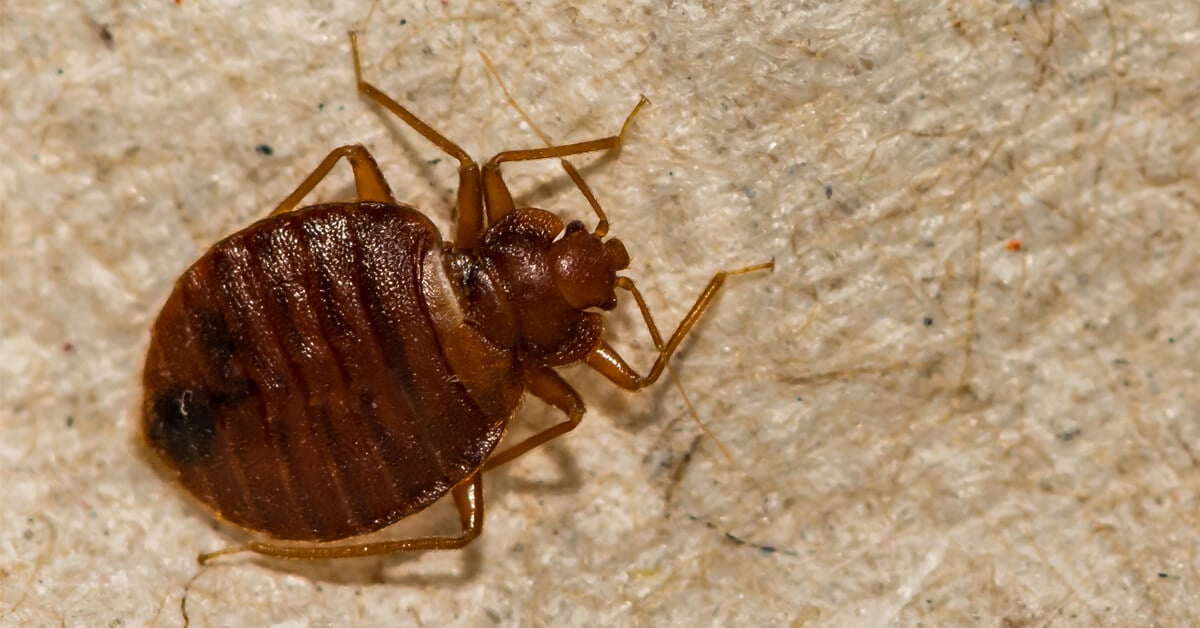
Bed bugs are quickly becoming the most common pest in all 50 states. New Jersey is not exempt, and these blood-eating pests are not limited to infesting hotels and motels. They can be found in daycares, libraries, movies theaters, senior homes, retail stores… The list goes on and on.
What you need to know most: These bugs are not easy to get rid of. DIY bed bug treatments are usually ineffective, lead to continued infestation, and can be harmful. If you see these bugs in your Morris County home, contact Viking Pest for effective bed bug control.
For more information about common pests, or to establish pest service for your New Jersey home, reach out to Viking Pest Control. We have over 40 years of experience protecting families and businesses in New Jersey. We look forward to helping you protect yours.
Call Viking at 800-618-2847 to learn more about our bed bug control and extermination services, or get a fast, free quote online today!
Fall Ant Prevention Guide
Autumn has arrived in NJ, PA, MD and DE! It’s time for beautiful fall foliage, cooler temperatures, apple picking, pumpkin-spice everything… and ants?! Unfortunately, just because fall has arrived doesn’t mean you’re free and clear from worrying about ants in the house. Ants are less active in the fall as they burrow deeper underground to avoid freezing, but they may be looking for the convenience and comfort of your temperature-controlled home to spend the winter months. If they get into your home, you can have ant problems throughout the fall and winter.
Carpenter Ants
Carpenter ants are big and black and are often confused with termites. Carpenter ants will tunnel through the wood in your home, damaging structures, but unlike termites – they’re not eating the wood. They’re just chewing it up and spitting it out in order to make a path through the wall, furniture, or cabinetry. Inside the wood, they create nests for their growing colonies to rest. If this problem goes unnoticed for long periods of time, the growing colonies of ants will cause severe damage to the wood in your home.
Carpenter ants need access to moisture to survive. Outdoors, you’ll find them in rotting tree stumps. In your home, you’ll find them in walls where a plumbing leak created the ideal, moist wood they prefer for tunneling and building nests.
Pavement Ants
The pavement ant, or picnic ant, is usually found with nests under your foundation, sidewalk, or driveway. When they find their way indoors, they will emerge under floor registers connected to heating ducts, baseboards, and expansion joints. They will not cause damage to the wood in your home, but they will help themselves to any food you leave uncovered.
Odorous House Ants
Another common ant is the odorous house ant. These ants won’t destroy wood like a carpenter ant, but they’re also attracted to moist areas, such as near your heaters or pipes. While you don’t really have to worry about them ruining the structure of your home, you probably won’t enjoy sharing your pantry items with them as they seek out food and invade kitchens once inside.
How to Keep The Ants Out of Your Home
You can make your home less attractive to all ants by:
Keeping firewood away from your home
Pruning shrubbery, removing dead limbs, and keeping landscape trees away from the home
Eliminating water leaks and problems around basements, crawl spaces, and your foundation
Repair any roof or plumbing leaks immediately
Repair clogged or broken gutters to eliminate standing water sources
NJ, PA, MD and DE Ant Control Solutions
Don’t wait until your home is overrun with the various ants, thinking they will disappear come winter. They won’t! If they’re living in your home, they’ll be active year-round. Our highly trained and licensed pest control technicians can resolve your ant problems with year-round pest solutions that are guaranteed to work. Give us a call today!
Call Viking at 800-618-2847 to learn more about our ant pest control and extermination services, or get a fast, free quote online today!