How to Get Rid of Spiders in Your Home and Keep Them Out Year-Round
Few household pests make people uncomfortable as quickly as spiders. Whether you have a mild dislike of them or full-blown arachnophobia, finding spiders crawling across your walls or spinning webs in corners can be unsettling.
And while seeing the occasional spider indoors is common, large amounts of spider activity could indicate a bigger pest problem inside your home.
The good news is that there are several effective ways to reduce spider activity and help keep your home protected year-round.
Why Are Spiders Coming Into Your Home?
Many homeowners assume spiders move indoors because of cold weather. In reality, spiders can tolerate cooler temperatures surprisingly well. What they truly want is food.
Spiders enter homes searching for insects to prey on, which means if you have spiders, there’s a good chance other pests are already present too.
Spiders commonly enter homes through:
Cracks in foundations
Gaps around windows and doors
Openings around utility lines and pipes
Damaged screens
Chimneys and vents
Firewood, boxes, and packages brought indoors
Once inside, spiders look for dark, quiet places where they can build webs and hunt insects undisturbed.
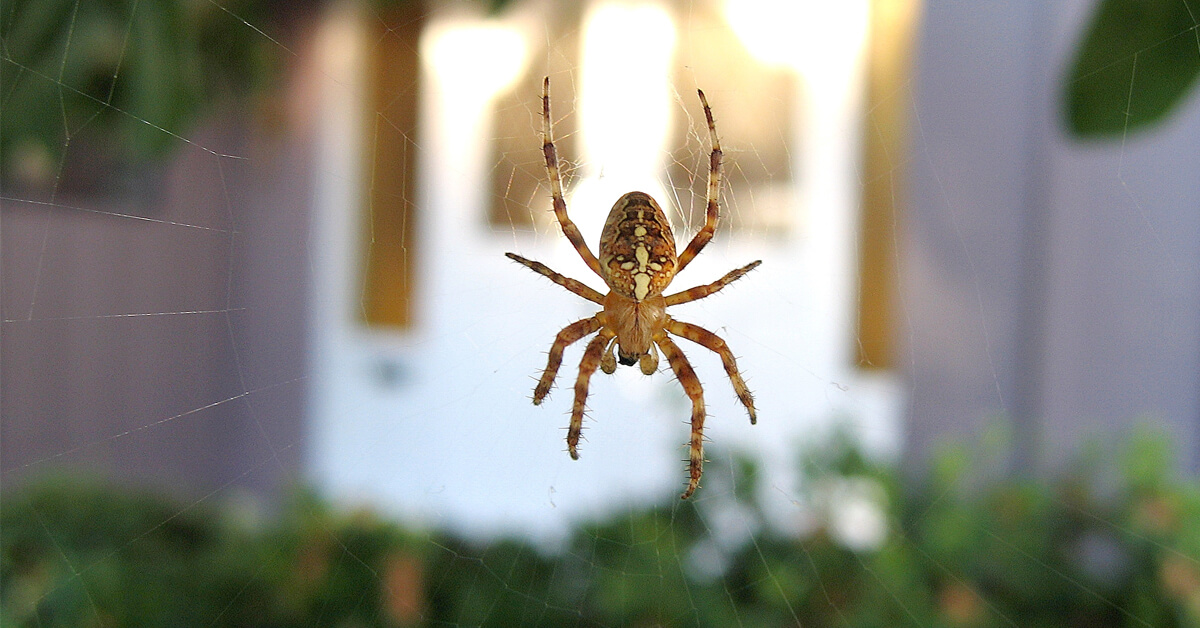
Common Spiders Found in Homes
Throughout New Jersey, Pennsylvania, Delaware, and Maryland, homeowners commonly encounter several spider species.
Common House Spiders
These spiders are generally harmless and often build webs in corners, basements, garages, and storage areas.
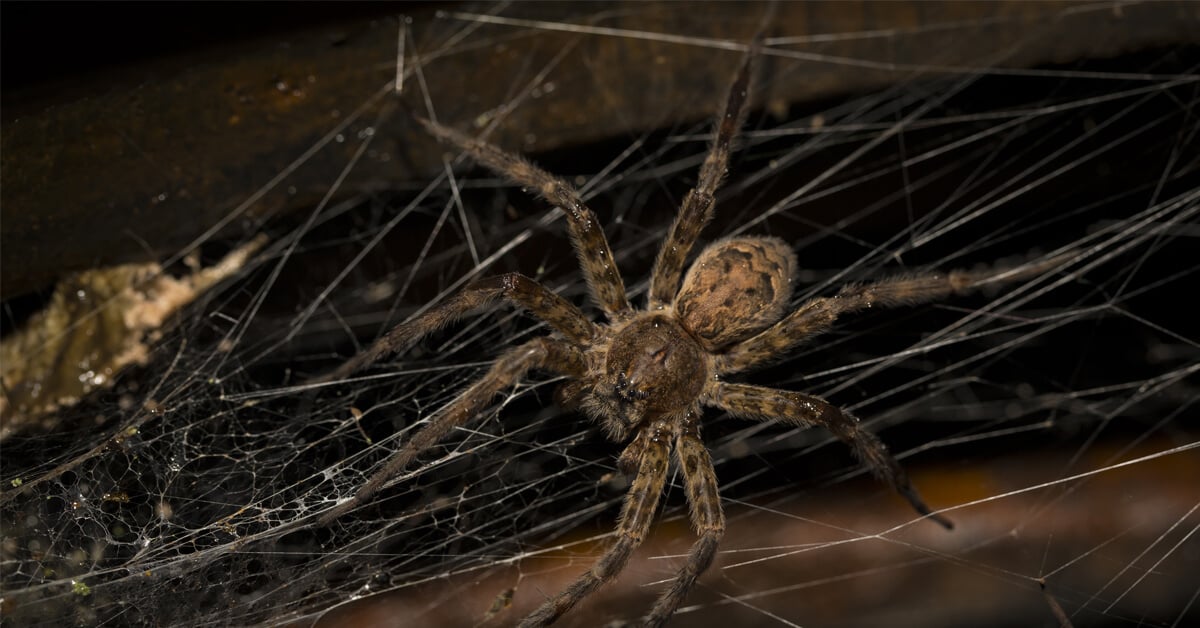
Wolf Spiders
Wolf spiders are larger and more intimidating-looking than house spiders, but they usually avoid humans and rarely bite.
Black Widow Spiders
Black widows are venomous spiders recognized by their glossy black bodies and red hourglass markings. Their bites can cause serious health issues and should be treated immediately.
Brown Recluse Spiders
Brown recluse spiders are less common but can also pose health risks if they bite. They prefer secluded spaces like attics, basements, and storage boxes.
Signs of a Spider Infestation
You may have a spider problem if you notice:
Frequent spider webs throughout the home
Egg sacs in corners or hidden spaces
Increased sightings of spiders indoors
Spiders gathering in basements, attics, garages, or closets
An increase in flying or crawling insects indoors
Because spiders feed on insects, seeing a large number of spiders may signal another pest infestation as well.
How to Get Rid of Spiders in Your Home
1. Reduce Clutter
Spiders love quiet, undisturbed hiding places. Clutter gives them plenty of opportunities to settle in and build webs.
Focus on cleaning:
Storage boxes
Newspaper piles
Under beds
Closets
Basements
Garages
Utility rooms
The fewer hiding spots available, the less attractive your home becomes to spiders.
2. Clean Thoroughly and Regularly
Vacuuming and dusting are essential for spider prevention because they remove:
Spider webs
Egg sacs
Dust buildup
Insects spiders feed on
Pay special attention to:
Behind furniture
Ceiling corners
Light fixtures
Under sinks
Around baseboards
Air vents and ducts
Using an extension duster can help you reach ceilings and high corners where webs commonly form.
3. Seal Entry Points
Even a spotless home won’t stop spiders if they can easily get indoors.
Inspect your home for:
Cracks in the foundation
Gaps around windows and doors
Spaces around pipes and utility lines
Torn screens
Vent openings
Use caulk, weatherstripping, mesh screens, and door sweeps to seal potential entry points.
4. Eliminate Other Household Pests
Spiders stay where food is available. Reducing insect activity is one of the most effective long-term spider control strategies.
Controlling pests like:
Ants
Flies
Cockroaches
Silverfish
Moths
will naturally make your home less attractive to spiders.
5. Turn Off Outdoor Lights
Outdoor lighting attracts insects at night, and insects attract spiders.
To reduce activity:
Limit exterior lighting when possible
Use yellow sodium vapor bulbs, which are less attractive to insects
Close blinds and curtains at night to reduce visible indoor light
6. Trim Landscaping Around Your Home
Bushes, shrubs, and tree branches touching your home can act like bridges for spiders and insects.
Trim vegetation away from:
Rooflines
Siding
Windows
Foundation walls
This helps reduce easy access points into your home.
7. Remove Spider Webs Immediately
Whenever you see webs, remove them quickly. Leaving webs in place encourages spiders to remain and continue nesting.
Regular web removal also helps reduce egg sacs before new spiders hatch.
How to Keep Winter Spiders Out
Spider activity often increases during winter because insects move indoors, attracting spiders along with them.
To help prevent winter spider problems:
Seal cracks and crevices before cold weather arrives
Reduce moisture in basements and crawl spaces
Use dehumidifiers in damp areas
Store firewood away from the home
Inspect boxes and packages before bringing them indoors
Keep storage areas organized and clean
It’s also important to stay cautious around hidden spaces where spiders may hide. Before using stored clothing or shoes, shake them out thoroughly.
Why Professional Spider Control Works Best
DIY spider control methods may reduce activity temporarily, but professional pest control addresses both the spiders and the insects attracting them.
Professional spider control services can include:
Detailed inspections
Perimeter treatments
Interior treatments
Web and nest removal
Ongoing monitoring
Prevention recommendations
Many homeowners also benefit from year-round pest protection plans that help control spiders and other household pests throughout every season.
Benefits of Professional Spider Control
Customized Treatment Plans
Professional exterminators create treatment plans based on:
Your home’s size
Spider activity levels
Entry points
Moisture conditions
Long-term prevention needs
Long-Term Prevention
Professional services don’t just eliminate current spiders — they help prevent future infestations by targeting root causes.
Safer Treatments
Licensed technicians understand how to apply treatments safely and effectively while minimizing risks to people, pets, and the environment.
Time and Stress Savings
Spider infestations can be difficult and time-consuming to manage on your own, especially for homeowners uncomfortable around spiders.
Professional Spider Control From Viking Pest Control
If spiders are becoming a constant problem in your home, Viking Pest Control can help. Our experienced technicians provide effective spider control and year-round pest protection throughout New Jersey, Pennsylvania, Delaware, and Maryland.
We identify entry points, reduce insect populations, remove existing spider activity, and help prevent future infestations with customized pest management solutions.
Whether you’re dealing with common house spiders or more concerning species like black widows, Viking Pest Control has the tools and expertise to help keep your home protected.
Contact Viking Pest Control today for a free estimate and learn more about our professional spider control services.
Spider Activity Increasing in Union County
Is your home the place where all the teenagers hang out? If this is the case, chances are your home is also the place where there is plenty of food available for those teenagers. The same is true for spiders. If you are seeing lots of spiders around or, worse, inside your Summit, New Providence, Westfield, or Cranford home, chances are, you also have plenty of food for those spiders to consume. But spiders do not eat pizza, chips, and soda. They eat other pests, and their primary source of food is flies. Since fly populations increase in the springtime, it stands to reason that spider populations increase as well.
If you want to stop teens from hanging out at your house, stop feeding them. The same goes for spiders. To get rid of spiders it is important to effectively get rid of the food that is attracting them and keeping them around. This is where effective pest control methods come into play.
How To Keep Pests Away From Your Union County Home
There are two areas you need to focus on if you want to keep spiders and other pests away from your home: outside your home, and inside your home. If you can keep pests to a minimum outside, there will be less chance of pests trying to get inside. And if you can keep conditions inside your home less hospitable to pests, there will be less of a chance they will stick around if they do get inside.
Remove food sources for flies outside your home. Keep trash in containers with tight-fitting lids. Do not leave pet food outside. And clean up after barbecues or other events where food is outside. Covering trash will also reduce breeding sites for flies.
Eliminate water sources for pests. Make sure all gutters are clear and in good repair so water is channeled well away from your home. Fix leaky spigots or hoses. And remove any unnecessary items that collect water in your yard.
Examine the outside of your home and seal up any gaps, cracks or holes that you find. It doesn’t take much of a space for spiders to get in.
Make sure all of your window and door screens are in good working order to keep flies and other pests out.
Keep the inside of your home free from food sources for flies and other pests.
Keep things as dry as possible by fixing water leaks and using fans and/or dehumidifiers to dry things out.
Make sure all trash is in sturdy containers with lids.
Store food either inside the fridge or freezer, in sealed plastic, or in containers with tight-fitting lids.
The Best Way To Keep Spiders Away
If you are interested in becoming spider-free, consider reaching out to the professionals here at Viking Pest Control. While we can’t help you with those freeloading teenagers, our team CAN help with freeloading spiders. Give us a call to learn more about our Home Protection Plans.
Call Viking at 800-618-2847 to learn more about our spider control and extermination services, or get a fast, free quote online today!
Spiders to Avoid in New Jersey
There is nothing fun about opening a box in your closet or attic and seeing a spider. It can make even the bravest among us leap out of our skin, but not all spiders are created equal. While some spiders in New Jersey are definitely scary, some only look scary.
What is a Wolf Spider
Finding a wolf spider taking a sip from a pool of water in a stored ice cooler or near the drain on the tub can be a scary encounter, but you have nothing to worry about with these invading arachnids. They only look scary. Wolf spiders do not have a poison that is medically important, and they are not interested in biting you anyway.
Common House Spider
Another spider you’ll commonly find in your New Jersey home is the common house spider or Parasteatoda tepidariorum. Other names for this spider include American house spider, cobweb spider, house spider, and comb-footed spider. These spiders get their “comb-footed” name from the fact that they have comb-like hairs on their back tarsi, but you’ll have to look close to see them. Common house spiders are pretty tiny. The average body size of these spiders is only 2.5 cm. You won’t have to worry about the American house spider being a threat in your home. Their venom is even less medically important than that of the wolf spiders.
Black Widow Spider
If you find a black widow or brown recluse spider inside your New Jersey home, which is entirely possible, you do have something to worry about. Both of these spiders have venom that can ruin your day, but you probably already know this. What you may not know is that black widow spiders and brown recluse spiders are not aggressive by nature. They don’t crawl around your home looking to bite you. These spiders don’t eat blood; they eat insects. So you aren’t on their menu.
Most bites from black widow and brown recluse spiders happen when these spiders are brought into contact with the body. Contact happens when people slip their foot into a shoe, slide into bed, put on a shirt, or something similar. Always shake clothes and shoes before putting them on.
Bites can also occur when rummaging around in a box that is stored in the attic. If you’d like to reduce your chances of running into a spider in a stored container, consider using a sealable plastic tote and keep storage area clutter to a minimum. The more orderly your storage areas are; the less inviting they will be to spiders.
How to Prevent Spider Bites
The best way to prevent spider bites is to have ongoing pest control for your New Jersey home. There is a wide range of bugs and animals that can be a threat to your family. With year-round pest services, you can protect your family and your pets from all of them. Reach out to Viking Pest today and find out about our Home Protection Plans.
Can you live with spiders? Sure you can. But it is a lot nicer to live without them – especially if they are poisonous.
Call Viking at 800-618-2847 to learn more about pest control and extermination services, or get a fast, free quote online today!
How and Why Do Spiders Spin Webs?
Finding spider webs in your New Jersey, Pennsylvania, Delaware and the Eastern Shore of Maryland home?
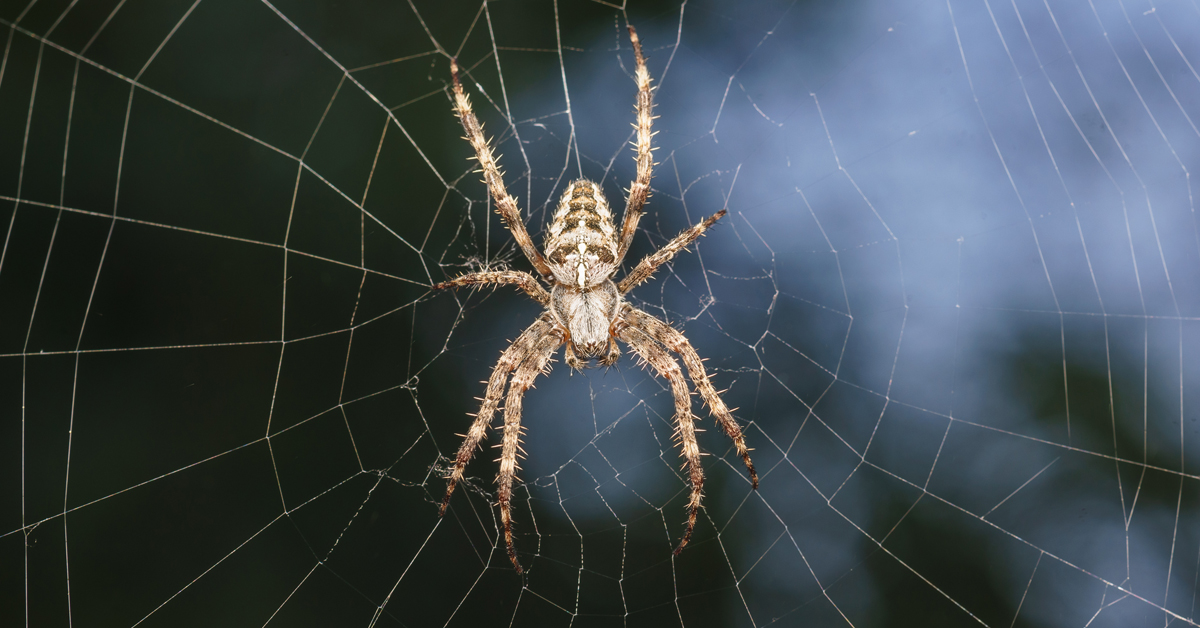
Nothing will make you break out your secret ninja moves more than walking into a spider’s web! As many people can attest, this can be one of the most goosebump raising things we can encounter in our homes, as spiders in NJ, PA, MD, and DE are known for seeking refuge in our basements, attics and other mostly undisturbed places. Believe it or not, not all spiders spin webs to catch their prey and the spiders that do spin webs don’t do it all the same way. In fact, you can tell what type of spider you have often by looking at the web they have spun.
What is the Purpose of Spider Webs?
Spider webs are designed to capture prey (mostly insects) or slow down prey so that the spider has an easier time catching it. Some webs are symmetrical and some are not, but all webs begin with a single thread, which forms the ‘foundation’ for the rest of the structure. Spiders will climb up something (often a tree, but inside your home, they may find a wall or rafter) and release a length of thread into the wind. With luck, the thread will catch on another tree branch or rafter and thus the foundation is created. Depending on what type of spider it is, the web is then crafted, sometimes with spirals and sometimes without an obvious pattern. Once the web is created, the spider often sits in the center of the web, monitoring it for vibrations. If an insect is caught in any part of the web, the spider will feel the motion of the insect through the vibrations of the thread and it will make its way to the vibration source to wrap the insect in silk to store or consume.
Are Spiders Good or Bad?
Although spiders can be a nuisance inside your home, they can also be beneficial, catching unwanted insects inside your home and making a meal of them. When you begin to encounter numerous spider webs, spider egg sacs and spiders themselves, having spiders inside your home can become less desirable and more frustrating. Repeated encounters with webs and spiders can make a homeowner feel like they are not safe in their own home; even though there are very few poisonous spiders, just the basic house spider can make a homeowner feel anxious, especially when they invade in large numbers. If you have been seeing a few more spiders than usual inside your home, or even just their webs, there are a few things that the local spider control experts at Viking Pest Control recommend you do to prevent spiders in NJ, PA, MD, and DE:
Reduce the populations of insects inside your home; this can be done by eliminating possible insect entry points (fixing window screens and using weather stripping around doors).
Install sodium vapor lighting or yellow lights where you currently have white lights around your home’s exterior. Insects are less attracted to yellow lights.
Remove clutter and store belongings in containers with tight fitting lids. Boxes of unused items and cluttered areas provide excellent harborage for spiders.
Vacuum up any spiders or webs that you come across inside your home; this can help prevent larger infestations from taking hold in your home.
Contact Viking Pest for Professional Spider Control
For more tips on spider control or help with other fall bugs, contact the professionals at Viking Pest Control. Our Home Protection Plans are a year round programs that provide protection for a wide variety of pests. With careful inspection services, helpful preventative measures, and free call backs for covered pests you can feel secure in knowing that Viking Pest Control is the best choice for pest control in NJ, PA, MD and DE.
Call Viking at 800-618-2847 to learn more about spider pest control and extermination services, or get a fast, free quote online today!